Author Archives: Phil Bowermaster

Survey: Why Will We Go to the Stars?

NCC-1701

Image via Wikipedia

The discovery of the first potentially habitable earth-like planet raises questions about humanity’s future in interstellar space. Will we, in fact, “explore strange new worlds” and “seek out new life and new civilizations?” In my previous post I suggested that discovery of habitable, earth-like planets may give us the impetus to begin serious manned exploration of interstellar space.

That’s assuming we have the technology. But then, wanting to go badly enough will play a large role in how and whether we ever develop the technology. If we do ever travel to the stars, which of the reasons listed below do you think is most likely to be our primary motivation to do so? We’d like to know what you think. Please chime in via the survey and comments below.

Apparently not everyone was seeing the links to the results way down at the bottom, so I’m putting them up here, too.   View Totals          View breakdowns       


Enhanced by Zemanta

Strange New Worlds

For copyrights, see Image:Gliese.JPG (the orig...

Image via Wikipedia

UPDATE: Take the survey.

The discovery of Gliese 581g is a truly exciting and wonderful development. Here we have a planet just a little larger than our own sitting right smack in the middle of the habitable zone of the star it orbits. If ever we’re going to find life out there in the great vasty blackness, this is where we expect it to be. Of course, our expectations may be wrong not only in this case but on general principles — life could be much more abundant elsewhere. It’s possible that what we take for the “habitable zone” is in fact anything but. Perhaps we’re the outliers with our odd penchant for liquid water, while the majority of life in the universe prefers much colder (or warmer) climes.

Perhaps, but seeing as we are the only example of a living, thriving planet that we have, it’s entirely sensible that our search for new living, thriving planets would draw us to worlds situated similarly to our own. One of the interesting characteristics of Gliese 581g is that it has a couple of close neighbors on opposite sides of the habitable zone, planets C and D, each of which was discovered before G and was considered as a possible candidate for habitability. (Planet D still hasn’t been ruled out altogether.) So like our home planet, poised between Venus (too hot) and Mars (too cold), Gliese 581g occupies what might be described as its own system’s “just right” location.

I have to wonder: is this a coincidence? Or, in the years to come, as we discover dozens, perhaps hundreds of planets occupying their various star systems’ habitable zones , will we find that many or most are similarly flanked? There’s no particular reason to expect that we will, but it’s interesting to speculate.

So Gliese 581g has a lot in common with Earth, but what makes it even more fascinating is its points of divergence:


  • The planet is very close to that star it orbits, less than 15 million miles (24 million km) away. On earth, we’re 93 million miles (150 million km) from our sun. Now, the star we orbit is quite a bit bigger than Gliese 581*, but even so — the sun has got to be huge in the 581g sky.

  • And not only is the sun huge, it’s red. Gliese 581 is a red dwarf.

  • Enormous and red the sun may be as seen from 581g, but it’s not seen everywhere in the planet’s sky. 581g is tidally locked, meaning that one side of the planet experienes perpetual and  blazingly hot day, while the other side side dwells in endless, frigid night.

  • Because of its close proximity to Gliese 581, 581g orbits its sun very quickly. One trip around the sun takes only 37 Earth days. (And we have to use Earth days to measure the length of the year because…well, see above.)

The most habitable part of 581g might well be in the “twilight” area that separates the planet’s day and night halves. One can imagine life developing in that temperate band and then evolving in highly distinct ways as it spread in one direction versus the other. The distinction on Earth between land-based and aquatic life could be fairly insignificant compared to the divergence on 581g between night and day life. And, who knows, there may be “amphibious” creatures living in such an environment, life forms that freely move from non-stop daylight to utter darkness and who can withstand almost unimaginable ranges of temperature.

Granted, this is a significant amount of speculation considering how little we really know about 581g. But to be candid, I’ve stopped short. I’m sorely tempted to push on and sketch out some ideas around at what kinds of intelligences and, indeed, what sort of civilization a planet like this might be home to. But I won’t go there. (This time.) Rather, I’ll just point out that it’s not the speculation, but what we know about this planet that makes it so exciting.

It hasn’t been all that long since the first extrasolar planet was discovered. Two decades ago, it was pretty much assumed that such bodies exist. In those days a handful of astronomers were working relentlessly to be the first to prove that there are planets outside the eight (at that time, nine) that orbit our sun. And, finally, those efforts paid off. But before that, we could only assume. And ponder. And speculate.

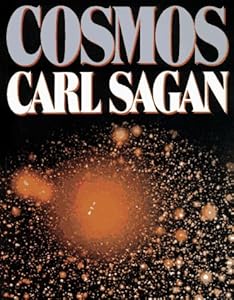
 It was great fun, as a kid, watching Cosmos or reading books by Carl Sagan, Isaac Asimov, and others that dared us to imagine what these hypothetical other planets might be lik

Cover of

Cover of Cosmos

e. A planet might orbit a star situated far above the galactic plane, allowing its inhabitants (if any) to witness the rising and setting of the entire galaxy each day. Another might be a moon of an enormous gas giant, twice the size of Jupiter, and yet a planet it in its own right, home to a unique ecosystem and civilization.

Or who knows? Somewhere out there we might find an otherwise Earth-like planet with a huge red sun in the sky, a year that lasts just a bit over a month, and a thin temperate strip of twilight separating blazing endless day from frigid endless night.

It’s not speculation, friends.

Gliese 581g is out there.

Now there have been, without question,  some interesting finds among the first 400-plus extrasolar planets that have been cataloged. And when I say “interesting” I mean in the way that astronomical discoveries are always interesting. All well and good. But the discovery of 581g is something else entirely. This is interesting the way news of a newly discovered country would have been interesting to our ancestors. Imagine how listeners might have received news of Cathay in the 14th century or America in the 16th — fantastic places, like something out of a fairy tale, only real.

Such places touch the imagination, but they do more than that. They awaken a desire to set out for the unknown or, more properly, the partly known. We want to travel to such places, to see for ourselves what we’ve heard about, what we’ve hypothesized, and what we’ve imagined.

We want to go there, and not just in our dreams.

Here’s the thing: 581g is just the first. We’re only now beginning to get good at finding extrasolar planets. Within the next decade or so, we will probably catalog dozens of potentially habitable Earth-like planets, some much more interesting (in both senses of the word) than 581g. We may detect evidence for life on one or more of these, maybe even reasons to suspect the presence of a technological civilization.

For some of us, such news from distant lands has always been irresistible. We’ll find a way to do it. We’ll go there, and see for ourselves. 


* The star. From here on in I’ll refer to the star as “Gliese 581 and the planet as “581g.”

Enhanced by Zemanta

The Singularity Goes Prime Time

sheldon.jpg

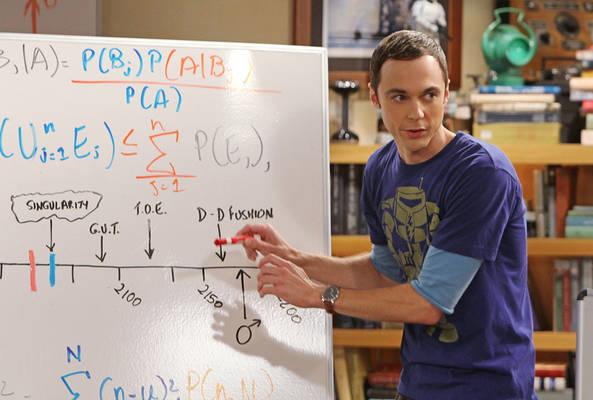
This week’s episode of the CBS sitcom The Big Bang Theory brings the idea of the technological singularity to one of the widest audiences it has ever reached. In the opening teaser, ubergeek Sheldon (Jim Parsons) explains to his longsuffering roommate and best fried Leonard (Johnny Galecki) that he is trying to determine how much longer he has to live. Referring to the time line shown here, he laments that he will probably not make it far enough into the future to, well, live to see it would be one way of putting it:

Sheldon: At best I have 60 years left. 60 only gets me to here. I need to get here.

Leonard: What’s there?

Sheldon: The earliest estimate of the Singularity, when man will be able to transfer his consciousness into machines and achieve immortality.

Leonard: So, you’re upset about missing out on becoming some sort of freakish, self-aware robot…

Sheldon: By this much!

Leonard: Tough break. You want eggs?

Sheldon: You don’t get it, Leonard. I’m going to miss so much: the Unified Field Theory, Cold Fusion, the dogopus…

Leonard:
What’s a dogopus?

Sheldon:
A hybrid dog and octopus — man’s best underwater friend.

Leonard: Is somebody working on that?

Sheldon: I was going to. I planned on giving it to myself for my 300th birthday.

Popular both  with geeks and with the intellectually inferior sorts that Sheldon refers to as “muggles,” The Big Bang Theory (now in its fourth season)  is a major hit, claiming an average of 14 million viewers per week. The show is also critically acclaimed. Just a few weeks ago, Parsons won the 2010 Emmy for
Outstanding Lead Actor in a comedy series.

If Sheldon’s description of the Singularity seems imprecise, that’s probably by design. While a serious in-depth explanation of what the Singularity is all about would be edifying, it probably wouldn’t make it onto TV.

Certainly not network TV.

In prime time.

On a popular sitcom.

Twisting serious scientific and technological ideas into comedic material is one of the show’s major tropes. So the audience gains a certain familiarity with terminology and concepts, but something less than a real understanding of these ideas. Hey, it’s a start.

Another major contribution of The Big Bang Theory is that it serves as a kind of mainstream endorsement of geek culture. The Geek Chic movement was one thing, but this is something bigger. As I wrote in 2007 after watching the first few episodes:

 After all, isn’t it amazing
that a show like this can feature four such characters not as the annoying neighbors
or as the object of derision or pity of the real heroes of the show? These guys
are the heroes.

Three physicists and an engineer — heroes for our time.

One major difference between Sheldon’s description of the Singularity and references we may have seen to it elsewhere in prime time (in Fringe, for example) is that Sheldon describes the Singularity not as a catastrophe to be avoided, or something that is simply “going to happen,” but rather as a goal. In just a few short sentences he makes a case for life extension, uploading of consciousness, and the achievement of major longstanding scientific aims via cooperation between human and artificial intelligence.

Sheldon is a transhumanist!

Sure, these ideas are all portrayed as bizarre and ridiculous, but that’s because Sheldon is the nerd of the group. But that’s okay. If The Big Bang Theory has demonstrated anything, it’s how quickly and easily nerdy ideas can become mainstream. Stay tuned

Some More Thoughts on Comments

Several of us are still getting long ugly strings when logging in through OpenID. When I use Google, I get a string but it has my name in it. I was getting an ugly string when logging in via Yahoo! but I found that the OpenID in Yahoo is configurable. it defaults to the long ugly string, but you can set it to something much more manageable.

Some are getting a similar string for Google, but I have not yet figured out how or whether this is configurable in Google mail settings. If anyone figures this out, please advise.

If you want to avoid strings and configuration issues altogether, use Facebook or set up a Typepad account.

FastForward Radio — Stating the Obvious

This week Phil Bowermaster and Stephen Gordon take inspiration from a quote from Less Wrong.:

So my hypothesis is that if a certain side of an issue has very obvious points in support of it, and the other side of an issue relies on much more subtle points that the average person might not be expected to grasp, then adopting the second side of the issue will become a signal for intelligence, even if that side of the argument is wrong.

Are Speculists really just purveyors of the obvious? We examine some obvious(?) truths that may shed some light:

  • The appearance of humanity on this planet was a good thing
  • Life is getting better
  • Death sucks
  • The answer to our environmental problems lie in technological and economic development
  • The answers to virtually all of our problems lie in technological and economic development
True or false? Let’s discuss.


FFRNewLogo9J.jpg


Listen to internet radio with The Speculist on Blog Talk Radio

Why We're Promoting The Rational Optimist

New reading material: The Rational Optimist

Image by Daniel Bachhuber via Flickr

We’ve been talking about this for the past two weeks on the podcast. We officially kicked off our campaign to get 1000 people to read The Rational Optimist with a blog post last week, followed by setting up a Facebook group this week.

So what’s the big deal, anyway? It’s a good book and all, but why all the fuss?

Apparently the book is doing pretty well, but Matt Ridley faces an uphill battle try to spread his message. Over at Less Wrong, Yvain provides a wonderfully succinct explanation as to why that is:

So my hypothesis is that if a certain side of an issue has very obvious points in support of it, and the other side of an issue relies on much more subtle points that the average person might not be expected to grasp, then adopting the second side of the issue will become a signal for intelligence, even if that side of the argument is wrong.

Absolutely brilliant. And spot on.

That’s the reason that it’s “controversial” for me to suggest that death sucks.

And that’s the reason that it’s “controversial” for Matt Ridley to suggest that the condition of humanity is improving and is likely to continue to improve.

Strange but true: some obvious truths require a more robust defense than other, more subtle truths. So be it. Matt Ridley provides a reasoned and straightforward defense of the (what ought to be) obvious in his book, and we’re here to back him up.

So once again: if you haven’t read it, read it. If you have read it or are reading it, pick up a copy for a friend or just pass your copy on to someone when you’ve finished. And let us know what you’ve done — we’re trying to get to a 1000 (more than 40th of the way there as of today!)

UPDATE: Instalanche!  All right Instapundit readers, who’s ready to push us closer to 1000?

Why We’re Promoting The Rational Optimist

New reading material: The Rational Optimist

Image by Daniel Bachhuber via Flickr

We’ve been talking about this for the past two weeks on the podcast. We officially kicked off our campaign to get 1000 people to read The Rational Optimist with a blog post last week, followed by setting up a Facebook group this week.

So what’s the big deal, anyway? It’s a good book and all, but why all the fuss?

Apparently the book is doing pretty well, but Matt Ridley faces an uphill battle try to spread his message. Over at Less Wrong, Yvain provides a wonderfully succinct explanation as to why that is:

So my hypothesis is that if a certain side of an issue has very obvious points in support of it, and the other side of an issue relies on much more subtle points that the average person might not be expected to grasp, then adopting the second side of the issue will become a signal for intelligence, even if that side of the argument is wrong.

Absolutely brilliant. And spot on.

That’s the reason that it’s “controversial” for me to suggest that death sucks.

And that’s the reason that it’s “controversial” for Matt Ridley to suggest that the condition of humanity is improving and is likely to continue to improve.

Strange but true: some obvious truths require a more robust defense than other, more subtle truths. So be it. Matt Ridley provides a reasoned and straightforward defense of the (what ought to be) obvious in his book, and we’re here to back him up.

So once again: if you haven’t read it, read it. If you have read it or are reading it, pick up a copy for a friend or just pass your copy on to someone when you’ve finished. And let us know what you’ve done — we’re trying to get to a 1000 (more than 40th of the way there as of today!)

UPDATE: Instalanche!  All right Instapundit readers, who’s ready to push us closer to 1000?

Death Sucks

This is a re-post of an essay originally posted at speculist.com in 2004. The original comments from the old site are now part of the post. I’ve also reopened this entry for comments if anyone is interested in getting back into it.

Death Sucks

Reader Mary (Definitely on the Outer Ring) posed the following question in a recent comment:

Why are you so scared of dying?

(She wrote some other provocative questions as well, but I want to focus on this one for now.)

From the context, I’m going to assume that what Mary is asking is a philosophical question. She doesn’t want to know why I would get out of the way of a speeding truck. All mentally healthy human beings are “scared of dying” in that sense; it’s something we share with virtually every living being on the planet.

What Mary wants to know is this: why am I not resigned to my own mortality? Why would I want to engage in this unseemly practice of exploring alternatives to dying?

I’ll tell you why, Mare.

Death sucks.

TSP_007

Image by E L O via Flickr

Some say that dying is as natural as being born. I say, so what? Vomiting is as natural as eating, but I happen to like eating a lot more.

Some say that death is a part of life. I contend that, by definition, it is not.

Some say that death is the threshold to the next stage of existence. I say maybe so. But this stage seems to have a natural built-in aversion to the threshold to that stage, and I’m going to go with that.

Many believe that the fear of death is a primitive relic, a lingering superstition. Fear of death, they will tell us, is what originally led humanity to irrational thinking. We invented gods and spirits primarily to assuage this fear. Now we live in an age when rational thinking might once again hold sway, although irrationalism persists all around. To differentiate themselves from the irrational throng, rational thinkers proudly state that they are not afraid of dying.

I remember years ago, when I went to see Scorcese’s Last Temptation of Christ, there were two groups of sign-carrying protestors standing out front of the theatre. One group was Christian, the other was Atheist. The box office line was rather long, and those of us standing in it were stuck between these two groups: one warning us not to go see this shocking piece of blasphemy, the other encouraging our support of free speech. Needless to say, there was a good deal of verbal sparring between the two camps. Some comments were good natured and even a little funny, but it got heated from time to time. I remember one exchange ended with these very words:

Yeah? Well, I’m not afraid of dying.

Hey, good one. Sign-carrying atheists, one; sign-carrying fundamentalists, zero.

Unfortunately, that’s a load of crap. No, I don’t mean that I doubt that guy’s sincerity when he said that he was not afraid to die. I’m sure he meant it, and wasn’t just trying to score points against those polyester-clad, big-haired fundamentalists in front of his cool sign-carrying atheist friends. But the notion that the fear of dying is uniquely linked with irrational thinking is just about as wrong as it can be.

Let’s go back 50,000 years or so ago and take a look at our primitive ancestors. It’s true that somewhere along the line they developed burial rituals and a belief in an afterlife. Maybe this was just an irrational response to their fear of death and the grief of losing a loved one. But it was just a small part of what they were doing. What, then, were they spending most of their time doing?

Figuring out how the world worked.

These plants will make you sick. These are good for food. Spears with sharp stone heads are better than pointed sticks at bringing down game and warding off predators. This is a good place to stay; predators don’t usually come here. After the moon changes three more times, we’ll start heading south. We used to wait until it got cold, but this way works better and we lose fewer members of the tribe.

Our ancestors relentlessly pursued an empirical investigation into the nature of…everything. Science didn’t begin with Newton or Bacon or the ancient Greeks. It started way back when. All mathematics, physics, biology, astronomy — all rational human thought — has as its foundation the pioneering work of these our ancestors.

Now what do you suppose motivated them to do all this hard investigative work, to engage in all this rational thinking. Could it have been the fear of death?

Absolutely. They were besieged by threats on all sides. A rational, empirical approach to the world emerged as the soundest way of warding off those threats. If our fundamentalist-taunting friend could go back in time and somehow convey to a group of his ancestors his basic credo of intellectual superiority — “I’m not afraid of dying” — they’d think he was nuts. And not because they were so irrational.

But we’re only halfway there.

Paradoxically, the self-satisfied volley of “I’m not afraid of dying” might just as easily have come from the religious side of the ticket line as it did from the non-believing side. Religious and spiritually oriented people are often quick to tell you that they have no fear of death. And if you really got it, — whatever that means to the particular believer — you wouldn’t be afraid of death, either. If you only understood about Jesus‘ victory on the cross, or reincarnation, or nirvana, or even just the Natural Order of Things, you would be as resigned to your own eventual demise as the rest of us.

Yeah, well, that’s a load of crap, too.

I’m going to restate that so I’m not misunderstood. Any religion that teaches that you should be okay with the fact that you’re going to die is a load of crap. Christianity (to use the religion I’m most familiar with) most assuredly does not teach this. As C. S. Lewis famously put it:

But here is something quite different. Here is something telling me — well, what? Telling me that I must never, like the Stoics, say that death does not matter. Nothing is less Christian than that. Death which made Life Himself shed tears at the grave of Lazarus, and shed tears of blood in Gethsemane. This is an appalling horror; a stinking indignity. (You remember Thomas Browne‘s splendid remark: “I am not so much afraid of death, as ashamed of it.)

I believe that all human beings, including people of faith, share the same natural revulsion for death. We can blot these feelings out and cover them up, but to do so is to become like those rabbits in Watership Down who sang melancholy songs while trading their lives for some lettuce and carrots.

Those who claim to have no fear of death, whether they be an Objectivist or the Dalai Lama or some Palestinian strapping dynamite to his chest, have lost touch with a primary truth of human existence: a truth which has lead us both to science and to faith. Those who seek to prolong human life — whether via antioxidants or cryonics or standard medical procedures — have tapped into that same fundamental truth:

Death sucks.


We're back!

UPDATE: Accessing Facebook through TypePad isn’t working very well, so I have added a plugin that should let you login to commenting using Facebook directly. I recommend either Facebook or Google for commenting as both of these show your name.

And not only is The Speculist back online, we’re (finally) fully open once again for comments. You can log into comments any number of ways (including via Facebook if you have a TypePad account.) We strongly recommend using OpenID for commenting, but whatever you use, when you preview your comment, make sure that that the method of commenting you use displays your name — or at least what you want to be called in the context of the discussion.

Some of our fist few comments on the new system came from:

https://me.yahoo.com/a/blahC0QjrcyBFU_wtKjwWKmynzfAHIf.tg–#7560a  (which is me!)

and

Which is a friend, but we know not who. And it’s hard to address someone with a string like that. So please, if you’re signed in as a big long string, sign your comments. Even writing “No Name” at the bottom gives fellow subsequent participants in the thread someone to address.

Also, please join the new Google friends group.

See, Stephen? Twitter feeds. Social networking. We’ve finally gone web 2.0!

There will be more gadgets and subtle design changes in the coming weeks. We welcome suggestions about what you’d like to see here.

We’re back!

UPDATE: Accessing Facebook through TypePad isn’t working very well, so I have added a plugin that should let you login to commenting using Facebook directly. I recommend either Facebook or Google for commenting as both of these show your name.

And not only is The Speculist back online, we’re (finally) fully open once again for comments. You can log into comments any number of ways (including via Facebook if you have a TypePad account.) We strongly recommend using OpenID for commenting, but whatever you use, when you preview your comment, make sure that that the method of commenting you use displays your name — or at least what you want to be called in the context of the discussion.

Some of our fist few comments on the new system came from:

https://me.yahoo.com/a/blahC0QjrcyBFU_wtKjwWKmynzfAHIf.tg–#7560a  (which is me!)

and

Which is a friend, but we know not who. And it’s hard to address someone with a string like that. So please, if you’re signed in as a big long string, sign your comments. Even writing “No Name” at the bottom gives fellow subsequent participants in the thread someone to address.

Also, please join the new Google friends group.

See, Stephen? Twitter feeds. Social networking. We’ve finally gone web 2.0!

There will be more gadgets and subtle design changes in the coming weeks. We welcome suggestions about what you’d like to see here.