Author Archives: Phil Bowermaster

If It's True…

…if it’s really been established that some particles are traveling faster than light — and I very much doubt that that’s the case — then how much of the rest what Einstein had to tell us about the workings of the universe still holds?

Specifically, are these particles actually traveling backward in time? I mean, isn’t that what’s supposed to happen when you exceed the speed of light?

One possibility: (as mentioned in the linked article) the particles are engaged in some kind of quantum tunneling which allows them to get from point A to point B at faster than light speed without ever actually going faster than light. This is a cool possibility because it does away with worries about time travel and (more importantly) because  it’s in line with warp drive and hyperspace and other science fiction methodologies for achieving FTL travel.

Another possibility: these particles are tachyons. If so,they must be in a highly energized state to be moving so slowly. There is no evidence that tachyons actually exist — unless this discovery is the first such evidence. But if they were tachyons, we would have to contend with living in a universe that contains particles that can never go slower than the speed of light and that have an imaginary number for their mass.

Now that’s a weird universe, folks.

Again, the smart money says that this is an observational or measurement error,and at the end of the day the speed of light will be upheld.

But sometimes the smart money is wrong. Sometimes our well-established assumptions falter. Sometimes the universe throws a genuine surprise our way, and we become momentarily aware of how little we truly know.

Moments such as these — right now, when we don’t know for sure what the facts are  – present a tremendous opportunity. Either we will get a glimpse of how different the world is than we thought it was, or (I’m betting) we realize that we were right all along.

It’s a good lesson either way.

(Hat-tip: Chris Twyman.)

If It’s True…

…if it’s really been established that some particles are traveling faster than light — and I very much doubt that that’s the case — then how much of the rest what Einstein had to tell us about the workings of the universe still holds?

Specifically, are these particles actually traveling backward in time? I mean, isn’t that what’s supposed to happen when you exceed the speed of light?

One possibility: (as mentioned in the linked article) the particles are engaged in some kind of quantum tunneling which allows them to get from point A to point B at faster than light speed without ever actually going faster than light. This is a cool possibility because it does away with worries about time travel and (more importantly) because  it’s in line with warp drive and hyperspace and other science fiction methodologies for achieving FTL travel.

Another possibility: these particles are tachyons. If so,they must be in a highly energized state to be moving so slowly. There is no evidence that tachyons actually exist — unless this discovery is the first such evidence. But if they were tachyons, we would have to contend with living in a universe that contains particles that can never go slower than the speed of light and that have an imaginary number for their mass.

Now that’s a weird universe, folks.

Again, the smart money says that this is an observational or measurement error,and at the end of the day the speed of light will be upheld.

But sometimes the smart money is wrong. Sometimes our well-established assumptions falter. Sometimes the universe throws a genuine surprise our way, and we become momentarily aware of how little we truly know.

Moments such as these — right now, when we don’t know for sure what the facts are  – present a tremendous opportunity. Either we will get a glimpse of how different the world is than we thought it was, or (I’m betting) we realize that we were right all along.

It’s a good lesson either way.

(Hat-tip: Chris Twyman.)

Fun and Games

Scientists work on a problem for years and years. They can’t find a solution. The problem is embedded into a game and turned over to online gamers. Result: problem solved in three weeks:

Online gamers have achieved a feat beyond the realm of Second Life or Dungeons and Dragons: they have deciphered the structure of an enzyme of an AIDS-like virus that had thwarted scientists for a decade.

The exploit is published on Sunday in the journal Nature Structural & Molecular Biology, where — exceptionally in scientific publishing — both gamers and researchers are honoured as co-authors.

Their target was a monomeric protease enzyme, a cutting agent in the complex molecular tailoring of retroviruses, a family that includes HIV.

Figuring out the structure of proteins is vital for understanding the causes of many diseases and developing drugs to block them.

I’ve said it before: there is a lot more to games than fun and games. We are born problem-solvers and risk-takers. Games provide compelling and fun environments for carrying out these innate functions. Games make a social and entertainment activity out of that which we are driven to do anyway.

Yes, there is a ton of hype about “gamification” as a buzzword or marketing ploy. But we’re just scratching the surface of the real-world problems that can be addressed through game play. The next few years are going to be very interesting.

Cross-posted from Transparency Revolution.

FFR Returns 9/21

Having concluded the World Transformed 2, Stephen and I have decided to take a brief hiatus before resuming regular programming. FastForward Radio will return on 9/21.

Why Airplanes Don't Exist

There’s a great piece currently running on Pajamas Media from physicist Frank J. Tipler on the subject of whether our current society any longer has any interest in  pursuing big ideas. Not surprisingly, the author of The Anthropic Cosmological Principle opines that there are still some big ideas out there, and that people are still actively and eagerly pursuing them.

He concludes with a huge one. But before he goes there he lays out the following:

Then there is transhumanism: the evidence is very strong that sometime in this century (I predict by 2030, Ray Kurzweil by 2045) we will see the creation of computer programs that are fully equal to humans in mental ability.  At roughly the same time, we predict that humans will be able to download themselves into computers, and live forever.

(Yes, you read me right. What you see here is only the second biggest big idea that Tipler presents. Read the whole piece to discover the biggest.)

In the comments section, skeptics make short work of Tipler’s transhumanist projections:

And I predict that by 2030 Mr. Tipler will have revised his prediction of computer programs fully equal to humans in mental ability to 2050, perhaps not noticing that it’s been a good while since anyone takes these recycled 70′s era strong-AI pronouncements seriously anymore. Our gadgets are great tools, and while imputing our own capabilities onto our tools is fun and makes for great movies, it will remain a pipe dream, and thankfully so.

Another adds:

I have seen strong AI claims of this form for 50 years, and they have universally been wrong. We do not have systems that are even close to being able to simulate human intelligence.

I’m not interested in exploring when or whether strong artificial intelligence is going to happen. (Anyone who is interested in the subject might give this a listen.) But I’m intrigued by the argument. People have predicted [name a development] in the past and it didn’t happen when or how they said it would; therefore, predictions of [that same development] can be discounted. Here the principle is applied to strong artificial intelligence, but presumably it will work with anything that has ever been predicted.

For example,  many of you are no doubt familiar with this sketch made by Leonardo da Vinci probably some time in the 1480′s:
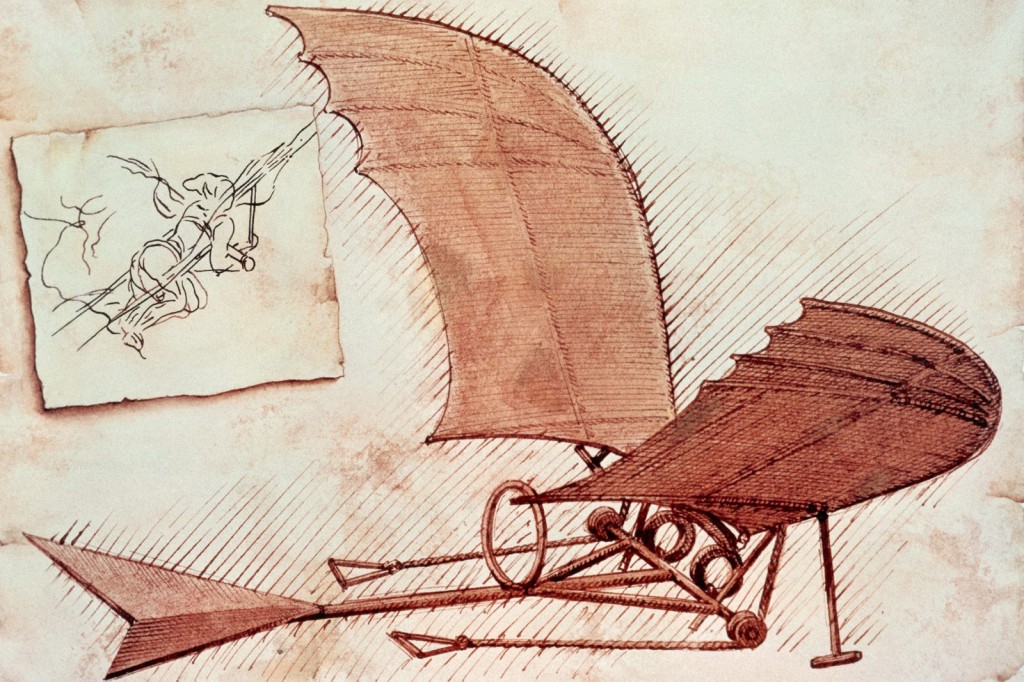
This is a preposterously inaccurate representation of how heavier-than-air flight would work. Poor Leonardo naively believed a flying machine could be built from materials available in his day and age. As if! He was off by a mile, as were many who came after him.

Such a blatantly inaccurate record of predictions spanning hundreds of years can only mean one thing: airplanes are impossible. They do not exist.

Oh, and while we’re on the subject, helicopters are also a fantasy:

If you’re not entirely satisfied with that analysis, you might be interested in future forecaster Paul Saffo‘s admonition that we should “never confuse a clear view with a short distance.” I would add that we should never confuse a long road with an impossible destination.

A while back I was present at a talk Saffo gave in which he explained this principle using a chart similar to the one shown below. Technological progress and adoption rates don’t follow the straight line we would expect. Rather, progress occurs along an S-curve which encourages overestimation in the early stages and underestimation further along. Or as Saffo puts it, “Technologists can get it wrong twice.”

Saffo provides some great examples of this S-curve in action as it relates to adoption rates of some familiar technologies.

Obviously, the fact that a given technological development has been inaccurately predicted doesn’t prove it will happen. The point is that it’s not terribly good evidence that it won’t happen, either.

Keep that in mind when you hear predictions of coming developments. Do they sound overly enthusiastic? Do they sound overly cautious? And remember the S curve.

Why Airplanes Don’t Exist

There’s a great piece currently running on Pajamas Media from physicist Frank J. Tipler on the subject of whether our current society any longer has any interest in  pursuing big ideas. Not surprisingly, the author of The Anthropic Cosmological Principle opines that there are still some big ideas out there, and that people are still actively and eagerly pursuing them.

He concludes with a huge one. But before he goes there he lays out the following:

Then there is transhumanism: the evidence is very strong that sometime in this century (I predict by 2030, Ray Kurzweil by 2045) we will see the creation of computer programs that are fully equal to humans in mental ability.  At roughly the same time, we predict that humans will be able to download themselves into computers, and live forever.

(Yes, you read me right. What you see here is only the second biggest big idea that Tipler presents. Read the whole piece to discover the biggest.)

In the comments section, skeptics make short work of Tipler’s transhumanist projections:

And I predict that by 2030 Mr. Tipler will have revised his prediction of computer programs fully equal to humans in mental ability to 2050, perhaps not noticing that it’s been a good while since anyone takes these recycled 70′s era strong-AI pronouncements seriously anymore. Our gadgets are great tools, and while imputing our own capabilities onto our tools is fun and makes for great movies, it will remain a pipe dream, and thankfully so.

Another adds:

I have seen strong AI claims of this form for 50 years, and they have universally been wrong. We do not have systems that are even close to being able to simulate human intelligence.

I’m not interested in exploring when or whether strong artificial intelligence is going to happen. (Anyone who is interested in the subject might give this a listen.) But I’m intrigued by the argument. People have predicted [name a development] in the past and it didn’t happen when or how they said it would; therefore, predictions of [that same development] can be discounted. Here the principle is applied to strong artificial intelligence, but presumably it will work with anything that has ever been predicted.

For example,  many of you are no doubt familiar with this sketch made by Leonardo da Vinci probably some time in the 1480′s:

This is a preposterously inaccurate representation of how heavier-than-air flight would work. Poor Leonardo naively believed a flying machine could be built from materials available in his day and age. As if! He was off by a mile, as were many who came after him.

Such a blatantly inaccurate record of predictions spanning hundreds of years can only mean one thing: airplanes are impossible. They do not exist.

Oh, and while we’re on the subject, helicopters are also a fantasy:

If you’re not entirely satisfied with that analysis, you might be interested in future forecaster Paul Saffo‘s admonition that we should “never confuse a clear view with a short distance.” I would add that we should never confuse a long road with an impossible destination.

A while back I was present at a talk Saffo gave in which he explained this principle using a chart similar to the one shown below. Technological progress and adoption rates don’t follow the straight line we would expect. Rather, progress occurs along an S-curve which encourages overestimation in the early stages and underestimation further along. Or as Saffo puts it, “Technologists can get it wrong twice.”

Saffo provides some great examples of this S-curve in action as it relates to adoption rates of some familiar technologies.

Obviously, the fact that a given technological development has been inaccurately predicted doesn’t prove it will happen. The point is that it’s not terribly good evidence that it won’t happen, either.

Keep that in mind when you hear predictions of coming developments. Do they sound overly enthusiastic? Do they sound overly cautious? And remember the S curve.

My Robot Is Better than Your Robot

Great video celebrating kids doing cool stuff with science and technology.

Bonus: Jack Black reveals the name of the greatest rock star of all time. It’s not who you think.

10 Years, 65 Pounds, 2 Photos

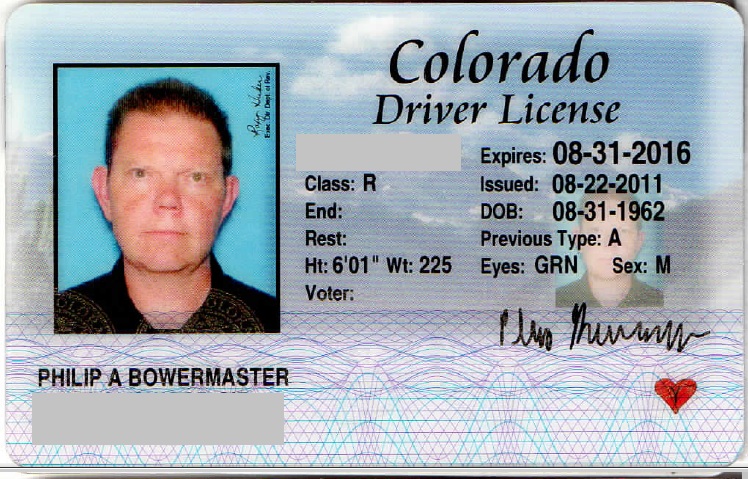
So here’s my old driver’s license, just expired.

And here’s my brand new one.

No huge lifestyle changes over the past decade. I cut way down on carbs and I bought a bicycle and started riding it. Seems to have helped. More importantly, I feel I made good use of my 40′s. A lot of people let things start to slide between 40 and 50. I’m glad I went the other way.

Update: I am reminded that in the colder months I also work out with a sledgehammer. Didn’t mean to leave that out! Plus I got a pull-up bar a couple of months ago.