Monthly Archives: April 2008

Bring on the Meat Factories

Japanesesteakhouse.jpgOn August 31, 2007 my wife took me out for dinner at a Japanese steakhouse where I ate my last beefsteak — for a year, if not for the rest of my life. This occurred on the heels of a reasonably obnoxious George Dvorsky essay on why we should have all already given up eating meat and why meat-eaters are (George’s words) “bad people.” Dvorsky’s essay led to an interesting discussion about the merits of the case vs. his in-your-face rhetorical approach. I tend to think that there is a lot to be said for the former, and not much to be said for the latter.

On the subject of the former, I wrote:

I’ve written more than once on my belief that the world will one day be a meatless — although not necessarily vegetarian — place. I agree that it’s wrong to cause animals undue pain. I agree that our current industrialized livestock management practices are abhorrent. And, from a purely practical standpoint, I think we’ll have a much stronger moral footing with our AI descendants if they see us treating weaker / arguably inferior life forms with as much kindness as possible. In short, I think I’m just about ready to be persuaded that I should give up eating dead animals altogether.

On the subject of the latter, I wrote:

Here we have a world-class futurist taking an “I’m good; you’re bad: be like ME” approach that even the most backward fundamentalists dropped decades ago. You see a lot of this kind of thing among “progressive” thinkers when dealing with the great unwashed who haven’t yet achieved their level of enlightenment. (An example — for whatever reason, atheists seem particularly prone to these excesses when arguing against belief in God. This could be a reverse application of the old adage that “converts are the worst.” Which would also apply to George, I suppose, what with his five-year tenure as a morally superior being.)

But then Dvorsky fired back with what I think was a fairly sound defense of his approach:

Let’s imagine for a moment that I had written an article titled ‘Racists are bad people,’ or ‘Homophobes are bad people.’ Do you think I would have received the same kind of negative response? Hardly. Aside from a few anachronistic and unenlightened perspectives I’d get a slew of comments saying, ‘right on, brother.’

But the fact that I didn’t get these sorts of supportive comments, aside from a small minority, indicates to me that our transition to a mostly meat-free society is a process still in its infancy.


It's Yuri's Night!

Today marks the 47th anniversary of Yuri Gagarin’s historic first manned flight into space, as well as the 27th anniversary of the first space shuttle launch. The folks at yurisnight.net believe that this is cause for celebration:

Yuri’s Night is like the St Patricks Day or Cinco de Mayo for space. It is one day when all the world can come together and celebrate the power and beauty of space and what it means for each of us.

We couldn’t agree more. Tonight let’s party like it’s 1961:

Of course, back in 1961, Americans didn’t think of Gagarin’s flight as something to celebrate. Rather, it was cause for alarm. The dreaded Russians had put the first artificial satellite in orbit with Sputnik, and then they put the first man in space with Gagarin. It was these threats — and, yes, they were absolutely perceived as threats — that led to the Apollo program and the first man on the moon.

It’s kind of neat that today we can look back on Gagarin’s accomplishment not as a victory for the Russians or communism, but rather as a major step forward for humanity. Ditto for Armstrong’s accomplishment a few years later. (And in fact, Neil said words to that effect upon setting foot on the moon.) Gagarin and those who came before and after him belong not to one nation or philosophy or system of government, but to all of us.

So let’s party!

yurisnight.jpg

It’s Yuri’s Night!

Today marks the 47th anniversary of Yuri Gagarin’s historic first manned flight into space, as well as the 27th anniversary of the first space shuttle launch. The folks at yurisnight.net believe that this is cause for celebration:

Yuri’s Night is like the St Patricks Day or Cinco de Mayo for space. It is one day when all the world can come together and celebrate the power and beauty of space and what it means for each of us.

We couldn’t agree more. Tonight let’s party like it’s 1961:

Of course, back in 1961, Americans didn’t think of Gagarin’s flight as something to celebrate. Rather, it was cause for alarm. The dreaded Russians had put the first artificial satellite in orbit with Sputnik, and then they put the first man in space with Gagarin. It was these threats — and, yes, they were absolutely perceived as threats — that led to the Apollo program and the first man on the moon.

It’s kind of neat that today we can look back on Gagarin’s accomplishment not as a victory for the Russians or communism, but rather as a major step forward for humanity. Ditto for Armstrong’s accomplishment a few years later. (And in fact, Neil said words to that effect upon setting foot on the moon.) Gagarin and those who came before and after him belong not to one nation or philosophy or system of government, but to all of us.

So let’s party!

yurisnight.jpg

Looking for the Smart Aliens

An intriguing post on The Daily Galaxy:

The 1.5 Gigayear Technology Gap

Some of the world’s smartest astronomers estimate that some of the more advanced technological civilizations in our Milky Way galaxy may be 1.5 gigayears older that Earth (that’s 1.5 billion years older). In other words, the search for extraterrestrial life is not going to end with us meeting the Hollywood kind of alien. ET or the Asgard (from Stargate) are not going to be who we first meet. Instead, we’ll be greeted by highly evolved robots.

Yes, in other words, Battlestar Galactica has got at least one thing right. The hit Sci Fi channel show’s bad guys are, unlike most other Sci Fi shows, highly evolved robots that have turned on their human creators.

But first, the real story.

“There are two kinds of encounters with aliens you can have,” said Seth Shostak, senior astronomer at the California-based SETI Institute. “Either you pick up a signal, or you pick them up on the corner. But I think it’s safe to say that in both instances they will be synthetic. They will be artificial constructions.”

starbuck.jpg

Twin Universes

Beyondtheuniverse.jpgYears ago I remember reading a book by Isaac Asimov (one of his many collections of essays) in which — if I recall correctly — he provided answers to questions that he had never addressed before, or that wouldn’t have been a good fit for any of his other books. One of these questions was, “What lies beyond the universe?”
Asimov’s glib initial response was “non-universe.” He then spent some time talking about what non-universe might be. Whatever it is, one would think that it would also be the correct answer to the question, “What came before the universe?”

But maybe not:

Before the Big Bang: A Twin Universe?
Until very recently, asking what happened at or before the Big Bang was considered by physicists to be a religious question. General relativity theory just doesn’t go there – at T=0, it spews out zeros, infinities, and errors – and so the question didn’t make sense from a scientific view.

But in the past few years, a new theory called Loop Quantum Gravity (LQG) has emerged. The theory suggests the possibility of a “quantum bounce,” where our universe stems from the collapse of a previous universe. Yet what that previous universe looked like was still beyond answering.

Now, physicists Alejandro Corichi from Universidad Nacional Autónoma de México and Parampreet Singh from the Perimeter Institute for Theoretical Physics in Ontario have developed a simplified LQG model that gives an intriguing answer: a pre-Big Bang universe might have looked a lot like ours. Their study will appear in an upcoming issue of Physical Review Letters.

“The significance of this concept is that it answers what happened to the universe before the Big Bang,” Singh told PhysOrg.com. “It has remained a mystery, for models that could resolve the Big Bang singularity, whether it is a quantum foam or a classical space-time on the other side. For instance, if it were a quantum foam, we could not speak about a space-time, a notion of time, etc. Our study shows that the universe on the other side is very classical as ours.”

So if a pre-Big Bang universe looked a lot like ours, does it follow that our universe looks a lot like a pre-Big Bang universe? Remember the old computer programming joke that goes…

__AM I IN A LOOP?

__AM I IN A LOOP?

__AM I IN A LOOP?

__AM I IN A LOOP?

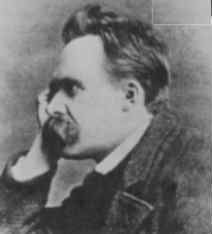
Neitzche.jpgThe idea that our universe sprang from one much like it puts me in mind of Friedrich Nietzsche’s idea of eternal recurrence. Corichi and Singh talk in terms of our universe being a lot like the one that came before it, but nothing I read above rules out the possibility that this universe is a dead ringer for its ancestor. If that were the case, if the current universe were an exact copy of the one that came before, it would only be reasonable to expect that the next one will also be exactly the same. Or as Nietzsche put it:

This life as you now live it and have lived it, you will have to live once more and innumerable times more; and there will be nothing new in it, but every pain and every joy and every thought and sigh and everything immeasurably small or great in your life must return to you-all in the same succession and sequence-even this spider and this moonlight between the trees, and even this moment and I myself. The eternal hourglass of existence is turned over and over, and you with it, a grain of dust.

How many times have you read this blog post? How many times have I typed it? Is it possible we have each done these things a dozen or a hundred or a billion times, and that we will continue doing so for all eternity?

Also — and this is the part that makes my head twinge just a bit — if it is exactly the same thing occurring over and over and over and over…exactly the same…does it really make sense to talk in terms of the number of times it happens? Is one instance of the universe somehow different from an infinite repeating series of the same universe? How? And to what observer?

UPDATE: Michael Darling directs us to this talk by Stephen Hawking, in which he asserts that the universe could have spontaneously created itself out of nothing. As far as satisfactory explanations go, this one has to be the bottom of the barrel. Which doesn’t mean it’s wrong, of course.

Diet and Exercise

If you’ve ever had a weight problem the title of this post might be the full extent of the advise you got from your doctor:

“Mr. Gordon, you’re overweight. For the sake of your health, you should drop some pounds.”

“Agreed. Any suggestions on how to do that?”

“Sure. Watch what you eat and get more exercise.”

I’ve had nearly that exact conversation three times with three different doctors in the last 15 years. They say, “diet and exercise” and smile as if they’ve revealed some great secret.

To be fair to doctors in general I should mention that Phil has had a different medical experience. Last year he lost weight under a doctor’s supervision. He chronicled that experience here at The Speculist.

And to be fair to my doctors specifically, “diet and exercise” isn’t bad advise. Certainly, getting bad advise is a possibility. Doctors could prescribe amphetamines or (in the recent past) the heart-damaging drug Fen-Phen. They could also recommend surgery that for most is not a good idea.

Of course most adults know that diet and exercise is the best way to lose weight. And yet we’re fat. If “diet and exercise” was all the information we needed, there wouldn’t be an obesity epidemic in this country. The problem is that not every diet and exercise program is equal. So, what works best?

What follows is my best answer.

The Tower Lions

toweroflondon.jpg

At some point between the reign of Edward I (1272-1307) and and that of Richard II (1377-1399), two lions lived in the Tower of London. They were part of a Royal Menagerie that was kept at the Tower for some 600 years, until the animals were moved to the London Zoo in the 19th century. There are a couple of reasons that these medieval lions are particularly interesting. First, they were part of a population of Barbary lions — a north African lion subspecies known for their long, dark manes which has been extinct in the wild since the 20th century. And second, their skulls were recovered during an excavation at the tower’s moat in the 1930′s.

lionskulls.jpg

These skulls have recently been subject to carbon dating, which identified them as coming from the era mentioned above, as well as genetic testing, which may prove to be of great benefit to some lions in the future.

FastForward Radio

Sunday night Phil Bowermaster, Stephen Gordon, and Michael Darling talked about the far future.

science_fiction_7 small.JPG

What is the destiny of humanity?

Click “Continue Reading” for listening options and the show notes:

Transforming Consciousness

Neuroanatomist Jill Bolte Taylor has identified what she calls “the deep inner peace circuitry” of the human brain. She believes that we can tap into that circuitry to transform not only our own conscious state, but the state of the world around us.

I would certainly have to agree with Taylor that our brains can transform the world. Our most recent Better All the Time feature focused on various good news developments having to do with the human brain. The news was all over the map — hope for treating brain cancer, an improved understanding of what a single neuron is capable of doing, thoughts on the proper care and feeding of our brains. All of this is great stuff, to be sure, but I wonder if by looking at individual news items we aren’t missing out on a hugely significant big picture?

The human brain is what brought us down from the trees and into art galleries. It is the reason we can build bridges, compose sonnets, cure diseases. It’s one thing to get all excited about incremental developments in biofuels or LED-based light bulb solutions — and I don’t mean that disparagingly, we should get excited about those things — but any improvement in how we use, care for, or even just understand our brains is good news with a multiplying effect. The human imperative is improvement of the human condition, and the human brain is, well, the brains of that operation. When we make better use of our brains, or care for them better, or understand them better, we are improving our Improvement Machine.

brainstairway.jpg

Zero-Emission Aviation

Hydrogen has a long (if somewhat spotted) history of making things go up. For starters, hydrogen gas is lighter than air. In fact, it’s even lighter than helium, which is why — along with a US embargo preventing the German government from getting their hands on sufficient quantities of the inert gas that today we use to lift children’s party balloons and to make our voices squeaky — the ill-fated airship Hindenburg was put aloft by hydrogen gas. Sadly, hydrogen’s extra boost of lift power came with a high level of volatility and flammability, and I think we all know the rest of that story…

But there are other ways that hydrogen can make things fly. For example, Boeing has recently announced that, earlier this year, the aircraft manufacturer demonstrated the first-ever manned flight of an airplane powered entirely by a hydrogen battery. NASA tells us that aircraft account for “up to 4 percent of the annual global CO2 emissions from fossil fuels near the Earth’s surface as well as at higher altitudes (25,000 to 50,000 feet),” so there is definitely something to be said for airplanes with a carbon footprint of zero. The question is, how close does this initial 20-minute demo flight get us to a future of zero-emission aviation?

Not very, according to Boeing:

The director of the Ocana research centre, Francisco Escarti, said the hydrogen battery “could be the main source of energy for a small plane” but would likely not become the “primary soruce of energy for big passenger planes”.

“The company will continue to explore their potential as well as that of all durable sources of energy that boost environmental performance,” he said.

boeinghydroplane.jpg

But Boeing is not the only game in town where hydrogen-powered flight is concerned. As we reported a couple of months ago, the European Space Agency is looking at an idea called LAPCAT (Long-Term Advanced Propulsion Concepts and Technologie) which promises not only to deliver large-scale, hydrogen-powered commercial aviation, but to return us to the era of supersonic commercial aviation. UK-based Reaction Engines, who have proposed LAPCAT and are currently working with the ESA to study its feasibility, claim that their jet will deliver cruising speeds up to Mach 5, making it possible to fly from Sydney to Brussels in about four hours.

Consider the possibilities: a jet that can fly faster than the Concorde — with a much greater range than Concorde’s, too — which will have none of the Concorde’s negative impact on the atmosphere. Moreover, Reaction Engines claims that the greater range means that LAPCAT will be able to fly routes that can minimize or avoid “supersonic overflight of populated areas.” So we can once again travel faster than sound, this time with less worry about potential resulting noise pollution.

Of course, there’s a hitch to hydrogen-powered aircraft. In fact, it’s the same hitch that you get with hydrogen-powered anything. Hydrogen is a means of transporting energy; it is not itself an energy source — at least not when burned like a conventional fuel. So if we want truly zero-emission aircraft, we need to make sure that whatever is serving up LAPCAT with hydrogen fuel, or charging the batteries of Boeing’s more modest offering, is itself a green and emission-free energy source. Solar, wind, and hydroelectric would all be good ways to produce energy for zero-emission aviation. But if we were to look to look to a future in which all aviation becomes zero-emission, we will need something more scalable and reliable than any of those.

For the near- to mid-term, that probably means nuclear energy. For the longer term, fusion energy will eventually supply us with cheap and abundant power without the risks or drawbacks associated with nuclear fission reactors. (Although it’s important to note that those risks and drawbacks have been considerably reduced in the more recent versions of nuclear fission reactors, which has significantly broadened the appeal of these low-emission power plants.) Mimicking the process by which the sun itself is powered, fusion is perhaps the ultimate natural energy source. And it’s fueled by hydrogen — meaning that a future of zero-emission aviation may be hydrogen-powered in more ways than one.