It’s got some of the same vibe, sans the wonky conspiracy theories, of course. But what makes it truly compelling is that it’s real:
Ancient scroll may yield religious secrets
ATHENS, Greece – A collection of charred scraps kept in a Greek museum’s storerooms are all that remains of what archaeologists say is Europe’s oldest surviving book — which may hold a key to understanding early monotheistic beliefs.
More than four decades after the Derveni papyrus was found in a 2,400-year-old nobleman’s grave in northern Greece, researchers said Thursday they are close to uncovering new text — through high-tech digital analysis — from the blackened fragments left after the manuscript was burnt on its owner’s funeral pyre.
The book may have been transcribed during the reign of Philip of Macedon, who is remembered primarily for being the father of Alexander the Great. It was probably written a century or so earlier than that. One Scholar asserts that the book was most likely authored by a philosopher connected to Anaxagoras.
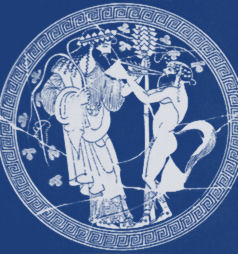 The difficult task of reading the text is ongoing. Apparently it deals with the beliefs of the mystery cult of Orpheus, which is asserted to be an early step in the direction of monotheism (early for the Greeks, anyhow) and a precursor to Christianity. Based on the limited information available (and my very limited knowledge of these matters) it looks more like a precursor to some of the gnostic cults.
Anyhow, discoveries like this are always exciting. Even if nothing world-shaking is found in the text, it can give us a clearer picture of that time — what people were interested in, what some of them believed. I was intrigued to read that Anaxagoras was accused of atheism, although he was described by David Hume as being “the first undoubted theist” among all the philosphers.
People were arguing aout these things 2500 years ago, and 500 years ago, and they’re still arguing about them today. Comforting or depressing? You decide.
