Monthly Archives: June 2005

Batman Begins

I went to a midnight showing of Batman Begins last night. Simply put, it was one of the finest action adventures movies I’ve ever seen. Don’t miss it.

It’s presently pulling 83% positive reviews on the Tomato meter. The 17% that didn’t like it apparently didn’t go see the movie I saw.

Maybe they rented Clooney’s “Batman and Robin.”

Blue Brain

One of the favorite tropes of both science fiction and extropian speculations about the future is the idea of uploading human consciousness into a computer. Uploading will require two things:

1. An appropriate storage medium for holding not only the data that a brain contains, but the metadata that defines relationships between the data, as well as the “application logic” that knows what to do with this data and the “operating system” on which the whole thing runs.

2. Sufficiently robust processing power to emulate the hardware functions of the brain.

Of the two requirements, the second seems the more daunting. Surely we have enough storage that we could back a brain up (should we figure out a way of doing that.) But reading a brain and playing it back…? That’s going to take some doing.

Of course, these requirements overlay the “computer” paradigm onto brain function, which defines relationships between hardware, software, operating system, and database that are very different from what you would find somewhere behind the screen you’re now looking at. But ultimately, that’s what we have to do, unless we’re prepared to create a machine that operates less like a computer and more like a brain…

…which leads to this highly interesting development:

Yorktown Heights, NY and Lausanne, Switzerland, June 6, 2005 – IBM and The Ecole Polytechnique Fédérale de Lausanne (EPFL) are today announcing a major joint research initiative – nicknamed the Blue Brain Project – to take brain research to a new level.

Over the next two years scientists from both organizations will work together using the huge computational capacity of IBM’s eServer Blue Gene supercomputer to create a detailed model of the circuitry in the neocortex – the largest and most complex part of the human brain. By expanding the project to model other areas of the brain, scientists hope to eventually build an accurate, computer-based model of the entire brain.

By the way, for those of you unfamiliar with the term, the neocortex is that special core brain part that only mammals have. That’s how you can tell a mammal brain from a reptile brain. Look for the neocortex. From this site, I learned that the neocortical column (NCC) is a handy building block for higher brain function, and that a human brain is really nothing more than a robust collection of specilaized NCCs working together in harmony.

So in other words, once IBM gets a single NCC emulation running, they are well on their way to emulating an entire neocortex and, eventually, an entire brain. The question, then, is this: will a computer emulation of a brain produce a computer emulated mind? (For an interesting discussion on that point, go here, via Kurzweil AI.)

Nano-nudity

Protestors picketed the Chicago Eddie Bauer store in early May for selling stain resistant nanopants. As is the norm these days, the protest involved nudity.

EDDIE-BAUER-HAZARD_f.jpgI’m not sure how effective these nude protests are when the protestor is attractive. Is this woman really going to scare customers away from Eddie Bauer? “You mean I can pick up a pair of stain resistant pants AND see a free show? I’m sooo there dude!”

Perhaps if some of us middle-aged male bloggers participated – now THAT would clear the street.

These protestors complain that the long-term effects of this simple form of nanotech is unknown. This is true. It is impossible to know with absolute 100% certainty that any technology will always be 100% safe 100% of the time. The manufacturer responded that:

Nano-Tex’s products are independently tested for safety and meet all environmental, health and safety standards mandated by the U.S. Environmental Protection Agency, the Occupational Safety and Health Administration and the Consumer Product Safety Commission.

I’m sure this is true too. Of course this won’t satisfy the protestors at all. This is “nanotech,” and nanotech is scary.

What the manufacturer can’t readily admit is that these nanopants are “fake” nanotech – nanotech as a marketing gimmick. Some of these “nanotech” products are only “nano” in the sense that any chemistry is nano. I ate a drumstick at lunch chock fulla nano goodness! Everything in the universe is made of nanoscale atoms and molecules.

We have new materials tech and product chemistry introduced all the time. There is a small level of risk associated with all of this new technology, but there aren’t protests because these products aren’t labeled “nano.”

Protesting a marketing gimmick is just silly. Not that I’m complaining.

UPDATE: Howard Lovy took this protest a little more seriously.

In any revolution, it’s almost always the intellectuals who are first to be carted away.

This may seem a bit overwrought, but he has a point. These protestors are wacky and entertaining, but so were the GM food protestors at first. Those guys set back the GM food industry decades – starving the developing world in the process.

It’s crucial for scientists to talk about the real risks and the real benefits of all new technologies. If people who understand these things are silent, then only those who don’t understand will be heard.

Carnival of Tomorrow 4.0

futurscape.jpg

We’ll kick off another foray into the Fabulous World of Tomorrow with these words from Howard Lovy:

This is the assumption I wake up with every day — that there is a crucial need for as many people as possible to understand that we all, in our lifetimes, will experience vast technological changes that will forever alter the way we interact with our environment, with one another and with our own bodies. It will not be too long before we rub our eyes, look around and wonder what happened to the world in which we were born.

So here, then, is a sneak preview of some of what we’ll be rubbing our eyes at.


Paul Hsieh of GeekPress tells us that, in the future, we can all be like the greatest of the superheroes. No, not Superman.

Aquaman!


FuturePundit Randall Parker reports on using gene activation to make adult stem cells divide rapidly. Quoth Randall:

I have repeatedly argued that it is just a matter of time before scientists find ways to turn adult stem cells into cells that can become any other cell type. This latest research from MIT is certainly a step in that direction. Note that these scientists used existing knowledge that the gene Oct4 is known to be active in embryonic stem cells. They turned that same gene on in adult stem cells. So this research is a clear step in the direction of making adult stem cells more like embryonic stem cells.

InstaPundit, meanwhile, did an entry on this subject that grew so large it practically became the first edition of the Carnival of the Stem Cells. Bottom line: non-embryonic embryonic stem cells are a great idea, but they won’t be the end of the controversy.


Seeing as Glenn’s site is so often overlooked, we’ll go ahead and mention that he also had some interesting observations about The Singularity. Glenn doesn’t think we need necessarily fear the Singularity. as he explains it:

The bigger danger won’t be the creation of a godlike artificial intelligence. It will be the creation of many millions (and eventually billions) of individuals with powers that would have been until recently regarded as godlike, in the rather small space that humanity currently inhabits. That problem will be reduced, however, if we expand beyond the earth beforehand.

TallDave at SemiRandom Ramblings has some additional thoughts on how likely the Singularity scenario really is. Meanwhile, John Kaye at Centerfield is handicapping the race for superintelligence. Who will get there first — humans or machines?

If you’d like a primer on the subject of the Singularity, have a listen to what these two guys have to say about it.


Rand Simberg reflects on the delayed apocalypse (as well as the inadvisability of having a name unsuitable to one’s gender.)


At Multiple Mentality, Josh wonders why we don’t have just one password for everything at work. Good question!


Jay at Longevity First asks whether money spent on the new anti-aging supplement, Protandim, is really well spent. He has some thoughts on alternative destinations for our hard-earned anti-aging dollars.


Mike Treder has the scoop on a movie that we won’t be seeing any time soon, and why that’s okay.


At Political Calculations, Ironman argues that most of today’s cities have the wrong shape to support viable public transportation systems. In the future, we can expect cities to be much more streamlined.


dcxbionic1_1.jpg

Lucas at Green Car Congress expounds of DaimlerChrysler’s “Bionic” Diesel Concept vehicle. Yeah, it looks a little strange, but it gets 70 mpg.

dcxbionic0.jpgIt’s called “bionic” because the design was inspired by nature, specifically the box fish. Obviously the marketing department wasn’t in on the choice of animals. What’s the matter guys, had the mole already signed a deal with Ford?

mole_200.jpg


Virginia Postrel is looking for breakthroughs that have occured this year or last. We think a truly efficient harvesting of solar power qualifies.

Virginia says she’ll explain later why she’s asking for these submissions. New book? A carnival? We’ll see…

You know.

In the future.


Thanks to Sven Geier for creating the hauntingly futuristic image that graces this edition of the Carnival.

Want to participate in the next edition of the Carnival of Tomorrow? Just write to us:

mrstg87 {@ symbol} yahoo {dot} com or
bowermaster {@ symbol} gmail {dot} com

See you in the future!

CNN Talks to Dr. Bowyer

I somehow missed pointing to last week’s CNN article about Adrian Bowyer and his RepRap project.

In this interview Dr. Bowyer compared the RepRap to agriculture. This is a good reminder that self-replication isn’t magic. It’s not something for nothing. Energy, raw materials, and information are essential to the process – just like agriculture.

Also, his goal is a little more modest than a perfectly self-replicating machine.

Bowyer said the target of the project was to create a range of devices that could be assembled for around $500 using additional components commonly and cheaply available in hardware stores.

Which is practically free for a machine that can make almost any kind of electronic gadget. $500 certainly beats the current price of a prototyping machine – $45,000.

Then Dr. Bowyer made his case to environmentalists.

If the machine can copy itself, it can make its own recycler. When you break something you can just feed it into the recycler and break it down to its raw materials and re-build it.

The key ecological point is that it cuts down on the transportation necessary both to manufacture products and to dispose of them. Every household would have its own recycling set-up.

I hate to brag but (Well, that’s not true at all. I love to brag! I must have been thinking of somebody else.) back in March I speculated that:

[Too much stuff] would probably be a problem at first. We have these fab labs that can make us anything we want…and so we begin filling our house with this stuff.

Pretty soon we’d realize that more than the stuff, we need space to walk. At that point – particularly if fab labs had become reasonably fast in operation – we might start living a “Just In Time” lifestyle.

If we need something we’d fabricate it, use it, and then toss it in the fab recycle bin where the basic materials could be used again to fab something else.

A smart fab lab could even keep an inventory of the bin. If you asked it to fab something already in the bin it could ask: “That item has been fabricated and is awaiting recycling, are you sure you’d like to refab?”

Just a Spoonful of Sugar…

Wouldn’t it be great if a strawberry malt was as healthy as a cup of steamed veggies? It could happen. Dr. David Weitz at Harvard University is developing a self-assembling nanoscale capsules called “colloidosomes” that could deliver nutrients, medicine, even tastes at a set time.

The capsules, called “colloidosomes,” are made of tiny particles just one-tenth the size of a human cell, that assemble themselves into a hollow, sturdy, elastic shell with holes. “We fabricate colloidosomes by taking small drops of water and immersing them in another fluid which has little particles in it. And the particles… stick to the surface of the water drop, and then we heat them up slightly to make a solid shell of particles around the water drop,” Weitz explains.

“By controlling the way we produce the little particles, we can adjust the little holes in the shell that allow small molecules to go in and out of this capsule.” By adjusting the size of the holes they would be able to control how long it would take for the drug or nutrient inside to escape, “so we could control the release of these nutrients,” he says.

Don’t miss the story with video at ScienCentral News.

Why Invent When You Can Discover?

A Peruvian scientist named Luis Gustavo Lira is building a database of world-wide Biomimetics research projects, past and present. Biomimetics is “the application of methods and systems found in nature to the study and design of engineering systems and modern technology.”

Apparently, nature has a lot to teach us:

Species
Application


Tokay gecko
adhesion

Lily leaf
superhydrophobic surfaces, support structures

Setcreasea
superhydrophobic surfaces, self-cleaning

Red Abalone
ceramic composite nanostructures

Pinctada
ceramic composite nanostructures

Cow bone
ceramic composite nanostructures

Cow Antler
ceramic composite nanostructures

Lotus
superhydrophobic surfaces, self-cleaning

Seed Shrimp
photonics

Sea Mouse
photonics

Morpho rhetenor
photonics

Morpho didius
photonics

Euplectella
photonics

Ophiocoma wendtii
photonics

Brazilian giant horsetail
support structures

Dutch rush
support structures

Dutchman pipe
support structures

Dung bettle
composite nanostructures, non-smooth surfaces

Pangolin squama
composite nanostructures, non-smooth surfaces

Vanessa indica
superhydrophobic surfaces, self-cleaning

Colias erate
superhydrophobic surfaces, self-cleaning

sea slug
perform colonoscopies

Cicada
aerofoils, sensor systems

Arion subfuscus
adhesion

Helix aspersa
adhesion

Hornbeam leaves
deployable structures, folding

Beech leaves
deployable structures, folding

Angler fish
deployables structures

Hummingbird hawk moth
deployables structures

Desmodium gyrans
hydraulic mechanism

Trifolium pratense
hydraulic mechanism

leontodon flower
hydraulic mechanism

mimosa pudica
hydraulic mechanism

venus fly trap
hydraulic mechanism

Arctium minus
adhesion, velcro

cockroach
walking robotics

Hedgehog spines
shock absorbers

Locust ovipositor
mini-excavator

Wasp ovipositors
mini-drills

Insect cuticle
fibrous nanocomposite


This is just a small sample.

Better Late

I just received an e-mail with an announcement so astounding that I had to share it with you all:

MARS SPECTACULAR!

The Red Planet is about to be spectacular! This month and next, Earth is catching up with Mars in an encounter that will culminate in the closest approach between the two planets in recorded history. The next time Mars may come this close is in 2287. Due to the way Jupiter’s gravity tugs on Mars and perturbs its orbit, astronomers can only be certain that Mars has not come this close to Earth in the Last 5,000 years, but it may be as long as 60,000years before it happens again.

The encounter will culminate on August 27th when Mars comes to within 34,649,589 miles of Earth and will be (next to the moon) the brightest object in the night sky. It will attain a magnitude of -2.9 and will appear 25.11 arc seconds wide. At a modest 75-power magnification

So far, it sounds pretty exciting. Not to mention eerily similar to something that happened in August two years ago. Talk about a coincidence. But there’s more:

Mars will look as large as the full moon to the naked eye. Mars will be easy to spot. At the beginning of August it will rise in the east at 10p.m. and reach its azimuth at about 3 a.m.

By the end of August when the two planets are closest, Mars will rise at nightfall and reach its highest point in the sky at 12:30a.m. That’s pretty convenient to see something that no human being has seen in recorded history. So, mark your calendar at the beginning of August to see Mars grow progressively brighter and brighter throughout the month.

Amazing! I can’t wait to see this!

Oh, wait. The e-mail includes a link. Apparently no one who has dutifully forwarded this e-mail over the PAST TWO YEARS has bothered to follow the link to Space.com where the linked article clearly states that all these wonderful things will happen in 2003.

Ah, yes. I remember it well. And for those of you who didn’t see it, Mars was not as big as the full moon.

It was three or four times as large.

The e-mail closes with these words of wisdom:

Share this with your children and grandchildren. NO ONE ALIVE TODAY WILL EVER SEE THIS AGAIN

So true. Would that we could say the same about this clueless e-mail. But I bet it continues to circulate for many years to come.

UPDATE:

What a stroke of luck. Stephen Gordon actually caught a picture of this event. Check it out.

It's A Small World

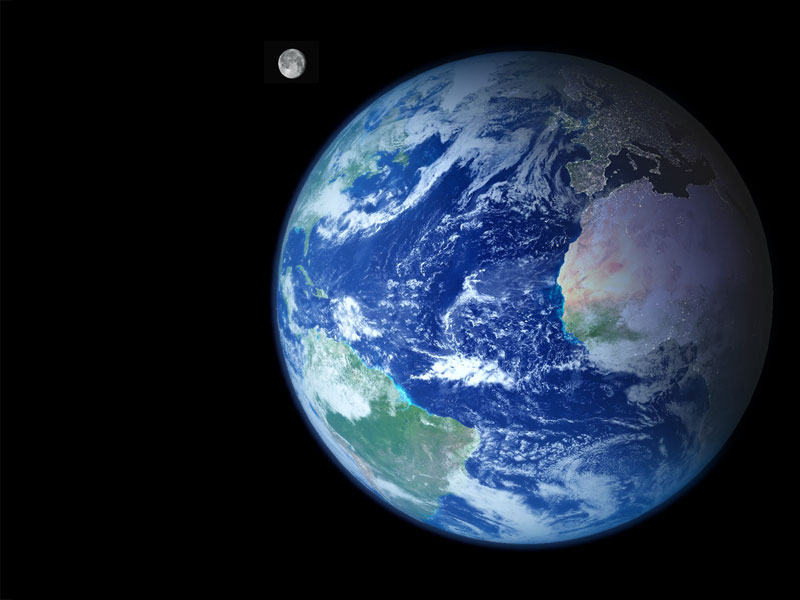
earth-atlantic-800.jpgIsolation is becoming a hard fiction to maintain. Whether you’re a Communist ruler in China or a Muslim cleric in Yemen, its hard to keep the peasants completely ignorant of developments in the rest of the world.

Islamic fundamentalists even take our culture as a personal insult. It doesn’t help to tell them America didn’t invent frozen dinners in order to blaspheme Islam. They don’t believe us, and when they do, the fact that its “not about Islam” just makes it more insulting.

Its not just totalitarian governments and religions that are having trouble setting the pace of the future. Corporations are having trouble too. Sony is getting bent out of shape over gray market importers of its Playstation Portable (PSP) in Europe.

The problem is that the PSP is available in Japan (probably since about 1992 – just kidding – but doesn’t it seem that way?) and the United States already. Sony decided to get geared up for the Japanese and American markets before offering their product in Europe.

playstation portable.jpgThe PSP is Sony’s innovation, so they have a right to handle distribution however they like. But consumers aren’t quite as helpless as they used to be. That kid in Brussels pinning away for a PSP might not wait.

Of course he could pick up a PSP while traveling in the United States. Sony would have little right to complain about that. He would have bought the product at a time and place that Sony already approved. Servicing and warranty work back in Europe would be problematic. Keep your receipt kid.

But most of these potential customers in Europe aren’t going to make a trip to the U.S. They might have to rely on those gray marketers I was talking about. Importers like ElectricBirdLand are doing their best to meet demand in Europe, at least until Sony sues them out of existence.

Even if Sony were able to stop ElectricBirdLand and all the other unsanctioned importers, how could Sony stop all the person-to-person sales (like on eBay). Here’s some systems for sale – 225 by my last count. At least some of these eBay sellers would have no problem shipping directly to a home in Europe. Many wouldn’t even know that Sony would disapprove.

mex-ens01.jpgBorders have always been fictions. If I travel south in Texas, I don’t go from one culture to an entirely different culture when I cross the Rio Grande. Its not like one side of the river speaks entirely English and the other entirely Spanish. Brownsville, Texas is, as you would expect, a very Hispanic town that is heavily influenced culturally by its proximity to Mexico. The culture changes gradually as you go south in Texas. Probably Mexicans would say that Matamoras (across the river from Brownsville) is a very American town.

The Internet has made everywhere a border town – on the border with every other place. Policy makers, whether they are trying to incrementally launch a video game system or prohibit embryonic stem cell research, need to keep this fact in mind.

If, for example, our government outlawed cloned stem cell treatments for U.S. citizens, how long would such a law be respected, particularly after lifesaving treatments were developed? I would be the first citizen on a plane to South Korea if I had a sick child that could be cured there.

Border towns are wild. But the cultural exchange tends to be worth all the hassles, for both sides of the border. Many people aren’t comfortable with their little provincial communities being hit with ideas from around the world. For better and worse, that’s the future.