In the Future…
…robots could need deodorant.
Futurist: M104 member Robert Hinkley.
Corey was there, in a vast city square that glowed with its own light.
White structures with domed towers surrounded the plaza on three sides. The fourth side sloped away to the shore of a small mountain lake. The air was sweet and clean. There was a fountain there, blasting water into the air in impossible geometric patterns. The fountain’s water, like that of the lake, was tinted pink. It was surrounded by a rose garden, the roses actually some other flower from some other place and time. The blooms were red and gold and green.
He had been here before, sometimes with some of the other children, sometimes alone. None of them were with him this time, but Corey was not alone.
She was there with him, as she had been a few times before. They were sitting together on a stone bench facing the fountain.
What are you called, [dear-young-one]?
She spoke directly to his mind. There were no words, only pieces of meaning. But Corey understood her perfectly.
“I’m Corey.â€

And M104 member Chris Hall sums it up on one word.
Bruce Sterling on the singularity:
The singularity’s biggest flaw isn’t that it’s hard to imagine, but that it flatters its human inventors. We may be on the verge of an astounding breakthrough! Or, with equal likelihood, we may be at the edge of a new dark age of plagues, mass hunger, and climate destabilization. More likely yet, we live in a dull, self-satisfied, squalid eddy in history, blundering around with no concept of progress and no sense of direction. We have no idea what we really want from our own lives or from society. And no Moore’s law rising majestically on any 2-D graph is ever going make us magnificent or spiritual when we lack the will, vision, and appetite for spiritual magnificence.
First, let me take issue. No matter how dull, squalid, and self-satisfied we may be as individuals — or even as a species, although I don’t think we are — there’s no way those adjectives can be applied to this era in history. There is simply too much going on. Even if we aren’t doing it, even if technology is just evolving more or less “on its own” (which is kind of hard to picture) this is still an amazing period of change.
It’s been suggested (slide 20) that the rate of technological change, not to mention the increase in the rate of technological change, has been fairly consistent irrepective of economic or political circumstances. If we face good times, we have spare resources to create new technologies. On the other hand, if the plagues, mass murder, and climate destabilization do show up, we’ll desperately need new technologies to deal with each of them
So I think Sterling is off base on the signficiance of the current and coming periods in history. However, his question about whether we’re ready to become supermen is an excellent one. After all, most of us are still trying to figure out what exactly it means to be human. How can we become superhumans or transhumans if we’re not even clear on how to be plain old humans? That doesn’t necessarily mean we aren’t ready for the next stage. I didn’t have a very good idea of what it meant to be a toddler while I was still a toddler, or even when I became a teenager. I’m not even sure I know now.
The next stage might very well hit us, ready or not, like puberty or menopause. Or maybe not. Maybe it will require, as Sterling said, a certain will, a certain vision, a certain appetite. And maybe we’re not there yet.
Meanwhile, our silicon-based progeny continue to develop, with or without our help. They haven’t reached the human level yet, but the expectation is that — once they do — they will grow well beyond the level of human intelligence very rapidly. Then the question will be whether they have the right stuff to grow into something else: not just smarter, better. There’s no gaurantee that we can build the right vision and will into them, but for some reason I have this idea that it might be easier to give it to them than it would be to build it into ourselves.
If that were to turn out to be the case, we might be facing a future which isn’t flattering to us at all. In this scenario, we stand by and watch while the computers become the transcendant beings that we believed it was our destiny to become.
Even if these meta-beings care for us and want the best for us, even if they want us to join them in the kind of existence that they have found, they might find that there is still an enormous gulf between the deepest desires of the human heart and the ability of the human will to make itself better. Our electronic descendants might decide to leave us alone in the hopes that we can eventually find our own way to where they are.
In his novel Till We Have Faces, C. S. Lewis retells the myth of Cupid and Psyche to illustrate the difference between the grasping, controlling need which passes for “love” in most human relationships, and the giving, sacrificial nature of spiritual love. One of the characters nurtures a long-term grudge against the gods which she is finally able to bring before them. It is only after she has made her case against them that she comes to a profound realization:
When the time comes to you at which you will be forced at last to utter the speech which has lain at the center of your soul for years, which you have, all that time, idiot-like, been saying over and over, you’ll not talk about joy of words. I saw well why the gods do not speak to us openly, nor let us answer. Till that word can be dug out of us, why should they hear the babble that we think we mean? How can they meet us face to face till we have faces?
When the Singularity comes, we may be left behind by transcendant beings who want nothing more than to have us with them, but who can’t or won’t force us to be like them. The silence they leave would be as deep and utterly frustrating as that encountered by any of us who have ever cried out to heaven for answers…and in return heard nothing but the beating of our own hearts.
Cold Fusion, written off for more than a decade as junk science, is struggling to work its way back to respectability:
Later this month, the U.S. Department of Energy will receive a report from a panel of experts on the prospects for cold fusion—the supposed generation of thermonuclear energy using tabletop apparatus. It’s an extraordinary reversal of fortune: more than a few heads turned earlier this year when James Decker, the deputy director of the DOE’s Office of Science, announced that he was initiating the review of cold fusion science. Back in November 1989, it had been the department’s own investigation that determined the evidence behind cold fusion was unconvincing. Clearly, something important has changed to grab the department’s attention now.
Behind the scenes, scientists in many countries, but particularly in the United States, Japan, and Italy, have been working quietly for more than a decade to understand the science behind cold fusion. (Today they call it low-energy nuclear reactions, or sometimes chemically assisted nuclear reactions.) For them, the department’s change of heart is simply a recognition of what they have said all along—whatever cold fusion may be, it needs explaining by the proper process of science.
It’s this sort of thing that makes predictions about future energy capacity and capabilities so difficult to predict. (For that matter, it’s this sort of thing that makes the future in general so difficult to predict.) Cold Fusion may yet be a long way off, but the fact that it could be back on the table only goes to show the risks involved in assessing the future based on present capabilities.
We’ve seen a lot of discussion in the blogosphere recently about the viability of changing to a “hydrogen economy.” The big problem with hydrogen is extracting it from water (or some other source, although water is probably the most likely.) A lot has been written about the impracticality of solar power, wind power, nuclear power, etc.
Personally, I’m quite partial to this model of using wind to extract hydrogen from water. It answers many of the objections which have been raised to wind.
But I haven’t seen much written about cold fusion, either as a direct energy source or as a means of enabling hydrogen as an energy source. A while back, Steven Den Beste had this to say on fusion:
Wake me when it actually works.
Well, we won’t nudge him just yet.
(Via Geekpress.)
In response to yesterday’s piece on virtual astronauts, Kathy writes:
The virtual astronaut story has this quote:”HAL was a vision of artificial intelligence…and I’m not a big fan of AI. Never have been,” [Peter] Plantec said. “What we really need is to fake conscious behavior so that we humans can have the emotional relationship with machines. You can’t do that with AI.”
Thank you! My enhanced human character, Asimov, in The Council, and my robot character, Colter, have both recoiled from the use of the term “AI.” I rejected the concept on an emotional and intuitive level. Peter Plantec helps me understand that there is an alternative to AI. I wouldn’t term it “fake” conscious behavior, however. Would the term “synthetic” be more appropriate? A synthesis isn’t merely artificial, it’s a recombination of essential elements to make something new. And if it’s real, it isn’t “fake.”
I think Plantec is making a distinction without a difference. Much current AI research is about getting computers to “fake” intelligent, interactive behavior. That’s the concept that lies behind AI chatbots like Alice and Jabberwacky (and my buddy Ramona).
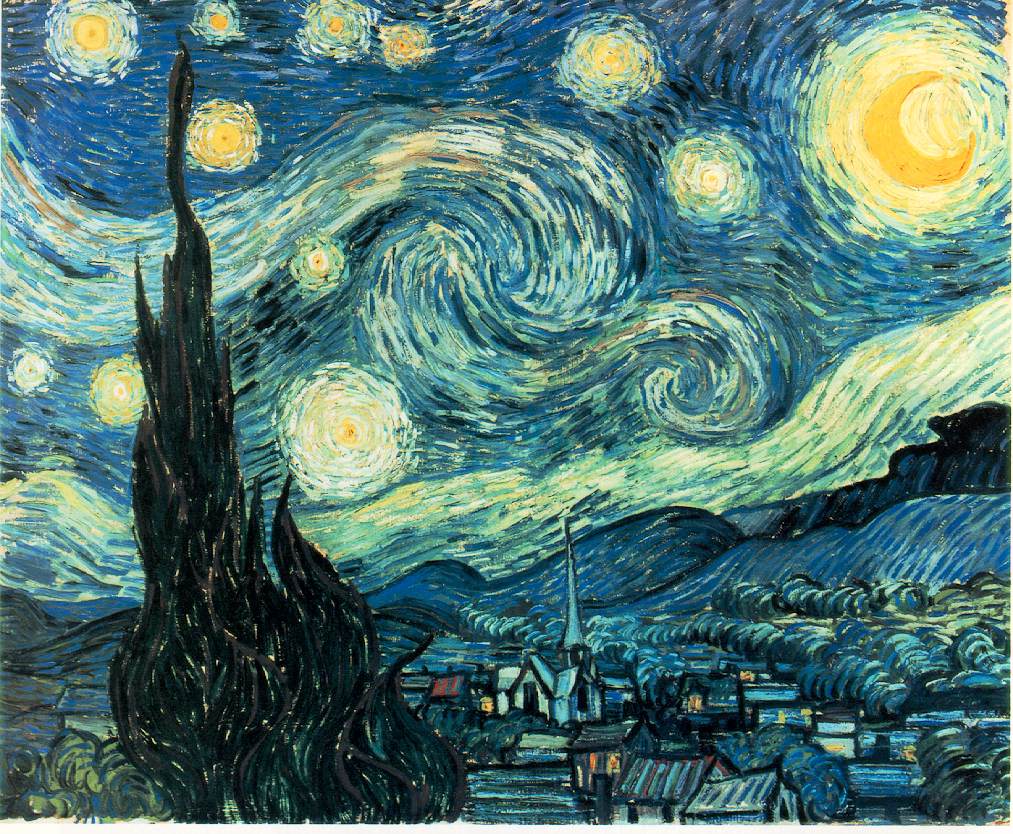
The word “artificial” has negative overtones because we think of things like artificial flowers and artificial flavors. But if you take it back to its roots, it means, “made by human artifice.” So Michelangelo’s David and Van Gogh’s Starry Night are both “artificial.”
The dream of AI is the ancient myth of Pygmalion — the artist who makes a statue that comes to life.
“Synthetic” intelligence would involve merging human and machine intelligence. To a certain extent, neural nets have already begun to accomplish this. Brain scans will move us further in this direction. The uploaded human intelligence I described as an ideal astronaut would be synthetic.
Ultimately, the distinctions between intelligence mapped out through human effort and intelligence occurring in or replicated from a human brain will probably not be that important. In the future, synthesized organic and mechanical intelligence will be the norm, making a term like AI obsolete. However, there will be a term for those who seek to keep their human intelligence “pure” — MOSH, Mostly Original Substrate Human.
How would Asimov and Colter feel about that one?
In response to yesterday’s piece on virtual astronauts, Kathy writes:
The virtual astronaut story has this quote:”HAL was a vision of artificial intelligence…and I’m not a big fan of AI. Never have been,” [Peter] Plantec said. “What we really need is to fake conscious behavior so that we humans can have the emotional relationship with machines. You can’t do that with AI.”
Thank you! My enhanced human character, Asimov, in The Council, and my robot character, Colter, have both recoiled from the use of the term “AI.” I rejected the concept on an emotional and intuitive level. Peter Plantec helps me understand that there is an alternative to AI. I wouldn’t term it “fake” conscious behavior, however. Would the term “synthetic” be more appropriate? A synthesis isn’t merely artificial, it’s a recombination of essential elements to make something new. And if it’s real, it isn’t “fake.”
I think Plantec is making a distinction without a difference. Much current AI research is about getting computers to “fake” intelligent, interactive behavior. That’s the concept that lies behind AI chatbots like Alice and Jabberwacky (and my buddy Ramona).
The word “artificial” has negative overtones because we think of things like artificial flowers and artificial flavors. But if you take it back to its roots, it means, “made by human artifice.” So Michelangelo’s David and Van Gogh’s Starry Night are both “artificial.”
The dream of AI is the ancient myth of Pygmalion — the artist who makes a statue that comes to life.
“Synthetic” intelligence would involve merging human and machine intelligence. To a certain extent, neural nets have already begun to accomplish this. Brain scans will move us further in this direction. The uploaded human intelligence I described as an ideal astronaut would be synthetic.
Ultimately, the distinctions between intelligence mapped out through human effort and intelligence occurring in or replicated from a human brain will probably not be that important. In the future, synthesized organic and mechanical intelligence will be the norm, making a term like AI obsolete. However, there will be a term for those who seek to keep their human intelligence “pure” — MOSH, Mostly Original Substrate Human.
How would Asimov and Colter feel about that one?
I love it that this story comes from right here in Colorado:
Better make room for an extra crewmember aboard any spaceship heading outward. This person won’t require food, oxygen or water, nor even need to buckle up for safety. The tag-along traveler could, however, be a lifesaver in terms of getting the expedition to and from a celestial destination.
Roll out the welcome mat for the virtual astronaut and enter the 3D space of Peter Plantec, a consultant in virtual human design and animation, as well as a leading expert on visual entertainment. He also initiated the “Sylvie” project — the first commercially available virtual human interface.
If you can make them smart enough, virtual humans have it all over the meat-based kind*. They don’t need elaborate life-support systems, they can survive any g-force you’d care to throw at them, and they can last thousands, tens of thousands, millions of years.
The folks in Telluride are working on building virtual humans from scratch, but that might not be necessary. Eventually, we should be able to make virtual humans by uploading human minds into computers.
I’ve just been reading a book called Eater by Gregory Benford in which an uploaded human personality is sent to engage “face-to-face” with an intelligent alien lifeform which resides in (or rather, is made up of) the magnetic fields surrounding a black hole. Virtual humans would be perfect for this kind of high-risk assignment. After all, it’s a lot easier to come up with ways to get a computer close to a black hole — or even someplace more mundane like the corona of the sun or deep into the atmosphere of Jupiter — than it would be a human.
However, what fun would Star Trek be if the crew were nothing but a bunch of computer programs? On the other hand, what if they didn’t know?
Morpheus: So now you must choose. Red pill, or blue?
Kirk: I’m not interested in any damn pills. I want to know how you got on this ship, mister!
* Mmmmmmmmm…meat-based.
Those who predicted SpaceShipOne would usher in a new space age for the private sector got it right.
Commercial space flight is big business already. Virgin Atlantic Airlines is creating a new firm, Virgin Galactic, to start providing suborbital space flights by 2007. Virgin Galactic will be using technology it has licensed from the SpaceShipOne project for $25 million dollars.
Like the zero G flights we reported a couple of weeks ago, there won’t be an economy class on these flights. Each of five passengers will pay about $207,000 for their ticket to ride. It was not reported whether this price includes the training that each of these astro-tourists will need.
Why should we normal folks care if the jet-set becomes the astro-set?
Branson said he planned to use the proceeds from the first well-heeled customers to bring prices down in the next few years to make space travel affordable to the regular tourist.“The orbital hotel will happen,” he said.
Virgin expects 3,000 customers in the first five years.