Author Archives: Phil Bowermaster

The Highlander Model

Instapundit quotes Robin Hanson making some good points about lifespan, but getting way too literal about what “immortality” means:

“But finite increases in lifespan really have little to do with immortality. Immortality means you never die, ever. But forever is a really really long time! In fact, nothing you can imagine is remotely as long. . . . A thousand year lifespan would be fantastic, relative to our lifespan. I want it! But it is nothing like immortality.”

By the most literal definition, immortality would be impossible to achieve or prove. Even somebody who lives 25 quintillion years isn’t immortal — they just haven’t died yet. The only way to ever establish that anyone is immortal is to go all the way to the end of time and confirm that that individual is still alive.
 
But what do I mean by “the end of time?”
 
I have no idea.

On the other hand — can’t we be a little more flexible with our definitions? A guy who lives to be a thousand is clearly not immortal. However, if he hasn’t died yet, he’s just as immortal as the guy who makes it to 25 quintillion, or the guy who makes it to the end of time.

We are all effectively “immortal” until things go amiss and we die. The trick is to get better and better at being immortal.

 I see Robin’s point about not wanting to be distracted by crazy increments like “25 quintillion” or “to the end of time,” but immortal is too good a word not to use. It has a lot of appeal. I’ve stated my view of the future of humanity many times — we’re going to be sexy immortal billionaires with superpowers.

Every term on the list is arguable, but if you put them all together you start to get a feel for where we’re going with this thing.

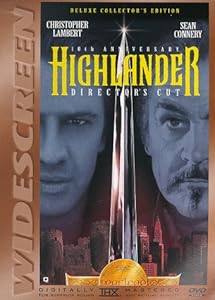
The “immortal” that we’re shooting for right now is not the God model (which is appropriately pursued, if at all, via religious belief) but rather a modified version of the Highlander model. Those “immortals” in Highlander lived for hundreds of years. They were called immortals, but their lifespan was only indefinite. However, if they could avoid coming to a catastrophic end, they were good for several centuries at least, and maybe longer.

That’s a good goal for us. And we can just skip the decapitations, thank you very much.

Always remember: in the end, there can be a whole lot of us. 

Enhanced by Zemanta

FastForward Radio — How Zombies Work (Plus Singularity Summit!)

Thumbnail image for KellyParks.jpgStraight from San Diego Comic Com, Kelly Parks joins us to discuss his hit web series, Universal Dead. The sci-fi horror series provides a fresh take on a well-established subject — the flesh-eating undead — and provides a unique explanation of why zombies are the way they are and why they do the things they do.

Could zombies really exist? Tune in and find out.

UD_LOGO2.jpg

michael.anissimov.jpgPLUS a sneak preview of the 2010 Singularity Summit. Our good friend Michael Anissimov joins us to tell why he’s so excited about this year’s event and why you (that’s right, YOU) need to be there.

ss10_brain_500px.jpg

FFRNewLogo9J.jpg


Listen to internet radio with The Speculist on Blog Talk Radio


Singularity Summit 2010

As promised on FastForward Radio, here is some background on the 2010 Singularity Summit. (Full details are available here.)

The Singularity Summit is the premier dialog on the Singularity.

The
first Singularity Summit was held at Stanford in 2006 to further
understanding and discussion about the Singularity concept and the
future of human technological progress. It was founded as a venue for
leading thinkers to explore the subject, whether scientist, enthusiast,
or skeptic.ss08_19.jpg

ss09_1.jpg

bostrom_overview.jpg

Since 2006, the scope of this dialog has expanded dramatically. In 2008, the Singularity entered mainstream consideration. IEEE Spectrum,
a sober and mainstream technology publication, issued a special report
on the Singularity, and Intel CTO Justin Rattner remarked that “we’re
making steady progress toward the Singularity” during his keynote to
2,000 people at the Intel Developer Forum.

What was once a relatively
unknown concept is now being discussed in corporate board rooms.

We
invite you to join our extraordinary group of visi

onaries in business,
science, technology, design, and the arts, as our community explores
this exciting topic. Your participation offers a world of powerful
ideas, a unique networking opportunity, and access to an exclusive
directory of your peers.

We hope you will join us August 14-15th. Register here.

hyatt_atrium.jpg

FastForward Radio — Moonday Plus One

Buzz Aldrin bootprint. It was part of an exper...

Image via Wikipedia

We choose to go to the
moon. We choose to go to the moon in this decade and do the other
things, not because they are easy, but because they are hard, because
that goal will serve to organize and measure the best of our energies
and skills, because that challenge is one that we are willing to
accept, one we are unwilling to postpone, and one which we intend to
win, and the others, too.

President John F. Kennedy, September 12, 1962, at Rice University, Houston, Texas

Phil and Stephen reflect on the 41st anniversary of Apollo 11 and talk about new frontiers for the human adventure.

Listen to internet radio with The Speculist on Blog Talk Radio


Enhanced by Zemanta

Body Shock Contest

This sounds pretty cool:

May
the best health idea win.

BodyShock
is a call for ideas to improve global health over the next 3-10 years
by transforming our bodies and lifestyles. NextNow members are invited
to enter today! Read the full press release (with video) here – http://www.iftf.org/node/3514

Are you:

  • a DIY scientist trying to extend healthy human life?
  • a developer who wants to invent a mobile diabetes app?
  • an elder caregiver with ideas to help people age in place?
  • a patient creating an emotional wellness tracker?
  • a citizen with a plan to reduce air pollution in your community?
  1. Send us your visual idea by September 1, 2010. The earlier
    you enter, the more time you have to gather votes for your idea. Enter here.
  2. Vote for your favorite idea. Do you think musical stairs
    will work, or are implantable sensors a better idea? Make your voice
    heard – cast your vote.
  3. We’ll help bring your ideas to life. Up to 5 winners will
    be celebrated at Institute For The Future in Palo Alto, California on October 8, to present their
    ideas and be connected to mentors and resources. One of these ideas
    will also win the $3,000 Roy Amara Prize.

Good luck, and may those who help the most win.

Would like to hear about any ideas that Speculist readers submit. Stephen and I will spend some time discussing our own ideas on tomorrow night’s FastForward radio.

Enhanced by Zemanta

Inception

Director Christopher Nolan participating in th...

Image via Wikipedia

The formula for a big summer action blockbuster could not be simpler:

  1. Start with an absurd premise.
  2. Use the absurd premise as a pretext for generating loads of over-the-top action sequences.
  3. Flesh out those action sequences with a bunch of over-the-top special effects.

With Inception, Christopher Nolan has followed the formula dutifully, and I think there can be no further discussion (as Stephen raised on Twitter the other day and again here on one of his Twitter round-ups) about whether this movie is going to be a flop. It isn’t.

It’s got all the right ingredients to pack the summer movie popcorn munchers into the seats. I just returned from a nearly full-house screening of Inception, and the mostly teenagers and twenty-somethings who made up the audience were highly appreciative, especially of the very end of the film, on which I’ll have some comments in a moment. 

So, yes, the film appears to have summer movie chops, but it offers a bit more than just that. For example, it provides a rather sly commentary on the movie business — Leonardo DiCaprio and his posse of dream-manipulators are really just a kind of specialized film crew. One of the challenges discussed early on in the film has to do with how the artificial dream world is established and made real to the dreamer. It may just be coincidence that this issue is raised during a sequence in which we go from Kyoto to Paris to Mombasa all in fairly short order, and each time with a visually stunning establishing shot (or set of shots) telling us where we are now. Sure, it might be coincidence, but I don’t think so.

Along the way, Inception asks some fearless questions about the power of ideas, where they come from, and, ultimately, the nature of reality. I don’t think that a spoiler alert is required before writing that one of the film’s principal conceits is the notion that dreams can be embedded within dreams. Watching characters deal with the various levels of reality, I couldn’t help but be reminded of the Simulation Hypothesis. The chief problem with establishing multiple layers of reality is a simple but profound one — how can you ever know for sure that  the world you are experiencing is the real world?

In taking on the question of where ideas come from, Nolan does something brilliant. He pulls off an Inception of his own. That is to say, he plants an idea in the audience’s mind so subtly that we believe that we came up with it ourselves. A theory is introduced in the film which is described as a grave error. Believing it leads to tragic consequences. And yet we as an audience are led to conclude that this theory may, in fact, be true.

The movie ends with an amazing confirmation, not that the theory is true or false, but that somebody has, indeed, been messing around in our heads for the last couple hours. That’s a pretty scary thought, but maybe one we should consider more often than we do.

Enhanced by Zemanta

Friday Video — Tiger Trouble

I’m still spending all of my blogging time on the MT 4.0 cut-over, but I had to share this one.
After my wife and Stephen, Saul Goodman has got to be the finest lawyer on the planet.

I know it’s a 4-month old TV promo. (Breaking Bad is good stuff, btw, for those who have never caught it.) Anyhow, if you liked it, there’s lots more here.