Author Archives: Phil Bowermaster

Let the Skeptics Speak

Kool-Aid Man

iPads, OH YEAH!
Image via Wikipedia


As recently as a year or so ago the introduction of the iPad kicked off (once again) an old, old debate about whether the tablet presents a viable computing platform. I believe even iPad Kool-Aid connoisseur Stephen Gordon may have made a snarky comment or two at the time. I haven’t followed the discussion much, but I would have guessed that the past year ought to have laid that issue to eternal rest; however, folks a little closer to the discussion say no.

Specifically, Eric Lai at Ubermobile has been getting some push-back on this issue. He writes:

There were many objections to my blog yesterday in support of market researcher Canalys’s move to reclassify tablets as full-fledged PCs. Some were very thoughtful, I can’t deny that.

But faster than we realize, I think these objections to the concept of tablets=PCs may feel as antiquated as Bill Gates’ “640K ought to be enough for anybody.” or “There is no reason for anyone to have a computer in his home.

With all that in mind, Eric has compiled a wonderful collection of quotes questioning the viability of this new, too small, non-serious version of the personal computer — the laptop!

Here’s my fav:

 ”While ‘regular’ desktop PC systems have always been and likely always will be the way that most people buy PCs, notebook PCs (also called laptops) have become very popular in recent years. At first they were almost exclusively the province of big business ‘high rollers’ due to their very high cost. Now the cost of some notebooks PCs has come down dramatically, and they have really entered the mainstream. Many people use a notebook as their only PC today, and for some they offer advantages that make them very worthwhile. However, notebooks also represent a trap that far too many people fall into.”

That one is especially funny because (Eric notes) the piece it is taken from was supposedly “updated” as recently as 2001! I got my first laptop in 1993 and have rarely been without one since.

Read the whole thing for a good laugh. 

Enhanced by Zemanta

FastForward Radio — Dude, You're Harshing My Mellow!

Phil and Stephen welcome futurists Michael Anissimov and PJ Manney to discuss the importance of bleak scenarios for the future, even in the face of criticism that one is being “too negative.” Maybe being an optimist isn’t enough — maybe the important thing is what KIND of optimist you are.

FFRNewLogo9J.jpg


Listen to internet radio with The Speculist on Blog Talk Radio

About our guests:

As a frequent guest and occasional co-host — not to mention our official Hollywood correspondent — PJ Manney brings a unique perspective to FastForward Radio. She is a writer and futurist, and a leading voice in the Humanity+ movement. She has written extensively on H+ topics, having previously been involved in motion picture development (Hook, It Could Happen to You, Universal Soldier) and writing for television (Hercules: the Legendary Journeys, Xena: Warrior Princess). pjlittle.jpg

Michael Anissimov is a science / technology writer and consultant. He is the creative force behind one of the leading futurist blogs, Accelerating Future. He is a co-founder of the Immortality Institute and the Media Director for the Singularity Institute for Artificial Intelligence.

Enhanced by Zemanta

FastForward Radio — Dude, You’re Harshing My Mellow!

Phil and Stephen welcome futurists Michael Anissimov and PJ Manney to discuss the importance of bleak scenarios for the future, even in the face of criticism that one is being “too negative.” Maybe being an optimist isn’t enough — maybe the important thing is what KIND of optimist you are.

FFRNewLogo9J.jpg


Listen to internet radio with The Speculist on Blog Talk Radio

About our guests:

As a frequent guest and occasional co-host — not to mention our official Hollywood correspondent — PJ Manney brings a unique perspective to FastForward Radio. She is a writer and futurist, and a leading voice in the Humanity+ movement. She has written extensively on H+ topics, having previously been involved in motion picture development (Hook, It Could Happen to You, Universal Soldier) and writing for television (Hercules: the Legendary Journeys, Xena: Warrior Princess). pjlittle.jpg

Michael Anissimov is a science / technology writer and consultant. He is the creative force behind one of the leading futurist blogs, Accelerating Future. He is a co-founder of the Immortality Institute and the Media Director for the Singularity Institute for Artificial Intelligence.

Enhanced by Zemanta

Bleak Outlook, but not Bleak Enough?

UFA-poster for Metropolis

Image via Wikipedia

College Crunch presents the top 10 Most Technophobic Movies, with some completey expected entries, some fairly obscure material, and a least a couple surprises.

Those of us more favorably inclined to technology often take issue with the technology-bashing that goes on in such films (while otherwise greatly enjoying many of them.) But at least one our friends in the singularity-aware community might actually criticize these movies from the other side: maybe they don’t present a bleak enough picture.

Yes, the singularity is the biggest threat to humanity, warns Michael Anissimov:*

Humans overestimate our robustness. Conditions have to be just right for us to keep living. If AGIs (artificial general intelligences) decided to remove the atmosphere or otherwise alter it to pursue their goals, we would be toast. If temperatures on the surface changed by more than a few dozen degrees up or down, we would be toast. If natural life had to compete with AI-crafted cybernetic organisms, it could destroy the biosphere on which we depend.

Greater than human intelligences might wipe us out in pursuit of their own goals as casually as we add chlorine to a swimming pool, and with as little regard as we have for the billions of resulting deaths. Both the Terminator scenario, wherein they hate us and fight a prolonged war with us, and the Matrix scenario, wherein they keep us around essentially as cattle, are a bit too optimistic. It’s highly unlikely that they would have any use for us or that we could resist such a force even for a brief period of time — just as we have no need for the bacteria in the swimming pool and they wouldn’t have much of a shot against our chlorine assault.

There is no reason to assume that these future intelligences will automatically be “nice” or that they will care about us just because they are intelligent. Greater than human intelligence might, on their own, develop the kinds of ethical standards we have, or standards that we would consider significantly higher than ours. Here’s hoping! But it’s just a hope. Left to their own devices, they are equally likely (if not more likely) to develop ethical standards that operate with no reference to us whatsoever (again, not unlike the way things stand between us and bacteria), that strike us as vastly immoral, or that are completely incomprehensible to us — and that we’ll never get a chance to try to understand.

That’s why, Michael argues, our very existence may well depend on getting it right the first time we produce a greater-than-human intelligence:

Why must we recoil against the notion of a risky superintelligence? Why can’t we see the risk, and confront it by trying to craft goal systems that carry common sense human morality over to AGIs? This is a difficult task, but the likely alternative is extinction. Powerful AGIs will have no automatic reason to be friendly to us! They will be much more likely to be friendly if we program them to care about us, and build them from the start with human-friendliness in mind.

This brings me back around to one of the surprising entries on the list of technophobic movies: Fritz Lang’s silent epic, Metropolis. If you have never seen this movie, or have not seen it in a while, I cannot recommend the newly restored version strongly enough. It is an amazing movie. Lang presents images that are astounding even to our jaded and CGI-addled eyes — using 1927 technology.

Because it deals with a murderous robot and an upper class exploiting a working class, Metropolis is often viewed as a warning about technology or capitalism run amok. However, I think such characterizations have more to do with making the film fit into neat categories than they do with articulating the philosophical message at the heart of the story. That message, which is repeated throughout the film, is that the heart must be the mediator between the mind and the hand. When the heart does not act as a mediator, suffering is the result. The exploitation of the masses, the murderous robot, the destruction and violence that occur in the wake of the workers’ uprising, even a slightly modified version of the Biblical story of the Tower of Babel are all presented as examples of this principle in action.

On the other hand, when the heart steps in and takes its rightful place between the mind and the hand, things begin to improve. What Michael is telling us about the singularity is that it, unlike fantastic goings-on in the movie Metropolis, will not offer a second chance to set things right.

The heart must be in place from the beginning — or we’re in a lot of trouble.


*Of course, Michael also recognizes the singularity as our greatest opportunity. He’s not anti-technology, just anti-wrongheaded assumptions about how technological progress “must” play out.

Enhanced by Zemanta

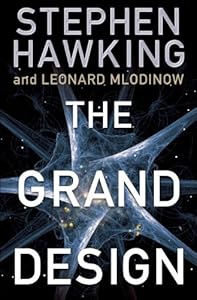
FastForward Radio — The Grand Design

Cover of

Cover of The Grand Design

Phil and Stephen  discuss Stephen Hawking’s book, The Grand Design. Does Hawking finally explain everything about everything? (High time someone did!) Does this book disprove the existence of God?
 
Plus, what is the Speculist view on whether or not our universe is the product of a “design?”
 
Tune in and find out!


FFRNewLogo9J.jpg


Listen to internet radio with The Speculist on Blog Talk Radio

Enhanced by Zemanta

Stunted Future

Dr Who

Image by aussiegall via Flickr

I’ve been watching Dr. Who a bit lately. My older daughter is quite a fan of the show and we’ve been catching an episode or two whenever she comes over. I have a lot of catching up to do as the current run has been around for five seasons now and I am barely into season 2 (or ”series 2″ if you prefer the British  way of describing these things.)

I watched a few episodes of an older incarnation of Dr. Who back in the early-mid 80′s and I remember thinking at the time that the storylines were as flat-out preposterous as the visual effects were enthusiastically cheesey.

Not much has changed in the intervening decades. Even with state-of-the-art CGI, the visual effects manage to come off looking silly, and the stories are as ridiculous as ever. Which is not to say that I don’t enjoy the show or that it is not great fun. I do and it is.

But I do have a big problem with Dr. Who –  its handling of time.

For those of you unfamiliar, the Doctor is a Time Lord, and with his trusty Tardis he can travel anywhere in space and anywhen in time. Over the years, he has taken advantage of that capability and witnessed the very beginning of the universe and the death of planet Earth some 5 billion years in the future.

You have to love a show with that sweeping of a scope.

But there’s the problem. It’s just not that sweeping. If you read through the timeline linked above, you’ll note that the Doctor has made relatively few stops between the years 5000 and 5 billion. Now, granted, that’s a lot of time to cover and it would be hard to do it justice.

What bothers me is that the future of 200,000 years from now and the future of 5 billion years from now look roughly equivalent. And I should point out that the future of 200,000 years from now looks like the kind of world I would expect to see in the next 200 years (even without the Singularity or something else really crazy happening.)

I realize that it’s not easy trying to imagine, much less describe, how radically different the world might be in the distant future, but it would be nice if they would try. I get the impression that the creators of the show don’t quite grasp how much change might occur in the next century, much less two thousand centuries from now — not to mention 50 million centuries from now.

Madonna and Austin Powers star Mike Myers in t...

Image via Wikipedia

50 million centuries, not years, centuries — that’s how long five billion years is. In one of the shows set in that unimaginably distant future, a human from our time meets an alien who works as a plumber and is delighted to learn that there are still plumbers. 

This occurs on an inhabited space station of the sort I predict we will have within the next two centuries. Will such space stations have plumbers? Well, somebody or something will perform that task. But I don’t think it will be a dedicated human staff member. Maybe a robot. 

Or maybe the intelligence to repair any possible problem will reside inside the plumbing itself.

Raymond Kurzweil, an American academicand author.

Image via Wikipedia

Dr. Who gives us a future in which machine intelligence has very little role to play. But that’s okay, it also gives us a present in which Earth is under frequent attack by aliens who want to take our stuff our rule over us or whatever.

Fun and entertaining, but in desperate need of an overhaul. It’s the 21st ccentury, and the Doctor still inhabits a world from the 60s — even its future is from the 60s. The Docotor is no doubt great friends with Austin Powers.

And, heck, who wouldn’t be? 

I’m just thinking he might benefit from meeting some new people.

Enhanced by Zemanta