Author Archives: Phil Bowermaster

Enterprise in 30 Years?

Very ambitious! An engineer says we could have a working starship Enterprise within the next 30 years.

One teeny-tiny drawback: this would not actually be a starship:

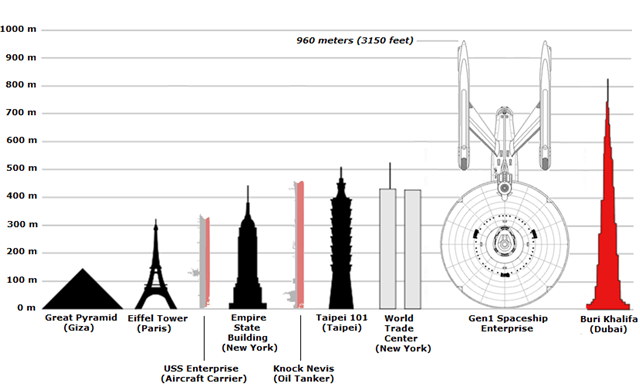
This “Gen1” Enterprise could get to Mars in ninety days, to the Moon in three, and “could hop from planet to planet dropping off robotic probes of all sorts en masse – rovers, special-built planes, and satellites.

For a ship longer than the Burj Khalifa is tall, those speeds sound a little on the pokey side, don’t they?

On the one hand I think it would very cool indeed if we had such large manned interplanetary craft operating in the next few decades. On the other hand, what is described is no starship enterprise. I don’t care if it’s a little smaller, but to be effective it’s going to need to be quite a bit faster.

The Quest for Immortality — FastForward Radio

 Phil and Stephen discuss the quest for immortality, which has been with humanity for a long time — perhaps since the very beginning, and which has done much to shape the world in which we live. New organizations are emerging with a whole new take on the proposition that life can be extended indefinitely.

How do we get from here to there? The phases might look something like this:

Life Extension

Durable Digital Replacements

Substrate Mobility

Immortality

So, will some of us live forever? And what does that even mean? Join us!

Listen to internet radio with The Speculist on Blog Talk Radio

For those who have asked: the image shown is a woman emerging from the mythical Fountain of Youth. Presumably she looked a lot older when she jumped in, but we don’t have that picture…

Drivers of Change — FastForward Radio

Our good friend futurist John Smart joins us for an overview and quick tour of 10 distinct areas of accelerating technological change, along with a discussion of the opportunities, disruptions, and threats they represent.

We’ll look at:

  • Nanoscience and Technologies
  • Resource Technologies
  • Engineering Technologies
  • Information Technologies
  • Social Technologies
  • Economic Technologies
  • Political Technologies
  • Security Technologies
  • Health Technologies
  • Cognitive Technologies

Listen to internet radio with The Speculist on Blog Talk Radio

John will be delivering a talk on “Forecasting the Future” at the DaVinci Institute’s next Futurist Mastermind Group meeting on Thursday, 4/19/2012.

About our guest:

John M. Smart is an evolutionary developmental systems theorist who studies science and technological culture with an emphasis on accelerating change, computational autonomy (human-independent machine learning) and technology foresight. He is professor and program champion for the M.S. program in Emerging Technology at the University of Advancing Technology (UAT.edu, Phoenix, AZ), and directs the Acceleration Studies Foundation (Mountain View, CA) a nonprofit technology and social foresight research organization. He is an affiliate of the ECCO research group at VUB, and a co-founder of the Evo Devo Universe research community, an international community of scholars exploring evolutionary and developmental processes of change at the universal and subsystem scales. His personal website (since 1999) on accelerating technological change is AccelerationWatch.com.

John has a B.S. in business administration from UC Berkeley, an M.S.-equivalency in physiology and medicine (two years of medical school and the USMLE-I) from U.C. San Diego School of Medicine, and an M.S. in futures studies from the University of Houston, and has done additional undergraduate work in biological, cognitive, computer, and physical sciences at U.C. San Diego, U.C.L.A., and U.C. Berkeley. He studied systems theory at UCSD under the mentorship of James Grier Miller (Living Systems, 1978), who mentored under process philosopher Alfred North Whitehead. Dr. Miller encouraged John to pursue multi-scale studies in evolution, development, and accelerating change starting from a systems perspective.

Join us.

Wednesday 4/18/2012 7 PM PDT, 10 PM EDT

Jumping Ahead — FastForward Radio

We picture our journey into the future as a smooth transition, but our real progress is a combination of leaps and bounds on the one hand and fits and starts on the other. On a special Tuesday edition of FastForward Radio, Phil and Stephen discuss why the road to tomorrow is such a bumpy one — and why that might be a good thing.


Join us.

Listen to internet radio with The Speculist on Blog Talk Radio


The Questions We Need to Ask

1. What are we ready to believe is possible?

2. What are ready to do in order to realize the possible?

3. Who or what are we willing to become?

4. When do we start?

It’s Time We Stopped Dancing Around this Thing

The headline over at InfoWars says it all:

78 percent increase in autism rates over past decade coincides with new vaccination schedules

Alex Jones elucidates:

And yet the mainstream medical system and its allies in the government and media are willfully ignoring this glaring fact, blaming “unknown” causes and “genetics” for causing autism, which are the two most common catch-all scapegoats. And in explaining the drastic rise in autism rates over the years, the talking heads actually claim that there is no rise — the seemingly elevated autism rates are merely the result of improved autism screening methods that are now identifying more cases.

Yes, blaming unknown causes for an unknown thing is downright irresponsible, especially when that unknown thing suspiciously coincides with some other thing. That’s why I think it’s time we face up to what’s really going on, here. Vaccinations are a pretty good explanation for autism, but I think there’s something else that makes even more sense. If we’re ready to face it, that is.

Look, I don’t like it any more than you do. Dora is cute, and Boots seems to all appearances to be a very decent monkey. But the facts are what they are: Dora the Explorer first aired in the year 2000. Diagnoses of autism have been skyrocketing ever since.

When are our puppet masters in the medical establishment going to come clean?

Teleportation in the News

Yesterday was an interesting anniversary. Wired News reports:

March 29, 1993: Teleportation Beams From Sci-Fi to Real Science

1993: Scientists show teleportation is possible, at least theoretically. The downsides: The original teleported object must be destroyed, and it can’t happen instantaneously.

The story goes on to flesh out some of the milestones that have occurred in the teleportation arena in the interrum, including teleporting photons a few meters and teleporting information up to 10 miles.

Gizmodo marked the anniversary by sharing this story with us:

Beam Me Up, Scotty: Scientists Transport a Hunk of Matter 18 Inches

Scientists in Copenhagen took one more step toward the Star Trek transporter, figuring out how to teleport groups of billions of atoms from one place to another using light, quantum mechanics, magnetism and a concept they call “entanglement.” Professor Eugene Polzik and his team managed to move an object about 18 inches, using an excruciatingly complicated process that amounts to some serious magic. Says the Prof:

“Creating entanglement is a very important step, but there are two more steps at least to perform teleportation. We have succeeded in making all three steps — that is entanglement, quantum measurement and quantum feedback.”

Somebody on Facebook said this story was actually six years old. Probably so, as the Reuters story linked in the Gizmodo article isn’t there any more. Still very cool.

Star Trek references aside, this method of teleportation sounds somewhat different from the Star Trek models of teleportation which breaks you down into bits and either beams 1) you or 2) your pattern to the other location where it is reconstituted either 1) from your original matter or 2) locally available materials. (For the record, 1) is the original series and 2) is Next Generation and beyond.) I’m not sure if I would ever want to do 1), but 2) is a big no way. The guy who lands on the other side isn’t me — he just thinks he is. I’m dead.

But THIS approach, from the sketchy details provided, might move the whole person intact, irrespective of what the Wired article says about the original having to be destroyed. As I understand it, if you recreate my quantum states, you recreate me. You don’t just have a copy in that case, you have the original. Would the subjective me-ness that is me come along for the ride? Theoretically, yes.

Still, come to think of it, I think I would have to pass. Not that it looks like anyone is going to be offering free teleportation rides any time soon.

I’m just sayin’.

The Shores of Possibility

We stand on the shoreline.  A vast sea of possibility spreads out endlessly before us. The waters are beautiful beyond description and powerful beyond imagination. The sea is in constant motion, ready to carry us to limitless fortune or sudden ruin. The sand is wet beneath our feet and the waves lap at our shoes. The future calls to us, beckons us, and we must answer.

Hosts Phil Bowermaster and Stephen Gordon discuss

Mars on the Cheap

Instant Genius

A Back Step Forward with Stem Cells

…and other items that have washed up on shore this week.

Join us!

Listen to internet radio with The Speculist on Blog Talk Radio


Source: Shoreline Image