Last week we talked about fallible vs. infallible futurism. We demonstrated how predictions can be phrased in such a way that they are never wrong.
That can be an important skill, what with the future being so difficult to predict. But it isn’t just the future — sometimes we can’t even predict the present.
To demonstrate, Phil has put together five groups of headlines taken from recent news stories about science and technology. All of these headlines have to do with some scientific or technological breakthrough. Each of the five groups contain three headlines, two of which are real and one of which is fake.
In each instance, Stephen will attempt to identify the fake.
Sound easy? Listen along and see how well you do!
Here’s the list of headlines. (Answers are here, but it’s more fun to listen along with the show.)
Newly Discovered “Monster Planet” Rewrites Rules for Gas Giants, Rocky Worlds
Soviet Moon Lander Discovered Water on The Moon in 1976
SpaceX capsule has ‘new car’ smell, astronauts say
—
Face-reading software to judge the mood of the masses
Modified Nintendo Wii System Provides Oil Rig Management Interface
Mind-controlled video games become reality
—
Avengers Inspires Real-Life “Iron Man”
New adhesive device could let humans walk on walls
Teenager finds solution to 350 year old math and physics problem
—
New stem cell technique promises abundance of key heart cells
Electronic implants restore, enhance sense of smell
Nanomedicines on their way through the body
—
3D blood vessels could aid artificial organs
Robotic jellyfish could one day patrol oceans, clean oil spills, and detect pollutants
Linux could soon replace Mac OS on select laptop models
Increasingly two models for the near future compete for our attention. We’ll call one model Abundance and the otherLimits to Growth. The former tells us that circumstances are improving and are likely to continue to improve; the latter says that a big reckoning is on its way.
A recent debate at TED between Paul Gilding and Peter Diamandis captures the issues pretty succinctly. So who’s right?
Hosts Phil Bowermaster and Stephen Gordon discuss.
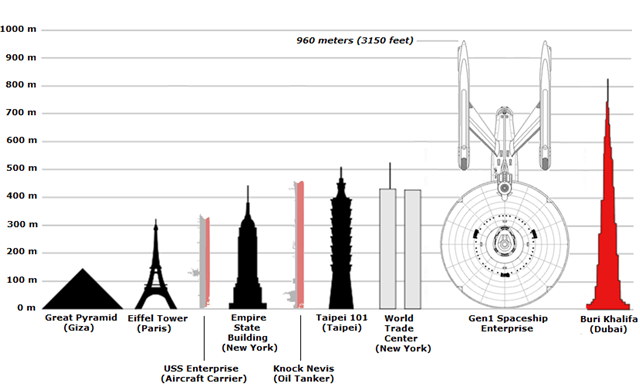
One teeny-tiny drawback: this would not actually be a starship:
This “Gen1” Enterprise could get to Mars in ninety days, to the Moon in three, and “could hop from planet to planet dropping off robotic probes of all sorts en masse – rovers, special-built planes, and satellites.
On the one hand I think it would very cool indeed if we had such large manned interplanetary craft operating in the next few decades. On the other hand, what is described is no starship enterprise. I don’t care if it’s a little smaller, but to be effective it’s going to need to be quite a bit faster.
Phil and Stephen discuss the quest for immortality, which has been with humanity for a long time — perhaps since the very beginning, and which has done much to shape the world in which we live. New organizations are emerging with a whole new take on the proposition that life can be extended indefinitely.
How do we get from here to there? The phases might look something like this:
Life Extension
Durable Digital Replacements
Substrate Mobility
Immortality
So, will some of us live forever? And what does that even mean? Join us!
For those who have asked: the image shown is a woman emerging from the mythical Fountain of Youth. Presumably she looked a lot older when she jumped in, but we don’t have that picture…


 Increasingly two models for the near future compete for our attention. We’ll call one model
  Very ambitious!
  Phil and Stephen discuss the quest for immortality, which has been with humanity for a long time — perhaps since the very beginning, and which has done much to shape the world in which we live. New organizations are emerging with a whole new take on the proposition that life can be extended indefinitely.