Planetary Resources has announced their plans to begin mining near-earth asteroids for the valuable resources that can be found there. Launches may begin in a couple of years. Is a new Gold Rush on its way, one that will open up space in the same way that previous rushes opened the western frontier?
Our good friend futurist John Smart joins us for an overview and quick tour of 10 distinct areas of accelerating technological change, along with a discussion of the opportunities, disruptions, and threats they represent.
John will be delivering a talk on “Forecasting the Future” at the DaVinci Institute’s next Futurist Mastermind Group meeting on Thursday, 4/19/2012.
About our guest:
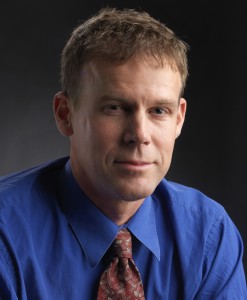
John M. Smart is an evolutionary developmental systems theorist who studies science and technological culture with an emphasis on accelerating change, computational autonomy (human-independent machine learning) and technology foresight. He is professor and program champion for the M.S. program in Emerging Technology at the University of Advancing Technology (UAT.edu, Phoenix, AZ), and directs the Acceleration Studies Foundation (Mountain View, CA) a nonprofit technology and social foresight research organization. He is an affiliate of the ECCO research group at VUB, and a co-founder of the Evo Devo Universe research community, an international community of scholars exploring evolutionary and developmental processes of change at the universal and subsystem scales. His personal website (since 1999) on accelerating technological change is AccelerationWatch.com.
John has a B.S. in business administration from UC Berkeley, an M.S.-equivalency in physiology and medicine (two years of medical school and the USMLE-I) from U.C. San Diego School of Medicine, and an M.S. in futures studies from the University of Houston, and has done additional undergraduate work in biological, cognitive, computer, and physical sciences at U.C. San Diego, U.C.L.A., and U.C. Berkeley. He studied systems theory at UCSD under the mentorship of James Grier Miller (Living Systems, 1978), who mentored under process philosopher Alfred North Whitehead. Dr. Miller encouraged John to pursue multi-scale studies in evolution, development, and accelerating change starting from a systems perspective.
We picture our journey into the future as a smooth transition, but our real progress is a combination of leaps and bounds on the one hand and fits and starts on the other. On a special Tuesday edition of FastForward Radio, Phil and Stephen discuss why the road to tomorrow is such a bumpy one — and why that might be a good thing.
And yet the mainstream medical system and its allies in the government and media are willfully ignoring this glaring fact, blaming “unknown” causes and “genetics” for causing autism, which are the two most common catch-all scapegoats. And in explaining the drastic rise in autism rates over the years, the talking heads actually claim that there is no rise — the seemingly elevated autism rates are merely the result of improved autism screening methods that are now identifying more cases.
Yes, blaming unknown causes for an unknown thing is downright irresponsible, especially when that unknown thing suspiciously coincides with some other thing. That’s why I think it’s time we face up to what’s really going on, here. Vaccinations are a pretty good explanation for autism, but I think there’s something else that makes even more sense. If we’re ready to face it, that is.
Look, I don’t like it any more than you do. Dora is cute, and Boots seems to all appearances to be a very decent monkey. But the facts are what they are: Dora the Explorer first aired in the year 2000. Diagnoses of autism have been skyrocketing ever since.
When are our puppet masters in the medical establishment going to come clean?
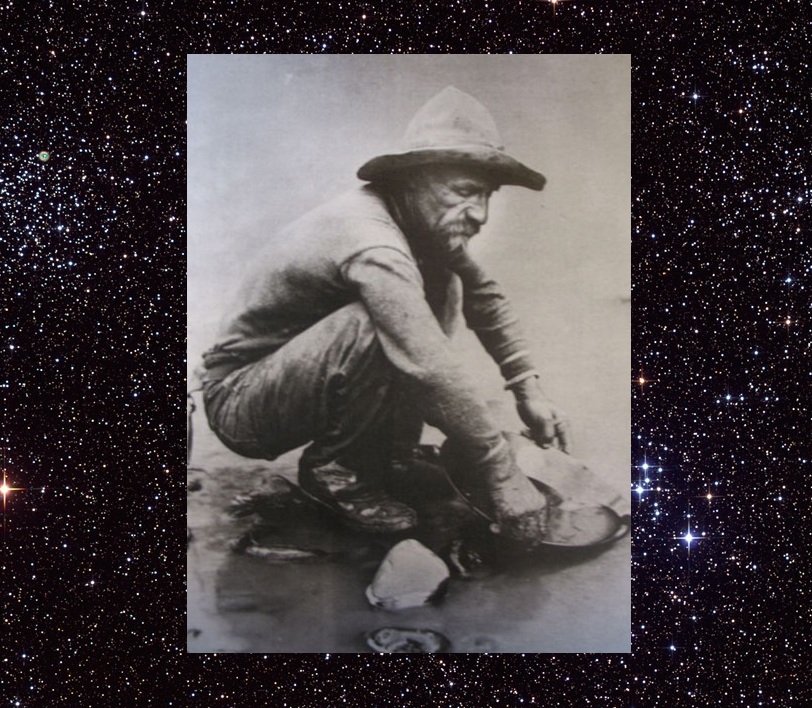 Planetary Resources has announced their plans to begin mining near-earth asteroids for the valuable resources that can be found there. Launches may begin in a couple of years. Is a new Gold Rush on its way, one that will open up space in the same way that previous rushes opened the western frontier?
 About our guest: