Monthly Archives: July 2010

Short Attention Span Blogging; Thursday, July 29, 2010

…where science, futurism, and anything else Stephen finds interesting are

thrown together in an informational stew for your consumption.

Enjoy!


Follow Stephen on Twitter: @stephentgo


  • “Live in the moment, but take the long view.”

    - overheard by Tobias Buckell

  • Army’s To Test at End of 2010, Hints at Industrial/Medical Uses

    Based on this I’d say it’s likely we’ll see some real-world version of Iron Man before we see a biologically enhanced Captain America.

  • from Laser-Activated Nanoparticles Move Molecules, Proteins and DNA Into Cells.

    This method is allowing these scientists to get stuff into living cells that they’ve never been able to do before. This could be a big, revolutionary change in medicine.

  • Achieves 700 bits of Parallel Processing

    Such massive parallelism could solve problems that conventional computers would work on forever.

  • “Free” is getting better and better: Excellent tabletop RPG – “Warrior, Rogue & Mage” – available free at RPGNow.
  • Speeding Up Diagnosis of Infectious Disease through DNA sequencing. What used to take several days can be done in 24hours

    This might be the first way DNA sequencing technology enters your doctor’s office. Not to sequence you. Rather, to sequence enough of a disease’s DNA to make a good diagnosis.

  • Rise of the Helpful Machines.

    There is a huge need for these elder-care bots in demographically-challenged places like Japan.

  • A young William Adama is getting his own online series, .

    As we learned from Kelly Parks in the latest FastForward Radio show, online series have a way of becoming more – full television series and movies.

  • The statistical result is in: The galaxy is rich in Earth-like rocky planets.

    Now, how do we get out there?

  • In answer to author Tobias Buckell: yes, movies can sometimes be better than the book. The Princess Bride, Forrest Gump, Shawshank Redemption, The Godfather, Jaws, and High Fidelity are all good examples.

    Of course there are plenty of counter-examples.

  • Huxley v. Orwell

    Competing dystopias – Orwell thought Big Brother will destroy our lives by taking away our freedom, Huxley thought that freedom will destroy our lives.

    Perhaps we can dodge both bullets. Increased technology can decentralize power to avoid Orwell’s vision. And, if we concentrate on using technology to build greater connections with other people, perhaps we can avoid disappearing into the hedonistic traps Huxley warned against.

  • Examples of science fiction preceeding science fact.

    Even if a technology proves to be forever out of reach – like, perhaps, faster-than-light travel – it wouldn’t mean that Star Trek was a big waste of time. Beyond its entertainment value, many times these stories have inspired us to look a little into the “impossible,” and turn dreams into reality.

  • DIY to DIWO [Do It w/ Others]: biohackers, synthetic biologists, & FBI to dialogue at Open Science Summit
  • “CO2 Could be Decreased To Pre-Industrial Levels in 10 Years.”

    This new solar carbon capture process simultaneously uses the visible and thermal solar components to power a cabon-capture facility. The carbon that is captured from the atmosphere could then be converted to carbon monoxide for fuel.

  • is playing the villianous Red Skull in next summer’s Captain America movie.

    Here’s the The Council Of Elrond scene from “Fellowship of the Ring.” Weaving is playing Elrond.

  • Prequel to Inception is a graphic novel, available online.
  • China Surpasses U.S. in ?

    Why is this important? Energy use is a great way to measure a civilization’s technological development. See the Kardashev scale.

  • “If you would be known, and not know, vegetate in a village; If you would know, and not be known, live in a city.” – Charles Caleb Colton

    Geographical location means less than it used to. It is increasingly possible to live in a village physically while simultaneously existing, virtually, in a city.

    And vice-versa.

  • Cory Doctorow: Why can’t I right-click on a building to find out when it was built?
  • One of the strangest invention stories of all time. The origin of the mechanical calculator.

    It was perfected by a prisoner in a German concentration camp.

  • MythBusters’ Jamie: this is how the show works- we’re just curious about stuff and figure out how they work
  • Maker Faire is in Detroit this week.
  • MIT , Virtuoso Mixer and Robotic Chef

    Can I get mine in harvest gold?

  • Speaking of harvest gold, check out this1981 TV news clip about .

FastForward Radio — How Zombies Work (Plus Singularity Summit!)

Thumbnail image for KellyParks.jpgStraight from San Diego Comic Com, Kelly Parks joins us to discuss his hit web series, Universal Dead. The sci-fi horror series provides a fresh take on a well-established subject — the flesh-eating undead — and provides a unique explanation of why zombies are the way they are and why they do the things they do.

Could zombies really exist? Tune in and find out.

UD_LOGO2.jpg

michael.anissimov.jpgPLUS a sneak preview of the 2010 Singularity Summit. Our good friend Michael Anissimov joins us to tell why he’s so excited about this year’s event and why you (that’s right, YOU) need to be there.

ss10_brain_500px.jpg

FFRNewLogo9J.jpg


Listen to internet radio with The Speculist on Blog Talk Radio


Short Attention Span Blogging; Saturday, July 24, 2010

…where science, futurism, and anything else Stephen finds interesting are

thrown together in an informational stew for your consumption.

Enjoy!


Follow Stephen on Twitter: @stephentgo


  • Check out “, July 19-23, 2010″

    They’re pointing to stories on:

    • Fighting Drugs With Drugs: An Obscure
      Hallucinogen Gains Legitimacy as a Solution for Addictions

    • Quantum Time Machine Lets You Travel to the Past Without Fear of Grandfather Paradox
    • Bionic Dick Cheney Technically Has No Pulse
    • Divers Use Bar Codes on Tablet Computers to Visually Control Underwater Bots
  • I wish I was at Comic-Con! Check out the Bare Naked Ladies surprise performance of “The Big Bang Theory” theme song.

  • “‘Hyperfast Star‘ Was Booted from Milky Way”

    SciFi story idea: Imagine you were an intelligent race marooned in that system. How important would it be to leave that star before it left the Milky Way? How hard would it be to leave?

  • After 14 days, the solar powered plane lands.
  • Discussion topic: “@MJSL2050: Why are some people so interested in human-like AI? I am glad that my computer is not like me…”

    Brent Kearney responded that it was “not just to build new friends. Same reason the computer was invented in the first place: to solve problems faster.”

    I see both sides of this one. My computer doesn’t have to be sentient to be an effective tool. And I’d really like to avoid the slave-owner stigma when I buy a robotic butler in a few years.

    Still, it seems pretty obvious that AGI could be useful – the whole Singularity thing. I’m glad its being worked on.

  • Top 10 countries by robot density.

    robotgraph.gif

  • New Zealand’s Let Paraplegics Walk for $150,000!

    More video .

    And, yes, it costs $150,000 now. It will go down.

  • “Pentagon Pushes for Near-Perfect Regenerative Medicine

    The Office of the Secretary of Defense is soliciting small business proposals for two new projects to transform the regeneration of damaged tissue and cartilage, which afflict 85 percent of injured troops in Iraq and Afghanistan…

    The solicitation anticipates some combination of “biomaterials, tissue engineering, [and] cell therapy.

  • TEDtalks: Orthopedic surgeon Dr. Kevin Stone says the future of joint replacement is “biologic, not bionic.”

  • World’s cheapest “laptop” has touch-screen computing, Internet browsing, and video conferencing .

    Drudge Report: India unveils $35 computer, wants to see price drop to $10.

    A few years ago one of my kids received a toy cash register in a happy meal. Almost as an afterthought, the cash register had a working calculator built into it. A device that had cost $2,200 in 1963 was being given away to kids that would probably never use it for calculation.

    Prediction: one day we will see computers as capable as OLPC given away in Happy Meals.

  • JPBarlow: Global Internet traffic is roughly tracking Moore’s Law, doubling every 18 months. Expect 21 petabytes per day by 2012.

    failwhale.JPG

    Cisco released a report earlier this week suggesting that global Internet traffic is growing exponentially.

    …prediction that the Web will nearly quadruple in size over the next four years. Cisco claims that, by 2013, what amounts to 10 billion DVDs will cross the Internet each month… The findings point to “consumer hyperactivity”

    …With the Cisco-created “PC Pulse,” you can clearly determine how much bandwidth you use and for what types of traffic. Not a bad way to become aware of the way we surf.

    “Consumer hyperactivity?” “Footprint tracking?” Internet traffic is a good thing. All those little kids with the OLPC computers – and the rest of us – are changing the world for the better.

  • “Once the rise in the position of the lower classes gathers speed, catering to the rich ceases to be the main source of great gain and gives place to efforts directed towards the needs of the masses. Those forces which at first make inequality self-accentuating thus later tend to diminish it.”

    - Friedrich von Hayek as quoted by Matt Ridley in The Rational Optimist

  • New Tron Legacy Trailer:

  • Bob Richards: Cool to find Singularity University offices buzzing with energized students when I returned at midnight. The Singularity is Here!
  • NASA is crowdsourcing: aspiring undergrads given a chance to propose, design and fabricate a reduced gravity experiment.
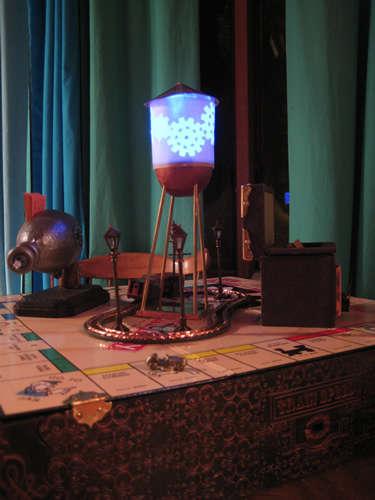
  • DIY: Steampunk Electric Monopoly

    steampunk-electric-monopoly-diy-5.jpg

  • Roger Ebert: “Inception” has entered into the category of a film people think they must see so they can participate in dinner conversations.
  • George Dvorsky: Just what Ontario’s campgrounds need:

    I’ve enjoyed 21st Century camping lately. Getting outside without having to leave part of my brain behind is a great way to “rough it.”

  • More than 100 Earth-like planets in just past few weeks.

  • Irradiating the brain’s stem cell cache improves survivability in brain cancer patients.
  • Prosperity in spite of climate change? GreenTV presents four scenarios for 2030. ()
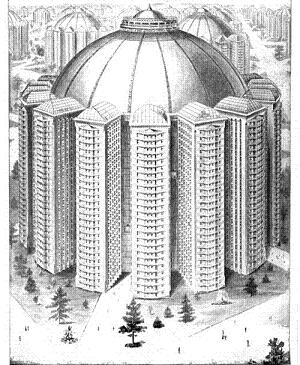
  • Before inventing the safety razor, Gillette was a futurist. In 1894, he planned a hexagonal city with transparent sidewalks. It was to be built atop Niagra falls for hydroelectric power.

    gillettebuildingexterior.JPG

  • TED: headset that reads your brainwaves.

  • Computer deciphers a forgotten written language within hours.
  • Language and abstract symbols is a massive intellectual prosthesis. Human thought is a combination of our evolved neural architecture AND the language prosthesis. Computer networking is just the latest gloss on a prosthesis that’s already given us greater than human intelligence.
  • Facebook Credits: The World’s First ?

Singularity Summit 2010

As promised on FastForward Radio, here is some background on the 2010 Singularity Summit. (Full details are available here.)

The Singularity Summit is the premier dialog on the Singularity.

The
first Singularity Summit was held at Stanford in 2006 to further
understanding and discussion about the Singularity concept and the
future of human technological progress. It was founded as a venue for
leading thinkers to explore the subject, whether scientist, enthusiast,
or skeptic.ss08_19.jpg

ss09_1.jpg

bostrom_overview.jpg

Since 2006, the scope of this dialog has expanded dramatically. In 2008, the Singularity entered mainstream consideration. IEEE Spectrum,
a sober and mainstream technology publication, issued a special report
on the Singularity, and Intel CTO Justin Rattner remarked that “we’re
making steady progress toward the Singularity” during his keynote to
2,000 people at the Intel Developer Forum.

What was once a relatively
unknown concept is now being discussed in corporate board rooms.

We
invite you to join our extraordinary group of visi

onaries in business,
science, technology, design, and the arts, as our community explores
this exciting topic. Your participation offers a world of powerful
ideas, a unique networking opportunity, and access to an exclusive
directory of your peers.

We hope you will join us August 14-15th. Register here.

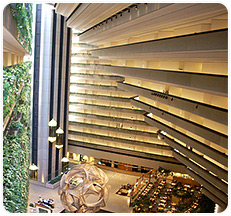
hyatt_atrium.jpg

FastForward Radio — Moonday Plus One

Buzz Aldrin bootprint. It was part of an exper...

Image via Wikipedia

We choose to go to the
moon. We choose to go to the moon in this decade and do the other
things, not because they are easy, but because they are hard, because
that goal will serve to organize and measure the best of our energies
and skills, because that challenge is one that we are willing to
accept, one we are unwilling to postpone, and one which we intend to
win, and the others, too.

President John F. Kennedy, September 12, 1962, at Rice University, Houston, Texas

Phil and Stephen reflect on the 41st anniversary of Apollo 11 and talk about new frontiers for the human adventure.

Listen to internet radio with The Speculist on Blog Talk Radio


Enhanced by Zemanta

Short Attention Span Blogging; Wednesday, July 20, 2010

…where science, futurism, and anything else Stephen finds interesting are thrown together in an informational stew for your consumption.

Enjoy!


Follow Stephen on Twitter: @stephentgo


  • “The most important question we must ask ourselves is, ‘Are we being good ancestors?’”

    - Jonas Salk

  • A US DOE Roadmap for Nuclear Energy and Uranium .

    Through 2100? Um, farsigted is great, but this seems a little unrealistic.

  • Marvel releases glorious concept art posters for upcoming Captain America and Thor movies.

    500x_marvel.jpg

  • Kindles, iPads, and Other eBook Readers from Public & Academic Libraries

    We’ll see a lot more of this as the price of these devices continues to drop.

  • Popular Mechanics: This is the inside story of the .
  • Virginia Postrel: Four authors explain why they feel $1.99 is ideal eBook price.

    EBooks eliminate the cost of printing, transporting, storage, and middlemen, so why not? And Apple has found that this is the right price point for Aps. Its cheap enough that people will more readily purchase on the mere chance that they may get something out of it.

  • Roger Ebert: movies “everyone” loves? “My Neighbor Totoro,” “Lawrence of Arabia,” “A Christmas Story,” “Bride of Frankenstein,” “Fargo,” “Notorious,” “Princess Bride,” “Duck Soup,” “Pinocchio,” “It’s a Wonderful Life,” “Hard Day’s Night,” “Jaws.”

    I’d add “Star Wars: A New Hope.”

  • A convincing for adding random strangers to your twitter feed.

    The idea is to challenge yourself with different thinking. Better than going random would be purposefully following people with different beliefs or backgrounds.

  • Robot can power itself with producing Artificial Gut.

    If a full sized robot can power itself in a way similar to a human body, could medical devices one day be powered by the same energy system that the biological body uses?

    Favorite quote: “Diarrhoea-bot would be more appropriate,” Melhuish admits. “It’s not exactly knocking out rabbit pellets.”

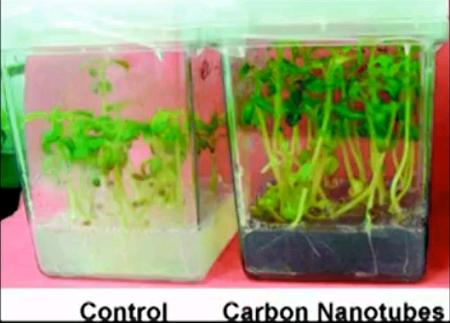
  • TEDx: “Can Nanotechnology Help Feed the World?”

    Here is the simplest way nanotech might help:

    carbon nanotube growth.JPG

    But the speaker was more excited about the possibility of developing “smart fertilizers.”

  • Makerbot joining RepRap in the ranks of devices that can (partially) self-copy. Coming soon: a self-replicating 3D printer revolution!

    There are still major hurdles to be cleared on the path to self-replication, however. Few printers can create more than plastic parts. While we have seen stainless steel printing, most metals are still far from accessible, and the semi-conductors needed for printing electronics seem many years off (though some progress is being made there too). Also, none of these printers come equipped with robotic arms, and until they are you can expect that every ‘self-replicating’ machine is still going to require a lot of human labor to assemble.

    Makerbot and the RepRap have an important similarity: both are open-source projects. Both allow the sort of incremental improvement necessary to move toward self-replication.

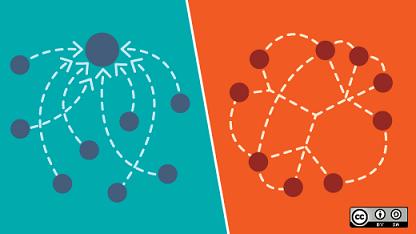
  • Open source crowdsource. What’s the difference? Is one better than the other?

    BUSINESS_crowdvsopen.JPG

  • : “Hi, folks! Have a new short story from me. It’s free! BUT ONE DAY I MAY ASK A FAVOR.”

    A very fun short story.

  • Wil Wheaton: “Trying to read a book about Heisenberg’s Uncertainty Principle, but whenever I look for it, it moves.”

    Hey Wil: I’m holding it in my hands, but now I can’t tell what the book is about.

  • Is in any language now possible?

    Short answer: no, not quite yet. But we’re getting close.

  • Yesterday was the 41st anniversary of the first Moon landing. Bill Whittle has some observations in this video: “One Small Misstep for a Man, One Giant Leap for Private Enterprise.”
  • : A Lunar Space Elevator is Feasible for Deployment within 7 Years.

    With its lower gravity, lack of atmospheric weather, and reduced chance of accidental collision or purposeful sabotage, the Moon will be much easier place to deploy a space elevator.

  • University of South Florida researchers suggest aging may be “.”
  • : Taking photos in public places is not a crime.

    A fact that many law enforcement agencies keep forgetting.

  • in catacombs under Paris. Fascinating and strange.
  • : Debunking 10 Energy Myths. #9: Solar will never pay for itself.

    [At the current state of the art...] after a solar array’s initial payback period, you start to reap some serious financial benefits [for a residential installation]. Assuming solar cells have an average life expectancy of 30 years, more than 50 percent of the power solar cells generate ends up being free. “There are maintenance issues,” Zimmerman says, but over time, “solar cells are definitely making you money.”

  • Like “Inception?” Here’s more : 10 Freaky, Funny, and Fantastical Dream Sequences – from Hitchcock to Bergman.

Body Shock Contest

This sounds pretty cool:

May
the best health idea win.

BodyShock
is a call for ideas to improve global health over the next 3-10 years
by transforming our bodies and lifestyles. NextNow members are invited
to enter today! Read the full press release (with video) here – http://www.iftf.org/node/3514

Are you:

  • a DIY scientist trying to extend healthy human life?
  • a developer who wants to invent a mobile diabetes app?
  • an elder caregiver with ideas to help people age in place?
  • a patient creating an emotional wellness tracker?
  • a citizen with a plan to reduce air pollution in your community?
  1. Send us your visual idea by September 1, 2010. The earlier
    you enter, the more time you have to gather votes for your idea. Enter here.
  2. Vote for your favorite idea. Do you think musical stairs
    will work, or are implantable sensors a better idea? Make your voice
    heard – cast your vote.
  3. We’ll help bring your ideas to life. Up to 5 winners will
    be celebrated at Institute For The Future in Palo Alto, California on October 8, to present their
    ideas and be connected to mentors and resources. One of these ideas
    will also win the $3,000 Roy Amara Prize.

Good luck, and may those who help the most win.

Would like to hear about any ideas that Speculist readers submit. Stephen and I will spend some time discussing our own ideas on tomorrow night’s FastForward radio.

Enhanced by Zemanta

Short Attention Span Blogging; Tuesday, July 20, 2010

…where science, futurism, and anything else Stephen finds interesting are thrown together in an informational stew for your consumption.

Enjoy!


Follow Stephen on Twitter: @stephentgo


  • AMAZON’s E-Books Pull Ahead of Hardcovers…

    Amazon celebrated last Christmas that they sold more eBooks on that day than hard covers. Now, for the last three months, EBook sales are outpacing the sale of hard covers at Amazon.

    Maybe this is not the most fair comparison. You can buy hardcovers anywhere. Kindle books can only be bought from Amazon. Still, this is just another milestone on the road to my winning the Kindle bet.

  • Cell phone charger works off human movement


  • Real life light saber?

    If this is not a complete scam, then its a very dangerous toy. No kids, you’re not getting one.

  • nprnews: NASA Waits For Spirit To Send Signal From Mars

    A mission intended for 90 days will be starting its 7th year.

  • Using a DARPA grant, MIT scientists are harnessing the body’s movements to generate electrical power for bionic devices.

    and “Fast Company” published this article, ” Legs, i-Limbs, and Other Super Human Prostheses You’ll Envy”

    The “You’ll Envy” part is a bit premature. But any reason to play the “Six Million Dollar Man Intro” is fine by me:

  • For more than a week, the Zephyr, a solar-powered drone, has been circling above the Army’s Yuma Proving Ground in AZ.

    Earlier this month the “Solar Impulse” became the first solar plane to stay aloft through the night. Another team is showing that it can be done for a week – at least without the weight of a pilot.

  • Undersea robots are heroes of Gulf of Mexico oil spill fight. Capable of going where no man can go…
  • Roger Ebert: films “everyone” likes? Pulp Fiction, Toy Story, The Third Man, Seven Samurai, Jaws, Singin’ in the Rain.

    I’d add “Dances With Wolves.” And not just “Toy Story” – almost everything from Pixar.

  • Debunking 10 . #7: The risk of earthquakes make geothermal energy unrealistic.

    But be careful where you drill…

  • Methane levels up to 1,000,000x higher than normal in some regions near gulf oil spill. May create “dead zones.”
  • How would you use interactivity in ebooks?

    The Kindle already shows you popular highlights. But that’s about as basic as interactivity can get. How about giving readers the option to allow automated updates?

    I’d also like author or author rep moderated reader note sharing / comment threads, links to the internet, video, etc.

    One of the reasons that eBooks will overtake paper is because they you won’t get the full experience reading off a dead tree.

  • t: Seawater + fresh water = electricity: A salty solution for power generation
  • : Bye-Bye Batteries: Radio Waves as a Low-Power Source
  • Check out the new “Carnival of Nuclear Energy” over at Brian Wang’s blog Next Big Future.
  • GE announced they have achieved 56 lumens-per-watt efficiency. Now white OLED lighting devices can be made at low cost.
  • Quantum Mechanics Of Time Travel Through Post-Selected Teleportation.

    Can somebody else read this and explain it to me?

  • Universal flu vaccine: experiments with mice able to produce antibodies that attacked a vast array of flu viruses.

    Would we want a truly universal vaccine? Probably, but only if it could distinguish between harmful viruses and the beneficial virome found in and on our bodies.

  • Aubrey de Grey: Scientists Call for a Biomedical Apollo Project to Avert Global Aging Crisis
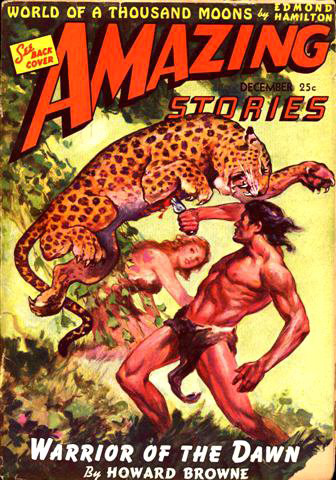
  • Pulp story “Warrior of the Dawn” now up at manybooks.net.

    warrior of the dawn.jpg

  • More of the strange creatures spotted with special deep-sea cameras by the Deep Australia project.

    Here’s an example:

    JNM00014small.jpg

Inception

Director Christopher Nolan participating in th...

Image via Wikipedia

The formula for a big summer action blockbuster could not be simpler:

  1. Start with an absurd premise.
  2. Use the absurd premise as a pretext for generating loads of over-the-top action sequences.
  3. Flesh out those action sequences with a bunch of over-the-top special effects.

With Inception, Christopher Nolan has followed the formula dutifully, and I think there can be no further discussion (as Stephen raised on Twitter the other day and again here on one of his Twitter round-ups) about whether this movie is going to be a flop. It isn’t.

It’s got all the right ingredients to pack the summer movie popcorn munchers into the seats. I just returned from a nearly full-house screening of Inception, and the mostly teenagers and twenty-somethings who made up the audience were highly appreciative, especially of the very end of the film, on which I’ll have some comments in a moment. 

So, yes, the film appears to have summer movie chops, but it offers a bit more than just that. For example, it provides a rather sly commentary on the movie business — Leonardo DiCaprio and his posse of dream-manipulators are really just a kind of specialized film crew. One of the challenges discussed early on in the film has to do with how the artificial dream world is established and made real to the dreamer. It may just be coincidence that this issue is raised during a sequence in which we go from Kyoto to Paris to Mombasa all in fairly short order, and each time with a visually stunning establishing shot (or set of shots) telling us where we are now. Sure, it might be coincidence, but I don’t think so.

Along the way, Inception asks some fearless questions about the power of ideas, where they come from, and, ultimately, the nature of reality. I don’t think that a spoiler alert is required before writing that one of the film’s principal conceits is the notion that dreams can be embedded within dreams. Watching characters deal with the various levels of reality, I couldn’t help but be reminded of the Simulation Hypothesis. The chief problem with establishing multiple layers of reality is a simple but profound one — how can you ever know for sure that  the world you are experiencing is the real world?

In taking on the question of where ideas come from, Nolan does something brilliant. He pulls off an Inception of his own. That is to say, he plants an idea in the audience’s mind so subtly that we believe that we came up with it ourselves. A theory is introduced in the film which is described as a grave error. Believing it leads to tragic consequences. And yet we as an audience are led to conclude that this theory may, in fact, be true.

The movie ends with an amazing confirmation, not that the theory is true or false, but that somebody has, indeed, been messing around in our heads for the last couple hours. That’s a pretty scary thought, but maybe one we should consider more often than we do.

Enhanced by Zemanta

Short Attention Span Blogging; Friday, July 16, 2010

…where science, futurism, and anything else Stephen finds interesting are thrown together in an informational stew for your consumption.

Enjoy!


Follow Stephen on Twitter: @stephentgo


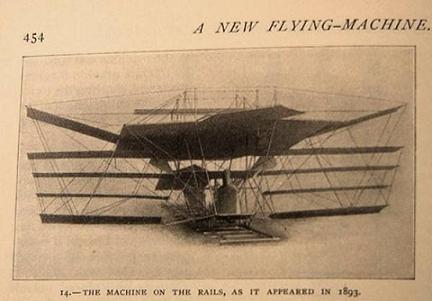
  • : “Steampowered flying machines of yesteryear.”

    newflyingmachine2.jpg

  • Composite made from reduced graphene oxide and magnetite could effectively remove arsenic from drinking water.

    Is there no end to the amazing properties of graphene?

  • Human Trials Next for Darpa’s Mind-Controlled Artificial Arm.
  • : “Air Force seeks to make science fiction a reality by developing smart autonomous vehicles + brain machine interfaces.”
  • : “New Livers Grown on Scaffolds In Rats.”
  • Reuters Science: “Woolly mammoth hunters helped change climate.”
  • Marcel Dicke: “The locust is the shrimp of the land.”

    Marcel Dicke laid out the arguments at TED for why we should be eating insects.

  • The first law of robotics in action: Developing artificial skin for robots to be safe around humans – that, plus algorithms to stop immediately if their skin contacts a human.
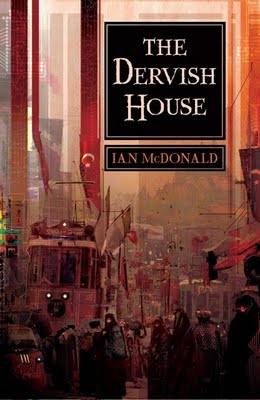
  • Doctorow: “Ian McDonald’s amazing novel The Dervish House: Turkey’s mystical nanotech future.”

    The Dervish House.jpg

  • Bob Richards reported that Dean Kamen received a standing ovation at Singularity University for inspiring millions of kids through FIRST robotics program.

    Bob Richards: “Brainstorming FIRST Robotics Bio-bot ideas over dinner with Dean Kamen and Singularity University students.”

  • Great CEO’s or Corporate culture- which is more important?
  • Roger Ebert’s 4-star review of “Inception.”

    It’s said that Christopher Nolan spent ten years writing his screenplay for “Inception.” That must have involved prodigious concentration, like playing blindfold chess while walking a tight-wire… We have to trust him that he can lead us through, because much of the time we’re lost and disoriented. Nolan must have rewritten this story time and again, finding that every change had a ripple effect down through the whole fabric.

  • Wil Wheaton: “Nothing makes me appreciate Pandora, Rhapsody, and Slacker more than being forced to rely on broadcast radio in the car.”

    Its a Wesley crusher.

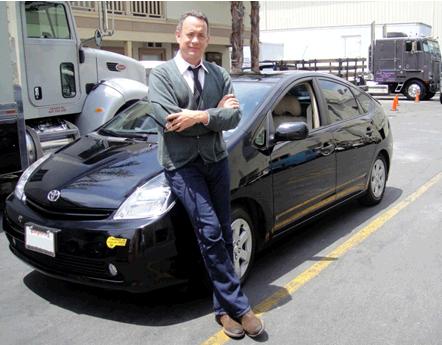
  • Tom Hanks: “Wanna buy my old Prius – hacked for MAX mpg? Go to Welcome Back Veterans auction.

    hanksprius.jpg

    Classy guy.

  • Aviation innovations: flying car, autonomous helicopter, paint that makes aircraft radar invisible.

    “Demonstrating that a full-scale robotic helicopter can safely take off, fly at low altitude and land heralds a new era,”

  • Which came first, the chicken or egg? MSNBC and NPR reported that “British scientists have proven it was the chicken.” That is not what those scientists said. This was just awful science reporting.

    By the way, the answer to the age-old riddle is “egg.” At some point in the distant past a pre-chicken bird layed an egg, which hatched the 1st chicken (however “chicken” is defined).

  • SierraSci: “244,273 compounds screened. 813 Telomerase inducers found! The search for a cure to AGING zooms ahead.”
  • junecohen: “The first TED talk from TEDGlobal is up! Matt Ridley: When ideas have sex. Knock out talk on human collaboration.”

    Ridley, of course, is the author of “Rational Optimist” – the book that Phil and I have been raving about for weeks on FastForward Radio.

    : “More detail on TED ‘s Global Conversation Project, launching this fall.”

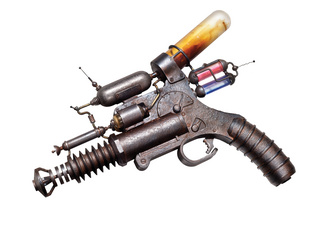
  • The 10 most gorgeous blasters and ray guns in science fiction.

    goliathon83-blaster-thumb-330x226-42754.jpg

    Pictured: Goliathon 83 from Dr. Grordbort

  • I think he would have liked this: “Philip K Dick brought back to life as a fully autonomous conversational android.”
  • MaryRobinette: “You know what I want? I want a clear sleeve on the back of my ereader so I can slip in a printout of the cover art of what I’m reading.”
  • New Scientist: “Time to abandon the black-and-white fiction that human-induced climate change is fact or conspiracy.”
  • as social hubs in neighborhoods. Good Social geography will be an increasingly important business model.
  • Paperback decline coupled with rapid growth of e-books puts the e-book market at 55% of the size of the paperback market.

    An important milestone for Phil and my “Kindle Bet:”

    I’m betting $1.00 that in ten years [from February 25, 2009] the print market will be diminished because most people will be reading on electronic readers like the Kindle. Phil disagreed and is betting that although most reading will occur on these devices in 10 years [by February 25, 2019], the print market will be bigger than ever.

  • June Cohen: “Neil Gershenfeld trying to re-implement biology with semiconductors, conductors, insulators to literally grow technology!”

    June Cohen: “Your brain doesn’t execute lines of code – everything happens everywhere all the time.” ~ Neil Gershenfeld

  • without normal cell towers.

    Australian scientists have invented software that enables mobile phones to work in remote areas where there is no conventional coverage and in locations where the infrastructure has been destroyed through disaster, or is not economically viable.

    Two methods are being worked on. One allows the wifi function of cell phones to be used to create a web of coverage.

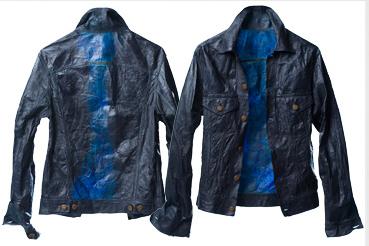
  • Suzanne Lee makes BioCouture– textiles grown from bacterial cellulose.

    denim_biocouture.jpg

  • Hudsonette: “There’s something to be said for the pressure to be excellent. R.I.P. George Steinbrenner.”
  • : “Body as battery.”

    Harvesting electricity from the human body (anybody remember Matrix), is yet another way to power medical devices with the human body.

    A recent “Short Attention Span” mentioned two other possible methods: using the mechanical energy of blood flow like a hydroelectric dam, and harvesting the ATP to ADP chemical energy that is already powering the human body.