Monthly Archives: November 2004

Mouse Brains to the Rescue

Huge news via Kurzweil
AI
:

Harvard
scientists have manipulated stem cells already present in the brains of mice
to induce the birth of new neurons, an advance once considered impossible
by most scientists.

They induced the birth of new cells by killing nearby neurons in mice, which
set off a cascade of events that led to stem cells, producing new neurons
in the cerebral cortex. If scientists can turn this into a therapy for humans,
it would mean that patients could literally heal themselves with stem cells
already present in their brains.

This development holds incredible promise for the treatment of any number of
degenerative diseases, not to mention brain damage caused by accidents or other
trauma. Excellent news! Moreover, we can add this to the arsenal of brain
enhancements
that might soon be avilable.

Interestingly, neither the editors at Kurzweil nor the author of the original
Wired piece have the guts to speculate as to how this development impacts the
possibility of one day producing a super-intelligent
mouse
.

For the record: it makes it much more likely.
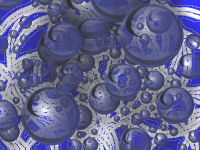
The Perfect Shape

GeekPress is back, and linking to a fascinating
article on squaring
circles
. I love that we live in a time when a solution has been found to
such stubborn old problem. Interestingly, it proved much easier to make a cube
out of a sphere than it did a square out of a circle. The article explains:

In the previous year, Tarski and Stefan Banach (1892–1945) had proved
a remarkable analog of the same conjecture in three dimensions, showing paradoxically
that a sphere can be cut up into a finite number of pieces and rearranged
not only into a cube of the same volume but also into a cube of twice the
volume. In fact, a sphere sliced up in just the right way could be rearranged
into virtually any shape of any size.
[Emphasis added.]

This
suggets to me that a sphere might be an excellent default shape for a multi-purpose
robot (made up of trillions of nanobots) designed to assume whatever shape is
necessary for the task at hand. So you’ve got this sphere that you carry around
in your backpack, or that rolls along with you as you go. It starts raining
out and poof! The sphere is now an umbrella. You stroll along until the
rain stops and poof! The umbrella is a sphere again. You decide that
you’d rather be biking than walking, and poof! You get the idea.

There’s something charming, very Harry Potter, about this image of a world
in which everybody has a magic sphere ready to do their bidding. Somehow, the
whole thing sounds less appealing if the default shape is a cube or
even an amorphous
cloud
.

But, hey, that’s probably just me.