Author Archives: Phil Bowermaster

What’s Real? Does It Matter?

whatsrealIn my new piece at H+ Magazine, I provide not so much a review of the movie Her as an exploration of the one of the bigger issues it raises, an issue that I don’t think is getting as much attention as it deserves.

Some take the film to be a biting commentary on the state of personal relationships in our technology-fueled age. Others take it to be a straight-up love story about a man and a machine. I think both of those interpretations are valid, but that the question that Her is primarily concerned with is a more fundamental one: What is real?

Moreover, I think the movie asks an even more challenging follow-up question: Does it matter?

Of course, we all already know the answer to that question. Yes, yes, a thousand times yes. Reality is all we’ve got. It matters. What else could possibly matter more?

And yet we value the non-real, whether we find it in the form of novels or movies or online games. Most of us would say we like it as long as the lines don’t get blurred; as long we aren’t mistaking the non-real for the real. But of course, that assumes that we aren’t doing that, that we aren’t fundamentally deluded (or just mistaken) about the facts that constitute our real lives. Telling in that regard is research showing that we sometimes duck the information we need that would give us  a more accurate picture of our own lives. Whether we do it just a little or lot, we all filter and edit the facts of our existence to make for a more palatable, and ultimately livable, version of our lives.

And then there is the blurring we do more deliberately. To quote myself:

The choice between living in the real world and living in a world of our own design (or a world that someone else has designed) is not a new one. What is new is that technology promises many more options than we have ever had before, many of them much more vivid and compelling than the options we had in the past. Technology promises to blur the lines between what’s real and what’s not real in ways we have never expected. And it isn’t just illusion that technology can provide; it is likely to offer us an almost endless array of real experiences, as well as those puzzling hybrids where the experience is simulated, but the response is real.

What, for example is going on here?

A massive battle involving more than 2,200 players in main battle is underway in CCP’s massively multiplayer online game Eve Online, easily the largest battle in the game’s decade-long history, according to Alexander “The Mittani” Gianturco, the CEO of Goonswarm Federation.

Well, obviously it’s just a game. It’s not reality. There are no actual spaceships blowing up other spaceships. And yet, current estimates show the total financial damage from the battle to be somewhere between $200,000 and $300,000. That’s the cost in real money, as converted from the game’s internal currency. Thousands upon thousands of player development hours have gone into building virtual ships which have been destroyed. That loss of time is real even if you can’t get your head around a currency that trades back and forth between the real world and a game. And the scheming, the rivalries, and the grudges that drive behavior within the game appear to be very real.

One interpretation of Her is that it is about extending this willing suspension of reality into the area of personal, even intimate, relationships. It all comes down to whether the Scarlett Johansson character is a real person or not. Which would you rather have, a potentially prickly and sometimes unsatisfying relationship with someone in the real world, or the most blissful and satisfying relationship you can imagine…with someone who doesn’t exist?

We all know what the right answer to that question is, or at least what it’s supposed to be. But then, that is only one possible framing of the question. What if it comes down to a blissful relationship with a computer program versus no relationship at all? (There are a lot of lonely people out there, after all.)  Or what if it’s a choice between a painful and abusive real-life relationship and a happy and satisfying artificial one?

As long as the relationship brings happiness, does it matter if it’s real? Again, we all know what the answer is supposed to be. But let’s not be too terribly surprised when, in the near future, a lot of people start to choose this particular form of non-reality over reality.

Here are the two recent editions of The World Transformed wherein Stephen Gordon and I tackled these topics.

We’re Better Off Now; We’ll Be Much Better Off Soon

oldtvVirginia Postrel has written an intriguing piece at Bloomberg that some dill-weed of an editor gave a really unfortunate, and misleading, headline. Her piece suggests that quality of life, in this instance measured by something as seemingly trivial as entertainment options, is increasing even as other standard economic markers of well-being stay flat or dip

What she is describing is the emergence of the post-scarcity economy. A couple of decades ago we saw the first wave of abundance; it came in the form of fairly simple information: chat rooms and html web pages. That’s all still with us, though more highly structured and broadly distributed through smart phones and social media apps. Meanwhile, the digital revolution has transformed the delivery of not just TV shows and movies, but music and books as well.

Everybody has access to a lot more information than they used to. Ray Kurzweil points out that today an African kid with a smart phone has access to more information than was available to the President of the United States 20 years ago. The fact that I have thousands of instant movies to choose from on Netflix and Amazon is a quality-of-life improvement for me. The fact that that kid can access Khan academy and tens of thousands of other learning resources that didn’t use to exist is a much bigger deal.

The next wave of abundance is the production of physical goods, which will also be completely transformed by digital technology. In fact, this is already happening, which is why that kid has a smart phone to begin with, and why so many of us have such high-quality TVs and other access devices. But that’s just the beginning.

There is currently a lot of interest in 3D printing, but the 3D printing technology available to us today is very rudimentary. It isn’t even analogous to the chat rooms and static web pages of 20 years ago. The 3D printers we have now are more like the old text-based bulletin board systems that people used to access via analog modem connection. What’s coming is the ability to produce just about anything you might want or need with a few clicks of the mouse, or more likely a simple verbal command. Amazon wants to fill the skies with delivery drones, and that may happen — for a while. But eventually we will no more need little helicopters bringing stuff to our homes than we currently need railroad tracks leading up to our front door. We will be able to download and print out local copies of just about anything.

And this may well all occur while the workforce continues to dwindle and wages continue to flatline or even slide. Nobody wants wages to go down, but if costs fall even more sharply, our relative economic health can remain the same or even improve. This is why everybody has a better TV even though wages have been flat for some time. The potentially bigger problem is all of those people being out of work. Even if costs go down, having a roof over your head, an internet connection, electricity, and feedstock to put into your 3D printer are all going to have some price associated with them. On the other hand, while the workforce is the smallest it’s been in 30 years, quality of life has over that time improved distinctly by many measures.  The smart money says it’s going to continue to improve. Substantially.

(TV photo by Zaphod.)

How Likely Is Your Life?

Check out this wonderful video from Jason Silva.

I love what Jason says about changing perspectives. Right now I am standing at a desk, but I am also standing on the surface of a planet. (Actually, I’m standing a bit below the surface, seeing as I’m in the basement.) I’m also hurtling through space, following an elliptical orbit around the sun at a speed of about 67.000 miles per hour. (And that’s just the beginning of our amazing space travels, for anyone who cares to read up on them.)

How best to describe our everyday reality? Is life a thoroughly mundane affair, or is it something completely extraordinary? Well, yes.  It’s either. It depends on how you choose to look at it.

For example, what are the chances that you would be where you are doing what you’re doing right now? Or more simply, what are the chances that you would even exist to begin with? There are a couple of ways to answer that. In basic terms, the probability of an event which has already occurred is 1. So what are the chances that you exist? 100%. That’s as mundane as it gets. But let’s rephrase the question just a little. What were the chances that you would exist, say, a million years ago, or a thousand, or a hundred, or the day before you were born?

That’s hard to calculate.

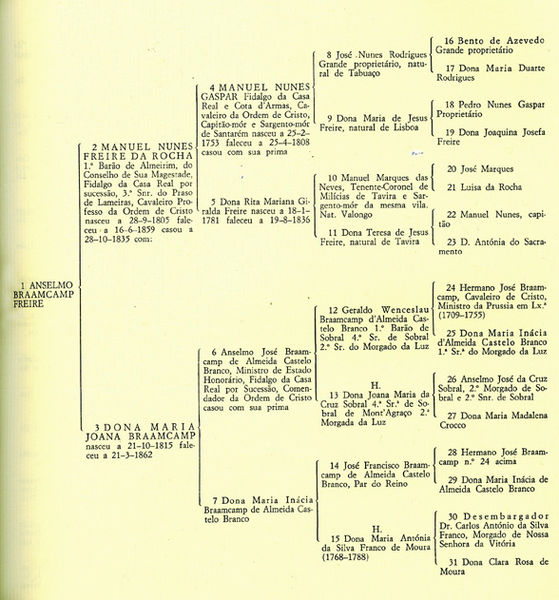
familytreeConsider this: you have two parents,  four grandparents, eight great grandparents, 16 great-greats, 32 great-great-greats, 64 great-great-great-greats and on and on all the way back to the beginning of time. What if your parents had never gotten together? Well, obviously, you wouldn’t be here. But what about your grandparents? If one of your two sets of grandparents had never gotten together, one of your parents wouldn’t have been born, and you wouldn’t be here.
Are you with me so far?

If one of your four sets of great grandparents never got together, one of your grandparents would never have been born, thus preventing one of your parents from ever existing, thus preventing you from existing. If one of your eight sets of great grandparents…okay, you get it. As we regress through the generations, the number of couples who had to find each other increases exponentially.

But is that any big deal? How likely is it, after all, that a couple might get together?

Again, it’s hard to say. Some couples meet at work; some meet in college; some meet in high school. Some guys marry the girl next door. There’s a lot of that typical, mundane stuff. But then you hear these other stories about how couples get together.

The comedian Aziz Ansari tells a great story about a couple who meet in the parking lot of Bed, Bath, and Beyond. They meet because the man mistakes the woman’s car for his. Think of the items that had to fall in place in order for this to happen: they had to have bought similar-looking cars; they had to show up at the same store at roughly the same time; they had to park near each other. Take any of those elements away and they might never have found each other. Ansari adds some interesting details: the guy was out shopping for Drano because his roommate had clogged the toilet. He might just as easily have gone to Ace Hardware or Target. Or the roommate might not have clogged the toilet that day, or he might have clogged it later or earlier that day.

Change any of those details, and you change not only the likelihood that the couple would one day get married, but also the likelihood that any potential children they might have would ever exist.

Here’s another example, taken from my own experience.

I met my friend Mike in grad school in 1986. I made a passing comment about a book he was carrying — we struck up a conversation and eventually became good friends. What if I had never spoken to him or that first conversation had never taken hold?

If we hadn’t become friends, he never would have hired me 5 years later to work at U S WEST.

If I hadn’t taken that job, I would not have been there to take over “the Russia project” from my friend Cap when he got sick

If I hadn’t taken over that project, I would never have gone to Russia.

If I hadn’t gone to Russia, I would never have later been sent to Malaysia.

If I hadn’t gone to Malaysia, I would never have met my friend Leslie.

If I hadn’t met Leslie, I would never have been introduced to Suraya.

If I had never met Suraya, she and I would never have gotten married.

If she and I never got married, our three children wouldn’t exist.

(If this sounds familiar to long-time readers, you’re right. It is a modified version of part of a piece from five years ago.)

Look at all the stuff that had to happen just for one couple to get together. (And, believe me, I’m leaving a lot out.) But for you or I or any of us to exist, just counting back to the great-great-great-greats, more than 60 couples had to get together. Everything had to work out 60 times over. And if you go back another generation, it becomes 120, then 240, then 480. And on it goes — we aren’t even 1000 years back yet.

People have been around in our current form for about 200,000 years. How could everything just keeping working out time and time again across all those lives in all those centuries just so that you would one day be here? The easy answer to that question is: “Well, it didn’t have to end up being me. Someone else would have been here instead of me.”

That’s true, and it’s all very well when you’re talking about other people. But personally I like the fact that I, and not some alternative, am here. Although there is currently a 100% chance of my being here, it sure feels like I beat the odds along the way.

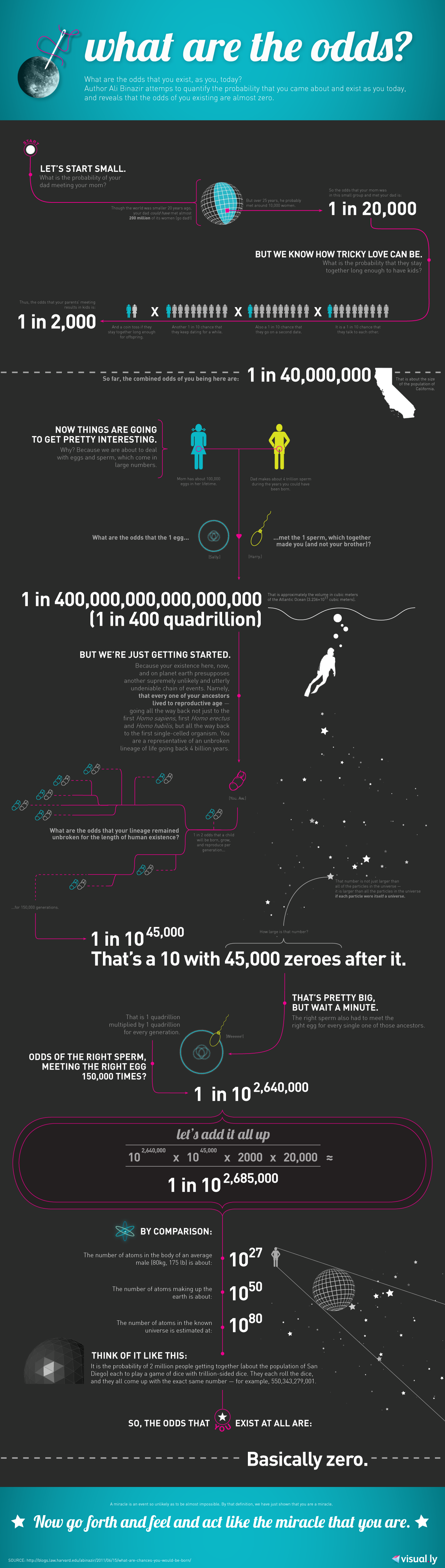
A few years ago, blogger Ali Binazir took a quasi-mathematical approach to calculating just what what those odds are. (Check it out in infographic form here.) His approach looks at a lot more factors than just whether individual couples would ever get together — things like the right sperm hitting the right egg. Over and over and again. Plus he takes it back to the beginning of all life, rather than just the beginning of modern humans. His conclusion?

Probability of your existing at all: 1 in 102,685,000

As a comparison, the number of atoms in the body of an average male (80kg, 175 lb) is 1027.  The number of atoms making up the earth is about 1050.  The number of atoms in the known universe is estimated at 1080.

Okay, so we’re trying to imagine a one followed by 2.685 million zeroes. The probability of you existing is one out of that huge number. Now that’s a long shot, folks. Binazir can be way, way, way off and we’re still talking about an unimaginably huge number. Think about it like this: if you were to sit down and write out your predictions for the winning PowerBall numbers week by week for the next fifty years, and dutifully play the assigned numbers every week, and actually win the jackpot every single time…that’s probably more likely than you ever having been born in the first place.

So there’s your choice. You’re standing (or more likely sitting) at a desk or you’re flying through space.

Both are true.

Your life is a 100% certainty or it is the rarest and most extraordinary of events.

Both are true.

As Jason says in the video, the two realities coexist, side by side. You can lead a life that is utterly mundane or a life that is almost too amazing to contemplate. It’s like traveling to a parallel universe or discovering an alternative reality. But you don’t have to go anywhere or discover anything. The two lives are one in the same. All that needs to change is your perspective.

Becoming Less Human

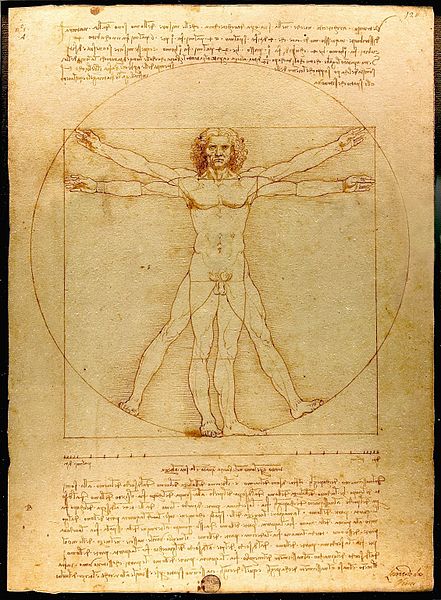
vitruvianOn this week’s podcast we talked about disturbing futures — future worlds that aren’t necessarily dystopias, but that nonetheless don’t look terribly appealing to us back here in the past. I focused mainly on futures in which the population has abandoned some traditional aspect of the human experience.

It isn’t always a bad idea to depart from things we have had for a long time. Slavery and blood feuds  have a long pedigree in human history and pre-history, but few would take seriously an argument that we should still have them around — even though, tragically, they do persist even into the 21st century.

But slavery and blood feuds, along with honor killings, genital mutilation, and even cannibalism, are ultimately social practices. We can pick and choose among social practices without bringing our humanity into question — until we get to the core ones around personal relationships and families. For example, a future without marriage, or family relationships, or friendship would look, from where we sit, like a distinctly less human world than the one we currently occupy.

On the show I talked about suggestions that in the future we might do away with eating or sex (not just the act, but the whole psychological, cultural, and physiological shebang) or emotions. Technology will soon give us greater control over our physical and psychological makeup than can be easily imagined today. Each of those characteristics may, in fact, become optional.

People might forgo eating in favor of ingesting regular doses of soylent or some other nutritious sustaining glop. They might design bodies for themselves without sexual organs or secondary sexual characteristics and rewire their brains to remove notions of sex or gender from their own identities.  They might edit their neural architecture in such a way that nothing frightens or angers them — or even makes them happy.

On the issue of sex, one of the listeners pointed out that 1 in 100 people are asexual — am I saying that they’re less human than the rest of us? No. They are part of a mix that includes people who are highly sexual and people who are mildly sexual. Human society includes nuns, nerds, accountants, soccer moms, Kardashians, Clooneys, drag queens, bull dykes, and Anthony Weiner — to name just a few from the huge range of possibilities. If everyone became asexual — or if even a lot of us did — it would be a very different world. A less human world.

Likewise there are people who can’t digest food and have to be on an IV. Of course they’re human. And there are people with psychological and neurological disorders who lack some (or all) emotions. Sure, they’re human, too. But note that they are described as having a disorder. 

Is that just prejudice? I don’t think so.

Going forward we have a lot to figure out. We are carrying a tremendous cultural and evolutionary baggage that we might be better off without. But there are some essentials in there, too, some of which may be packed very tightly — perhaps inextricably — with things that we would prefer to think of as optional. We will need to proceed cautiously.

(Image by Luc Viatour / www.Lucnix.be)


How Long Is the World’s Longest Book?

bookshelvesOur new book project, a collection of ideas for making the world a better place entitled The World Transformed, has been going by the nickname “the World’s Longest Book.” I want to be quick to point out that the proposed Abridged Edition of the The World Transformed will not be anything remotely approaching the world’s longest book. With 100 authors contributing not more than 1500 words each, the book will be hard pressed to make it even to 200,000 words (what with introductions, authors’ bios, etc.) and less than 500 pages.

At best you could describe a book with those characteristics as One of the World’s Many Somewhat Longish Books, or even the World’s Most Average Book. Either way, not something to get terribly excited about.

However, our plan is to give away at least 10,000 copies of the Abridged Edition, asking each recipient to submit a chapter to the full online version of the book and to invite others to do the same. If they all submit a chapter, or if some of them do, and invite others to do the same, who invite still others, and so on, and we end up with 10,000 chapters the full Online Edition of The World Transformed will be roughly 100 times as long as the Abridged Edition.

Would that make it the longest book in the world?

Sadly, no.

It would make the book significantly longer than the world’s longest novel, as certified by the good folks at Guiness. But our book is nonfiction and it seems likely that the real longest book in the world is probably a work of nonfiction. For example, I just learned today that the US tax code runs some 74,000 pages in length — no idea how many volumes that is. The 10,000-authored Online Edition of The World Transformed would, at most, only run about 50,000 pages — just two thirds as long as the tax code.

Of course, the plan is not to stop at 10,000 authors. 100,000 sounds a lot better, but not nearly as good as a million. A book with a million authors and a million chapters — now that’s a project worth getting excited about. A million authors will give us a book that will run somewhere between 3 and 5 million pages in length. Call it 50 times the length of the tax code.

At that point, I think we can safely say that we have produced the world’s longest book. Some will no doubt argue that it won’t be as long as Wikipedia, and that’s true. Even with a million chapters, The World Transformed will be only about a quarter the size of Wikipedia. But let’s not forget something very important, here.

Wikipedia is not a book.

The world Transformed, on the other hand, is a book, with a first chapter and a last chapter. It will be formatted such that you can download it to your favorite book-reading device, should you have the capacity on your device to support that (and the uncontrollable desire to do something so utterly pointless.) Or if you prefer to rock it old school, we’ll make it possible to do a one-off printing of all (approximately) 10,000 volumes of the finished book.

Pricing TBD.

Opening up the New Frontier: Government Work?

Neil deGrasse Tyson thinks so. He doesn’t believe that Elon Musk’s plan to send people to Mars is going to fly. I’ll just let him lay out his argument in his own words:

The Columbus analogy is fairly persuasive, but it ultimately it rests on the assumption that things in the future are more or less bound to work the way they have in the past. Long-time readers will know that I am not overly attached to that particular assumption.  For example, I think that it’s likely to get us in a lot of trouble where automation replacing jobs is concerned. In the past, whenever technology eliminated jobs, it created more jobs in the process. But that might not go on forever, and our assumption that it will is a very risky one, especially with the work force shrinking ever smaller. Likewise, the fact that governments have traditionally sponsored the earliest missions that open up new frontiers doesn’t mean that it always has to work that way.

In any case, there is an argument to be made that the government has already done its job in opening up the frontier of space. They have demonstrated that we can send human beings into space and to land on other worlds (Apollo.) They have demonstrated that people can live and work in space long-term (Mir and ISS). And they have done yeoman’s work in exploring, mapping, and generally getting to know the very planet that Elon Musk wants to go to: Mars.

Tyson talks about how the first mission is always carried out by the government. But here’s the thing: Mars is not virgin territory. We’ve been going there since the 1960′s, landing there since the 1970′s. We just haven’t been going in person. Ferdinand and Isabella didn’t have the option of sending unmanned probes out to prove that you can reach Asia by sailing west. Give them that option, and assuming that a hypothetical Renaissance-era unmanned probe would have cost less than three ships plus crew plus supplies, that’s exactly how they would have done it.

Also, Tyson makes no mention of Planetary Resources, the company that plans to start mining near-Earth asteroids for profit in the near future. What are the risks? Who are the investors? What’s the ROI? These aren’t just rhetorical questions. People are seriously working out the answers to them as we speak.

Via technology, capabilities that once belonged only to large nation states and mega-corporations are being passed into the hands of ever-smaller entities and individuals. Increasingly we may find that small private initiatives are not only a workable way to get humanity into space; they may well be the best way to do it.

Only So Many Noises

Ricky can laugh it up about the UFO magazine and the horse in the pub, but Karl is correct that there are only so many noises that can occur.

The piano keyboard analogy is actually kind of brilliant.

Where Karl gets it wrong is his estimate that all noises have been used five times. More likely there are many that have never been heard and never will be heard. But that doesn’t mean that sounds can’t recur — some things do sound very similar to other things.

Some birds imitate other birds. Humans imitate each other — and other sounds. And then there’s recording and digital reproduction of sounds. In point of fact, we do end up hearing a lot of the same stuff over and over and over. It’s probably not all that common that you hear a completely novel sound.

karlAdvantage: Karl.

A Painting from a Dying Flower

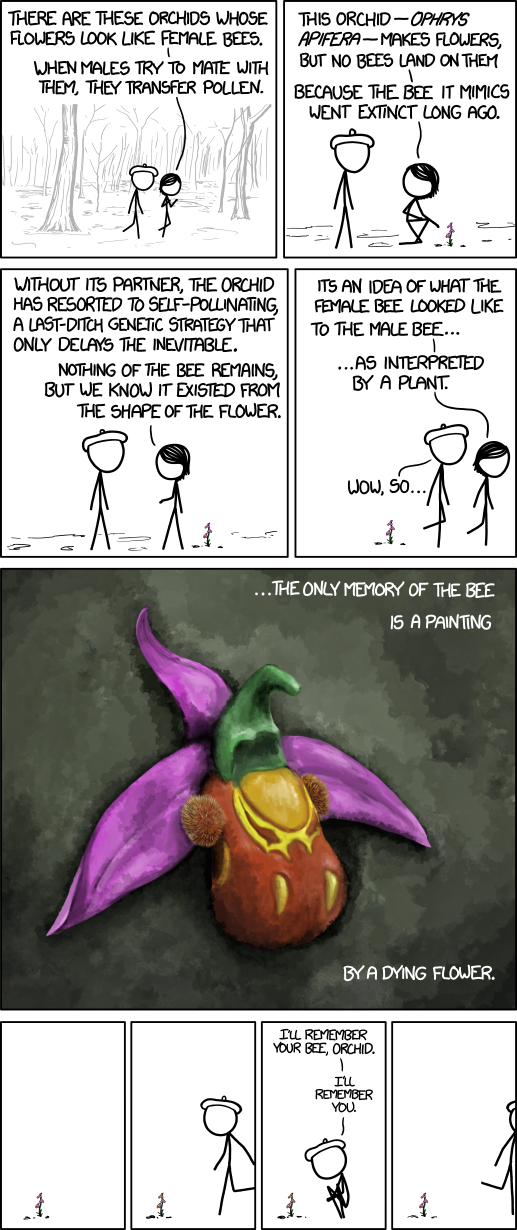
This is my favorite XKCD strip ever, and that is saying something:

Wow. Why do I feel so sad?

Somehow, the idea of the  bee image embedded in the orchid reminds me of this story, in which I raised the following question:

This makes me wonder…are there other past events that we might get a second shot at observing? If a well-placed dust cloud can bring back an event from nearly half a millennium ago, what other options might exist for retrieving visual information on events long since past?

In a similar vein, Stephen commented:

It makes me wonder if there isn’t a record of everything echoed somewhere if we just knew where to look.

Well, maybe not everything. But it’s encouraging that we can get a glimpse of a bee that, presumably, no human being ever got to see.  So much of the past is lost to us.

But not all of it.

Ad from the Future

Imagine when we’ll see advertisements for 3D printer supplies that look no different from ads for inkjet cartridges or printing paper that we’ve seen for years.

Things like this:

(hat-tip: Shawn Thuris)

My immediate thought — these spools look exactly like the ones I load into my lawn edger / trimmer. I wonder if they are produced by the same manufacturers?

The future is already here. And it’s getting more evenly distributed all the time.

PS: I gotta get me one of those.

False Dichotomies

They’re everywhere.

Superman or Batman? Star Trek or Star Wars? Football or baseball? It’s one thing to be asked to state a preference, but these choices are increasingly offered as absolutes. The idea that you might really like both of the items in question (in different ways, for different reasons) seems to get in the way of divvying up the human race into opposing camps.

But at least those dichotomies make sense logically. Some Star Wars fans really do despise Star Trek, and vice versa.

Then you see something like this:

Anne-Marie Slaughter envisions an America where caring is as important as competing

We are a nation that thrives on competition, from sports teams to small businesses. We define success by who wins, typically through talent, luck and working harder than anyone else. If everyone pursues their self-interest, all of society benefits.

But winning is not everything, much less the only thing. Competition must go hand in hand with care. As Bill Gates has put it, “There are two great forces of human nature: self-interest and caring for others.”

Care starts from the premise that humans cannot survive alone. Our progress flows from our identity as social animals, connected through love, kinship and clanship. Success should be defined not as individual victory but as group advancement, whether the group is a family, a community or a company. Satisfaction comes less from beating others than from bolstering them, enabling them to reach their full potential.

To her credit, at least Slaughter is making the case for competition and caring that I would make for Superman and Batman — they’re both good and they both have their place.

The problem comes from even attempting to make a dichotomy out of them. Saying that you prefer caring to competition isn’t like saying you prefer football to baseball. It’s like saying you prefer chocolate cake to baseball.

Perhaps the confusion arises from the embedded Bill gates quote. Self-interest and caring for others are not separate forces of human nature. They are both expressions of the one overarching human drive, what around here we describe as the Human Imperative. Humans are constantly trying to make things better, to make everything better. To quote myself:

Some people are focused only on improving the circumstances of others, while others are focused exclusively on improving their own circumstances. Most of us are somewhere in between, devoting some measure of our energies to improving the lives of others (whether those “others” be our own friends and families, our communities, or humanity as a whole) and devoting the rest of our energy to improving our own lives.

Slaughter’s world view misses out on two very important points:

  1. Unforeseen consequences pop up all the time. So actions that are intended benevolently sometimes have disastrous consequences, while actions that are malicious or even just indifferent to the suffering of others often lead to long-term benefits. (See the piece linked above for examples.)
  2. Improvements to the human condition tend to be transferable and they tend to persist. Because of these tendencies, even the most competitive and self-centered efforts bring about benefits that eventually everybody gets to enjoy.

I’m not arguing against caring. I like caring. I care. A lot.

Slaughter’s point is to argue for government programs that she believes represent a caring attitude towards others. Her ideas may or may not be right; I don’t care. Anybody who wants to debate that stuff, have at it. What I reject is her implicit suggestion that anyone who doesn’t favor such programs doesn’t care about other people.

My point is that people who care about what actually happens to other people — as distinct from people who care about being “caring” — recognize that competition is one of the most useful tools in the effort to make things better for other people. Competition is one of the ways we get better at everything, including getting better. So whether Slaughter’s ideas are right or wrong, they would benefit from healthy competition from other ideas. And even if we were to adopt her agenda wholesale, it would be better implemented by competitive teams than by one central authority.

But that’s me. I like baseball and cake.

(Cake photo by Tracy Hunter.)