Monthly Archives: September 2014

Datafication in Three Easy Steps

The relentless wave of change that is transforming our world from being one made primarily out of stuff to one made primarily out of data has a name. It’s called datafication.

Over the past few decades, we have witnessed the datafication of business, of society, and of everyday life. There appear to be three major phases of datafication. In the first phase, an activity or process becomes increasingly reliant on data. In the second, data begins to transform the activity or process by taking a central role in its execution. In the third phase, the activity is moved entirely into the data substrate.

film

Take the movie business. Putting artistic considerations aside, the success of any film has always been a measurement of how much revenue it generates. Originally, this was a pretty straightforward matter of counting box office receipts. (Today, what with many and varied distribution channels and considerations such as licensing and merchandising that often come into play, the math for calculating success is considerably more complex.) The film industry entered the first phase of datafication relatively early on, as studios began trying develop formulas for repeat box office success. have witnessed the datafication of business, of society, and of everyday life. There appear to be three major phases of datafication. In the first phase, an activity or process becomes increasingly reliant on data. In the second, data begins to transform the activity or process by taking a central role in its execution. In the third phase, the activity is moved entirely into the data substrate.

The data points were, at first, relatively few and far between: geographic differences in box office; one star’s draw vs. another; westerns vs. romances vs. war movies vs. musicals; summer releases vs. Christmas releases. Over time, the analysis evolved in terms of sophistication until the industry reached the second phase of datafication. This is how we  came to live in an age of scripts written for a target adolescent male audience and re-edits and even rewrites following test screenings. The data began to drive the process.

But data wasn’t done with the movies yet. The film industry is moving rapidly into the third phase of datafication. Once upon a time, filmmakers made films. Long strips of celluloid with images on them. We’ve all heard of efforts to preserve decaying movies from the early part of the last century. Film was a chemical and mechanical process resulting in a physical artifact. But not today. The product of the film-making process is now essentially a data artifact. Movies are consumed over digital networks on TVs, laptops, and smartphones. And, in fact, they can now be made entirely on smartphones.  Short messages, tweets, motions pictures…it’s all the same. It’s all data.

The big data revolution is ultimately about this kind of transformation in all sectors of all industries. The movie and music businesses are obvious examples of industries that have made it at least part of the the way to phase three. But then so is the telecommunications industry. Shipping and logistics have become as much about data as they are about moving stuff around. Even manufacturing is moving in that direction — and will continue to do so as digital fabrication and 3D printing become increasingly mainstream.

Right now the world as whole is really just beginning to move from phase 1 to phase 2. Data is beginning to influence and direct the world in ways never before considered. And we are still in the very early days.
 

Bigger than We Realize

I think maybe big data is being under-hyped.

That’s right. Under.

And, yes, I know how ridiculous that sounds. And I know how suspect it sounds coming from a guy who spent all those years in product marketing, specifically marketing a product with strong big data tendencies (although we didn’t use that word to position it — or at least I never did.)

Come on now: isn’t big data being hyped enough already? It’s not like a few years ago, when so many were uncertain as to what the term meant. People get it now. They know what big data is. In fact, at least one major survey shows that big data has pretty much become mainstream. Everybody is doing it. And, interestingly, even as people have come to know what it is, to accept that it exists, and to engage in big data projects…they still don’t much care for the term.

If everybody is doing it now, what need could there be for further hype? If anything, maybe we can and should be talking about it a bit less now that it has gone mainstream. Besides, if people don’t care for the term now, more hype cycles aren’t going to do much to help, are they?

Probably not. But I’m not suggesting that big data needs more hype because I want more people to use it or to like it. I just want them to be more aware of it. Going by this source, I’m probably using the second definition of the word hype. I think we need to create greater interest even if we have to use “flamboyant or dramatic methods.”

Why?

Because big data is only getting bigger. And it is only becoming more deeply embedded in our everyday experiences. Moreover, it is changing the world itself. I realize that might sound a little overly dramatic and / or flamboyant, but let’s take a look at this. Consider this example provided a while back by Irfan Khan, head of the Global Database and Technology organization for SAP:

General Electric (GE) has recently announced substantial changes to the design of the CFM Leap aircraft engine, which powers the Airbus A320neo, Boeing 737 Max and COMAC C919 aircraft. The new generation Leap is “designed to provide significant reductions in fuel burn, noise, and NOx emissions compared to the current… engine.” It is designed to generate 32K pounds of thrust, achieve a 99.87% reliability rate, and introduce a $3 million operating saving annually.

Where will these savings come from? New sensors intricately track how the engine is operating. The use of data fundamentally transforms how the engine operates and makes it more efficient. But that efficiency requires a lot of data. The new version of the Leap aircraft engine generates 1 TB per day from those sensors alone. Add in avionics, traffic data, weather data… a massive amount of information is generated just from taking a flight. In previous versions, the Leap engine has completed more than 18 million commercial hours of operation, with some 22,000 of the engines manufactured. So we’re talking about a lot of data.

In every way but one, this engine now operates with a smaller footprint: it requires less fuel, it makes less noise, it generates fewer noxious emissions, it costs less to operate. Only in one area, data, is its footprint expanding. [Emphasis added.]

An aircraft engine becomes smaller, cleaner, and more efficient. These changes in the physical properties of the engine have been achieved by generating, manipulating, and responding to data.

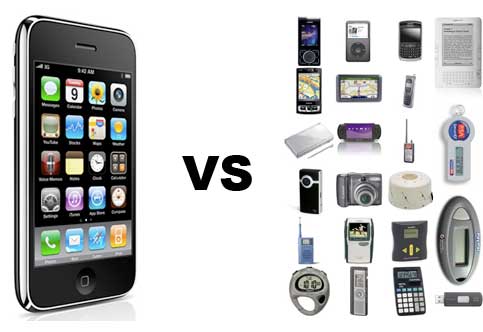
Of course, if this one jet engine were the only example of such a shift, it wouldn’t be terribly persuasive. But the examples are everywhere. A few years ago there was a lot of discussion about how the new smartphones were replacing so many other devices. You no longer needed a digital camera, a music player, a gps system. The phone did it all. where did all those separate devices go? Their physical footprints were dramatically reduced; their data footprints took up the slack.

Meanwhile, consider how many of your interactions with others, how much of what you do and think and communicate, how much of your self is now closely associated with that same device. What is a human life made of? Lots of things, obviously. But increasingly, one of the biggest component parts of our lives is the data component. Like that jet engine, we’re growing bigger and bigger data footprints.

We seem to be transitioning from a world made out of stuff to a world made out of data…and stuff.

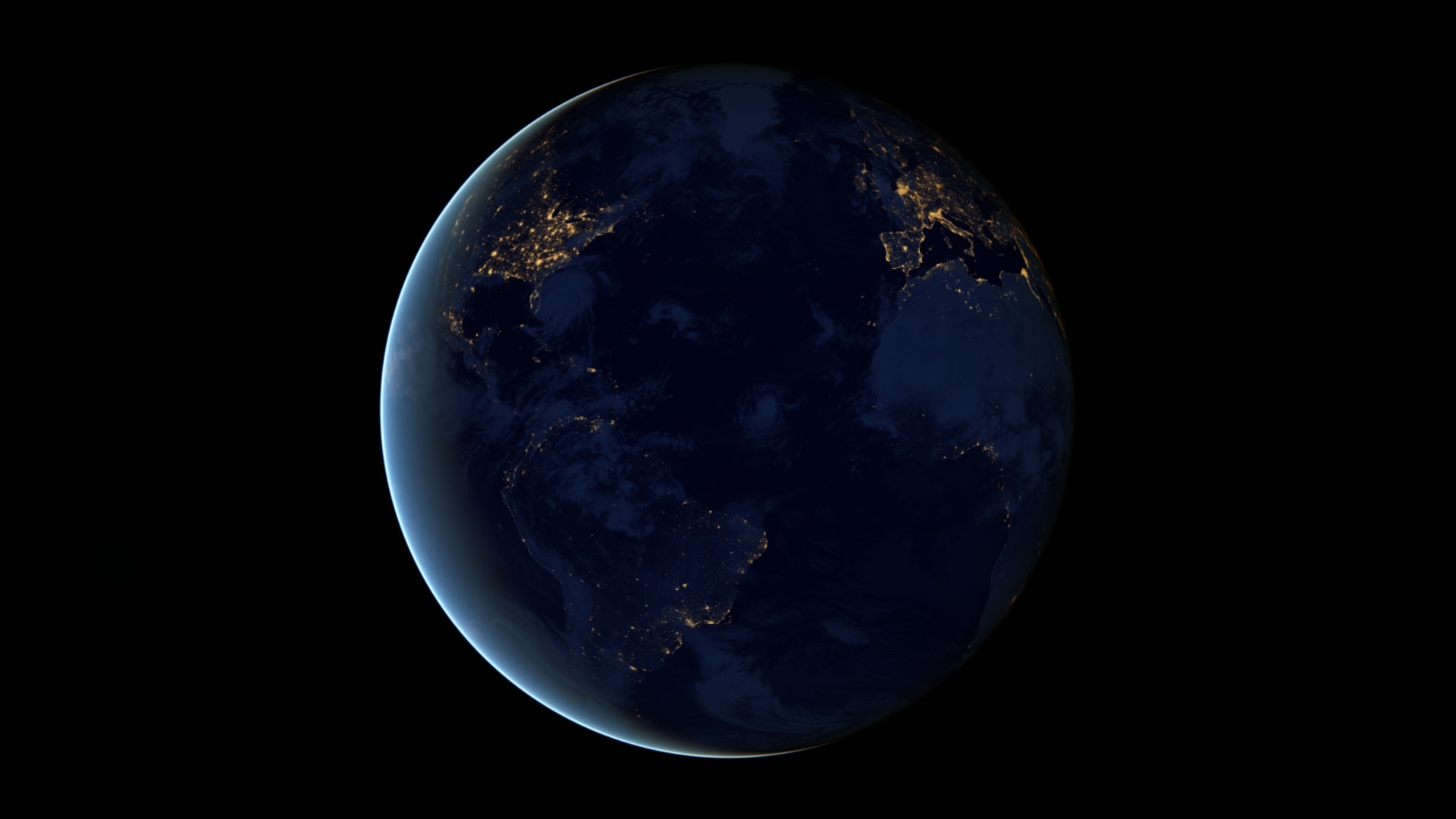
EarthatNight

Mostly Data?

A while back I wrote a piece about de-industrialization, describing how capability that once belonged to large institutions is passing into the hands of everyday people. The most prominent examples of this phenomenon have taken place in the film and recording industries. Those same smartphones that swallowed all the other devices are now being used to make  movies — the kind it used to take a whole studio to make (including one that got an Oscar nomination.)

Stephen Gordon’s In the Future, Everything Will Be a Coffee Shop is premised on this same shift from a world made primarily of stuff to a world made primarily(?) of data. R. Buckminster Fuller described a process that he called ephemeralization, whereby “you do more and more with less and less until eventually you do everything with nothing.” We are definitely doing more with less these days, although doing everything with nothing remains some distance ahead.

But as we use less stuff — less energy, matter, time and space — to do the things we do, we are using more and more data. Big data really is changing the world around us. We need to be aware of this process, and try to understand it. So let’s have some more big data hype.