Daily Archives: February 12, 2008

Less Gas is Always Greener

Without looking, what would you guess is the subject of the Wired article “‘Misinformed Craze’ For Hybrids Delays Greener Technology?”


Guess 1:

I was sure initially that the author was suggesting that standard hybrids are delaying plug-in hybrids.

Thanks to the nickel batteries in standard hybrids, there’s a good argument that these “green” cars are worse for the environment than my Ford Explorer. This is tragic because, well, it exposes my witty title as a lie.

Plug-in hybrids will be doubly better for the environment. We will be able to drive emission-free for most commuting and the batteries necessary to power a plug-in hybrid are environmentally friendly too.

But it doesn’t look like plug-ins are being held back by the standard hybrids. Most major car companies, plus a few upstarts, are getting into the plug-in business as fast as they can. In ten years we’ll probably look back at standard hybrids as a brief, necessary bridge to plug-ins.

Prediction: the word “standard” won’t describe non-pluggable hybrids for much longer.

But that’s not what the Wired article is about.


Guess 2:

Perhaps the author is arguing that somehow hybrids as a whole – standards and plug-ins – are holding back the development of full EV’s.

Now this would be an interesting article too. But hybrids aren’t holding EV’s back any more than standard hybrids are holding back plug-ins.

EV’s are being held back by a chicken/egg problem. Few people will buy EV’s until they are comparable to gas guzzlers in range, speed, and the ability to fuel up quickly at convenient stations. No EV’s, no infrastructure. No infrastructure, no EV’s.

Plug-ins will, I think, serve as a proving ground for the EV’s that follow. They could also provide the infrastructure for EV’s. Plug-in owners will buy gas for long trips until enterprising station owners offer quick charge service that’s cheaper than gas. Once that service is widespread, we’d have a network of stations that full EV’s could use. Perhaps Congress should mandate standardized quick charge jacks in plug-ins to encourage this.

But no, that’s not what the Wired article is about either.


The Big Reveal:

The article states that hybrids are holding back other technologies like…hydrogen. This according to two French researchers who also concede that hydrogen won’t be commercially viable until 2025 at the earliest.

If we ever do get hydrogen fuel cell vehicles (a rather big if) they will also be electric vehicles. A hydrogen fuel cell would power a car with electricity. Wouldn’t it be beneficial to have already perfected electric vehicles? Right now the best path to electric vehicles is through hybrids.

There’s no need to wait to 2025 to do something. We will experiment with many possibilities between now and then.
Unintended Consequences

We talked a little about the risks associated with genetic modification of crops on the most recent FastForward Radio. Where the danger exists, it is not so much a matter of crops being deliberately modified to do some kind of harm — Stephen pointed out that there are probably easier, more direct, and harder to detect ways of causing destruction than modifying crops — but rather due to unintended consequences of modifications that are aimed at achieving some good outcome.

Here’s an interesting case in point:

First documented case of pest resistance to biotech cotton

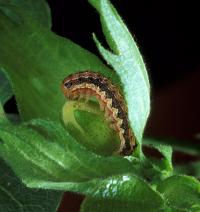
A pest insect known as bollworm is the first to evolve resistance in the field to plants modified to produce an insecticide called Bt, according to a new research report.

Bt-resistant populations of bollworm, Helicoverpa zea, were found in more than a dozen crop fields in Mississippi and Arkansas between 2003 and 2006.

“What we’re seeing is evolution in action,” said lead researcher Bruce Tabashnik. “This is the first documented case of field-evolved resistance to a Bt crop.

“Resistance is a decrease in pest susceptibility that can be measured over human experience,” said Tabashnik, professor and head of UA’s entomology department and an expert in insect resistance to insecticides. “When you use an insecticide to control a pest, some populations eventually evolves resistance.”

So the bollworms are now immune to the insecticide the cotton produces, meaning either that

1.The entire exercise was pointless?

or

2. We need to move on to the next round of genetic modification to find a way to wipe out these super-bugs?

bollworm.jpg

Well, not so fast:

Even so, the researchers found that most caterpillar pests of cotton and corn remained susceptible to Bt crops.

“The resistance occurred in one particular pest in one part of the U.S.,” Tabashnik said. “The other major pests attacking Bt crops have not evolved resistance. And even most bollworm populations have not evolved resistance.”
Bollworm, Helicoverpa zea, moths have a wingspan of 1. 5 to 2 inches. Their caterpillars, known as bollworms, are serious pests of cotton in the southeastern US and Texas….
Click here for more information.

The field outcomes refute some experts’ worst-case scenarios that predicted pests would become resistant to Bt crops in as few as three years, he said.

So let’s wait and see what other species do before we modify cotton any further. Meanwhile — if the Bt-resistant strain spreads beyond the small area they currently occupy — what about genetically modifying the bollworms? Right now it is probably well beyond our capacity to introduce a strain of bollworm into the wild that has some distinct reproductive advantage over the standard bollworms, but if we could do that, and if the modified bollworms were wired to re-develop the susceptibility to Bt, we might bring the situation into stasis.

Every few generations, the bollworms would evolve resistance to Bt, and every few generations, the susceptibility to it would be forcefully reintroduced. Rather than upping the amount of change to the cotton, just change the bollworms enough to keep them at bay.

One way to control unintended consequences is to control the number of variables in play. So we have a plant producing a natural insecticide and a pest developing a resistance to that insecticide. Rather than introducing new variables, the smart approach would be to find a way to work just with those

While not “natural” in the strictest sense, this approach would follow a more natural model of equilibrium than, say, allowing a strain of super-bugs to evolve through injecting multiple kinds of insecticide into the plant’s genetic makeup or through doing something really wonky like modifying bollworms such that they want to feed on other bollworms.

This won’t eliminate all risks, of course, but this kind of approach (if it ever becomes feasible) would help to keep the risks manageable.