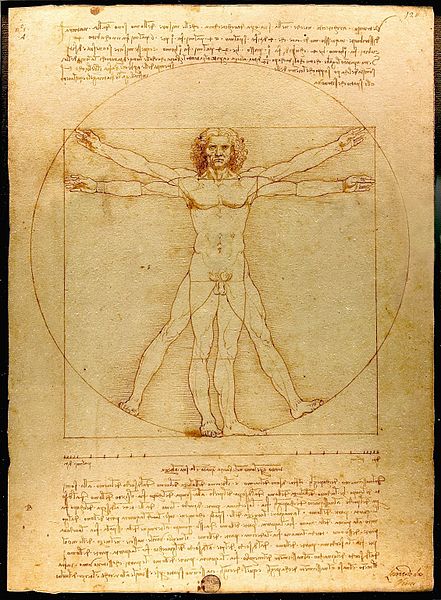
 On this week’s podcast we talked about disturbing futures — future worlds that aren’t necessarily dystopias, but that nonetheless don’t look terribly appealing to us back here in the past. I focused mainly on futures in which the population has abandoned some traditional aspect of the human experience.
It isn’t always a bad idea to depart from things we have had for a long time. Slavery and blood feuds have a long pedigree in human history and pre-history, but few would take seriously an argument that we should still have them around — even though, tragically, they do persist even into the 21st century.
But slavery and blood feuds, along with honor killings, genital mutilation, and even cannibalism, are ultimately social practices. We can pick and choose among social practices without bringing our humanity into question — until we get to the core ones around personal relationships and families. For example, a future without marriage, or family relationships, or friendship would look, from where we sit, like a distinctly less human world than the one we currently occupy.
On the show I talked about suggestions that in the future we might do away with eating or sex (not just the act, but the whole psychological, cultural, and physiological shebang) or emotions. Technology will soon give us greater control over our physical and psychological makeup than can be easily imagined today. Each of those characteristics may, in fact, become optional.
People might forgo eating in favor of ingesting regular doses of soylent or some other nutritious sustaining glop. They might design bodies for themselves without sexual organs or secondary sexual characteristics and rewire their brains to remove notions of sex or gender from their own identities. They might edit their neural architecture in such a way that nothing frightens or angers them — or even makes them happy.
On the issue of sex, one of the listeners pointed out that 1 in 100 people are asexual — am I saying that they’re less human than the rest of us? No. They are part of a mix that includes people who are highly sexual and people who are mildly sexual. Human society includes nuns, nerds, accountants, soccer moms, Kardashians, Clooneys, drag queens, bull dykes, and Anthony Weiner — to name just a few from the huge range of possibilities. If everyone became asexual — or if even a lot of us did — it would be a very different world. A less human world.
Likewise there are people who can’t digest food and have to be on an IV. Of course they’re human. And there are people with psychological and neurological disorders who lack some (or all) emotions. Sure, they’re human, too. But note that they are described as having a disorder.
Is that just prejudice? I don’t think so.
Going forward we have a lot to figure out. We are carrying a tremendous cultural and evolutionary baggage that we might be better off without. But there are some essentials in there, too, some of which may be packed very tightly — perhaps inextricably — with things that we would prefer to think of as optional. We will need to proceed cautiously.
(Image by Luc Viatour / www.Lucnix.be)
 Our new book project, a collection of ideas for making the world a better place entitled The World Transformed, has been going by the nickname “