Phil and Stephen talk about the future of institutions of bookstores, higher learning, retail outlets, the workplace, and other institutions we thought of as permanent. What is to become of all of them? Could they all really be evolving into coffee shops?
Phil and I ended last week’s FastForward Radio show discussing how higher education will change in the coming years. My conclusion:
Universities Will Become Coffee Shops
We’re faced with an education bubble. Tuition and other costs associated with a college education have been outpacing inflation for decades. It’s a trend that simply cannot continue. It has continued, so far, because the demand for education has proven to be somewhat inelastic. If you want a good job (the thinking went) there really wasn’t much of a choice. You went and you paid whatever price they put in front of you.
But what’s the advantage of a good job if the salary difference between that job and a non-college-level job is lost servicing student debt? It’s a reasonable question that has become more pressing as the amount of student debt required to get an education has risen.
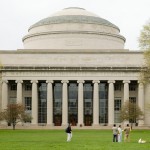
At the same time several universities with world renown branding have begun offering online courses for free. MIT has been the pioneering institution in this. They were first to make practically all classes available online. Now they are beginning to offer some level of credential for completion of online courses through a new program they’re calling MITx.
Imagine a personnel manager at a mid-sized industrial corporation in Kansas who’s looking for a candidate with a particular set of knowledge. There are two candidates: one from the local state school with an appropriate college degree, a second with relevant MITx certificates of completion.
Let’s say all other things between the candidates are equal. Which should be chosen? It’s true that an online education is not the same as the college experience. The candidate who went to college probably enjoyed his experience more, but how much is that experience worth to a potential employer? Unless he’s a member of the same fraternity, probably not as much as the college candidate would hope.
And here’s the reality: the student debt of the college candidate controls, to some extent, his salary requirements. Since the MITx candidate appears to have the knowledge required, and has no student debt, he probably can be hired cheaper.
There is a tendency to go with the college candidate because: “that’s the way its always been done.” But cheaper ultimately wins. Repeat that story a million times over the next few years and you begin to see how the local colleges – which already are overcharging for their product – begin to suffer in favor of free programs like MITx.
Eventually you could have local campuses becoming places where MITx students seek tutoring, network, and socialize – reclaiming some of the college experience they’d otherwise have lost.
Phil thought this sounded like college as a giant coffee shop. I agree. Every education would be ad hoc. It would be student-directed toward the job market she’s aiming for.
This trend toward… coffeeshopification… is changing more than just colleges:
Book Stores Will Shrink to Coffee Shops
Ebooks are coming of age – for many reasons. You can keep your library in your pocket. You can annotate and share your thoughts within social networks. Writers can publish more directly to their audience. Once completed, the unit cost of each ebook sold is essentially $0. Those savings can (and sometimes are) passed on to the customer. Also, an ebook doesn’t have to be limited to the written word. An ebook can incorporate video, audio and other methods of presentation. Your book store is always with you and has every book ready to sell. Nothing ever goes out of print because there are no print runs.
Compare that with your local Barnes and Nobel. Those stores are huge but can accommodate only a small fraction of the titles available in the Kindle store. They require expensive real estate, buildings, and employees.
If you don’t like reading from an ereader, there are new on-demand printing options like the Espresso Book Machine that can print a book within minutes.
Between ebooks and print-on-demand, Barnes and Nobel sized stores shrink down to just their coffee shops – or maybe Starbucks takes over their business. Either way, custormers keep the experience of reading with coffee and those big comfortable chairs.
The Coffee Shop Will Displace Most Retail Shops
My Christmas shopping this year was 90% through Amazon Prime. Not having to fight the crowds and having it delivered free of charge to my home is a big plus, but as with the Kindle store, the online retail selection is much better that even the largest retail outlet.
Which is more enjoyable: Starbucks or Walmart? For the sane: Starbucks. So if you can accomplish your Walmart shopping at Starbucks, why do it any other way?
Also, imagine the 3D print shop of the future. You put in your order, probably from your smart phone, and then go pick it up. What does the lobby of such a business look like? Again: a coffee shop.
Offices Become Coffee Shops… Again
We’re going back to the future: the modern office was birthed in 17th century coffee shops. Steven Johnson has argued that coffee fueled the enlightenment. It was certainly a more enlightening beverage than the previous choice of alcohol.
The need for offices grew as the equipment for mental work was developed starting in the late 19th centuries. That need appears to have peaked about 1980. It was a rare person who could afford the computers, printers, fax machines, and mailing/shipping equipment of that time.
Now a single person with $500 can duplicate most of those functions with a single laptop computer. So the remaining function of the office is to be that place that clients know to find you… and that kids and the other distractions of home can’t.
Going forward the workplace will need the same sort of flexibility that I described for education. Groups for one project will form and then disband and then reform with new members for the next project. What will that workplace look like? Probably closer to Starbucks than Bob Par’s cubicle.
What Doesn’t Become a Coffee Shop?
I’d say the last holdout will be houses of worship, except that the church I grew up in now has a coffee shop. They buy Land of a Thousand Hills coffee to aid war ravished Rwanda, and the profits go to missions. Just as important, I suspect, is their desire to be a community hub: a place where people – most especially those who don’t normally go to church – are comfortable.
“The Well” at my home church.
What will remain other than coffee shops? Upscale retail will remain – people paying as much for the experience as for the goods purchased. Restaurants remain. Grocery stores remain.
Brick and mortar retail stores will be converted to public spaces. Multi-use space will be in increasing demand as connectivity tools allow easy coordination of impromptu events. Some large retail stores will be converted to industrial 3D printer factories. These heavy-duty fab labs will fabricate products that are too big or complicated to fabricate at home.
While we’ve written and talked quite a bit about the education bubble over the past few months, a recent announcement from MIT may prove to be a game-changer. Does MITx represent the next stage in the evolution of higher education? Phil and Stephen discuss.
One of the tragedies in the history of human learning is the destruction of the Library of Alexandria. There are conflicting accounts of the library’s destruction attributed to various perpetrators, beginning with Julius Caesar in 48 BCE and ending with the Muslim invaders in 642 CE.
However it was destroyed, it was a tremendous loss. The Library of Alexandria was the Library of Congress of the ancient world. It is believed that many great works of antiquity — known to us today only by title, or in quoted fragments, or not at all — were lost for all time. Our knowledge would be richer and, potentially, our path from the ancient world to the modern world would have been shorter and easier, had some of these works survived.
Volunteers in white lab coats, surgical gloves and masks stood on the back of a pickup truck Monday along the banks of the Nile River in Cairo, rummaging through stacks of rare 200-year-old manuscripts that were little more than charcoal debris.
The volunteers, ranging from academic experts to appalled citizens, have spent the past two days trying to salvage what’s left of some 192,000 books, journals and writings, casualties of Egypt’s latest bout of violence.
Among the most severe losses is the 24-volume Description of Egypt, written over a period of 20 years by as many as 150 contributors after Napoleon’s conquest of Egypt. The loss of of these priceless manuscripts is a terrible blow from the standpoint of history, but there is a bit of a silver lining:
[T]here are four other handwritten copies of the Description of Egypt. The French body of work has also been digitized and is available online.
We can only hope that there are multiple copies of many of the books that were lost in this fire. Losing old books hurts, but losing the information they contained hurts a lot worse. This tragedy makes the case for creating digital backups of any collection of unique (or even rare) books, paintings, maps, etc.
A great deal of knowledge was centralized in ancient Alexandria and then lost because human civilization did not have a robust set of backup procedures in place. Such procedures would have been very difficult to implement in the ancient world, and would have been no small task even in the mid-to-late 20th century, when many such efforts were, in fact, contemplated (and a few initiated.)
But today there is no excuse. We have the tools and we have the infrastructure. We’re long past the point where we should be losing knowledge to fire or flood.
Let’s get those backup procedures in place, and let’s follow them carefully.
While we’ve written and talked quite a bit about the education bubble over the past few months, a recent announcement from MIT may prove to be a game-changer.
Our institutions of higher education don’t have a monopoly on information; they started losing that around the time the time that public libraries became widespread. And these days, they no longer have a monopoly on instruction. They have given it away through their own free programs — MIT was a pioneer in that movement — and lost it to competitors like Khan Academy.
So what’s left? Contacts and credentials. Let’s look at credentials. When you spend four years at Stanford or Yale you’re paying for a degree with that institution’s name on it. Such a credential is a not a guarantee of success and happiness, but it’s at least a good head start. It is a big-ticket item, a high-prestige item. At one time, such a degree was viewed as a solid investment (and largely still is, depending on what the degree is in.)
The thinking behind major universities giving away courses was that it wouldn’t conflict with their main business, selling credentials, since the free courses can’t be applied to a degree.
MIT today announced the launch of an online learning initiative internally called “MITx.” MITx will offer a portfolio of MIT courses through an online interactive learning platform that will:
organize and present course material to enable students to learn at their own pace
feature interactivity, online laboratories and student-to-student communication
allow for the individual assessment of any student’s work and allow students who demonstrate their mastery of subjects to earn a certificate of completion awarded by MITx
operate on an open-source, scalable software infrastructure in order to make it continuously improving and readily available to other educational institutions.
MIT expects that this learning platform will enhance the educational experience of its on-campus students, offering them online tools that supplement and enrich their classroom and laboratory experiences. MIT also expects that MITx will eventually host a virtual community of millions of learners around the world.
That “virtual community” is intriguing. MIT is going to stay in the business of both contacts and credentials, but now they’re offering two tiers of each. There is the traditional degree program and the traditional set of elite contacts that go along with it. That’s the premium level of service. And now there’s the consumer model — certification supported by an MIT-specific social network.
It will be very interesting to see how these two tiers work together. Does the consumer model help support the traditional model? Does the distributed online model become more official as time goes by? Time will tell. In any case, kudos to MIT for once again staying ahead of the curve.
Inspired by Amy Purdy’s remarkable TED Talk, Phil and Stephen discuss the limits that we are currently overcoming and may hope to overcome in the near future.
We live in an age in which many of the limitations our ancestors faced have been all but forgotten. And there is light at the end of the tunnel for several of the others.
As technology opens up new capabilities and new possibilities, we may find that the biggest limit we face is our own imagination.
Some thoughts on the malleability of images over at Transparency Revolution:
You take two excessively attractive people and you make them even more attractive. Sure, it’s about as close to literally gilding a lily as anything ever comes, but so what? We value these people because of their looks (meaning no offense to their acting ability; I think they both do okay on that front.) Why not take it up a notch? Because it’s going to give us unrealistic expectations?
Um, this is sensitive so I’ll try not to be too harsh: most guys looking for even the un-retouched version of Angelina Jolie are going to be bitterly disappointed. Sad but true. Might as well make her look perfect. If anything, the unreality of the perfection could help some of us to manage expectations a bit.
 Phil and Stephen talk about the future of institutions of bookstores, higher learning, retail outlets, the workplace, and other institutions we thought of as permanent. What is to become of all of them? Could they all really be evolving into coffee shops?


 While we’ve written and talked quite a bit about the education bubble over the past few months, a recent announcement from MIT may prove to be a game-changer. Does
 Our institutions of higher education don’t have a monopoly on information; they started losing that around the time the time that public libraries became widespread. And these days, they no longer have a monopoly on instruction. They have given it away through their own free programs — MIT was a pioneer in that movement — and lost it to competitors like
  Some thoughts on the malleability of images over at Transparency Revolution: