Monthly Archives: July 2008

The Mouse is Dead…

MouseNotWorking.jpg

…long live visual computing.

Gartner analyst Steve Prentice is predicting that the computer mouse will be dead in 3-5 years.

When I first read that headline I scoffed. But then I asked myself, “when was the last time I used a mouse?” I’m sure I’ve touched a mouse during the second Bush administration, but I realize now that I haven’t used a mouse daily in 3 or 4 years. Instead I’ve used the touchplates on the various laptops I’ve owned. The transition was so natural that I hadn’t noticed.

And the touchplate is getting more powerful. Try duplicating the two-finger gestures that Apple is pioneering for the iPhone and Macbook Air with a mouse. The Wiimote might be the harbinger of great things too.

So I’ll go along with this prediction. In 3-5 years most people will have moved on from the mouse and nobody will miss it.

But it was an essential first step to visual computing.

A Short Bridge to EV's

Hybrid electric/gasoline vehicles have been thought of as a bridge technology to full electric vehicles. There are a number of factors that could make the bridge long (25+ years) or short (a decade). Paypal cofounder and Tesla chairman Elon Musk is betting on a short bridge. Here’s why:

  1. Hybrids represent a poor compromise. The product is neither a good EV or a good gas powered vehicle.

    EM: Because you need both a gasoline-powered engine and a big battery, neither can be very good, and the engine will be a weak engine. It’s just not where the future lies.

  2. Batteries capable of offering EV’s comparable range to gasoline vehicles will be available sooner than most people think.

    EM: We’ll be able to offer a car with a 305-mile range roughly three years from now.

    I think what we’ll see is an increasing amount of energy being stored in the battery pack and a lowering of the cost of the battery pack over time.

    If you look at the improvement of battery energy density, it tracks to about 8 or 9 percent a year.

  3. Tesla will address the EV road trip problem with their second model.

    EM: There is the occasional road trip, but that’s actually pretty rare, and for some people it’s never. Our second model will address that rare case in two ways. One is to allow people to switch out the battery pack, so you can go to a battery-change station just like you’d go to a gas station. The second path is to have a high-speed charge. If you have a high-powered onboard charger, you can get an 80 percent charge in 45 minutes. If you’re going from L.A. to San Francisco, which is about a 400-mile trip, you can drive 200 miles, stop for lunch, charge your car in the restaurant parking lot, finish lunch and continue the remaining 200 miles to San Francisco.

  4. And there will be improvements to EVs beyond batteries that will enable EV’s.

    EM: [Battery improvements are] not the only thing. The efficiency of the electric motor, the efficiency of the powertrain, the rolling resistance are all important.

  5. Part of the electric infrastructure improvement necessary for EV’s can be done right at the EV owner’s residence.

    EM: I have another company, SolarCity, which is the largest provider of solar power to homes and businesses in California. The solution is to get a SolarCity solar panel on your roof and then have an electric car. It takes actually only a small solar-panel setup – of about 10 by 15 feet – to generate 200 to 400 miles a week of electricity for your car.

Read the whole interview.

(H/T to Michael Darling)

Musk didn’t mention it, but there’s another factor that would tend to push us to EV’s quickly:

  1. Skyrocketing gas prices.

    Dude. We’re there.

    No, I’m talking about $7,8… $10/gallon gas. If gas prices go in that direction the hybrid’s gas engine will look less like a feature than a bug.

Right out of a Michael Crichton Novel

…circa 1985 or so. This looks like a good set-up for a tehcno- thriller, doesn’t it?

S.F. officials locked out of computer network

A disgruntled city computer engineer has virtually commandeered San Francisco’s new multimillion-dollar computer network, altering it to deny access to top administrators even as he sits in jail on $5 million bail, authorities said Monday.

Terry Childs, a 43-year-old computer network administrator who lives in Pittsburg, has been charged with four counts of computer tampering and is scheduled to be arraigned today.

Prosecutors say Childs, who works in the Department of Technology at a base salary of just over $126,000, tampered with the city’s new FiberWAN (Wide Area Network), where records such as officials’ e-mails, city payroll files, confidential law enforcement documents and jail inmates’ bookings are stored.

Childs created a password that granted him exclusive access to the system, authorities said. He initially gave pass codes to police, but they didn’t work. When pressed, Childs refused to divulge the real code even when threatened with arrest, they said.

Granted, to make an effective thriller out of this, you would need for the computer system in question to be vital to national defense. Being down, it would open us up to attack by terrorists or the Soviets (1985, remember.) Or maybe it would just be a system controlling a dam — with humans completely locked out of control — with a devastating flood likely if the authorities can’t regain control. Or, come to think of it, maybe it would be a security system protecting people from dinosaurs.

mainframe.gif

In any case, the warning inherent in this kind of story would be that technology allows some individuals to disproportionately empower themselves, with potentially devastating results if the individuals in question are criminal or sociopath types. This is undoubtedly true. But while an effective theme for a techno-thriller, I don’t think it’s the right lesson to take away from a real-life incident such as this one.

I would prefer we learn something like this:

Technology can allow some individuals to disproportionately empower themselves if it isn’t managed correctly. So whatever we do, let’s make sure that no one individual is ever holding all the marbles.

Granted, this approach will require those sourcing and managing technology projects to understand, if not the technologies themselves, at least the risks involved. No doubt it’s a lot easier just to hand the keys to the kingdom over to the first geek who comes along who persuades you that he or she can solve all your problems, but the ease of that decision comes at the cost of entrusting that individual with an awful lot of power.

So instead of wringing our hands and saying, “Oh my, technology makes bad people too powerful,” how about if we hitch up or trousers and say, “Oh my, technology requires good people to be smarter?”

Just a thought.

(Hat-tip: GeekPress.)

FastForward Radio

Phil Bowermaster, Stephen Gordon, and two surprise guests talk about shopping for HDTV equipment without getting reamed, Hellboy 2, and why electricity will be so important to the transportation sector in the future.


Stream the latest show:

Or:

add_to_itunes.gif

Or download MP3′s for all the archived shows at:

Listen to FastForward Radio... on Blog Talk Radio


Click “Continue Reading” for the show notes:

Economic Inevitability

I’m all for fresh oil drilling, for getting shale up and running, for converting coal to methanol and trash to ethanol that we can burn in our flex fuel vehicles. I like the idea of diesel sourced from algae and bacteria that excretes crude oil. I’d be proud to drive around fueled by used french-fry grease, and I think converting atmospheric CO2 into gasoline is a swell idea.

Those are all great ideas and I think we should pursue each and every one of them enthusiastically. But I’m starting to think that the real future of automotive transportation has little if anything to do with liquid fuel (or even natural gas.) Here’s why.

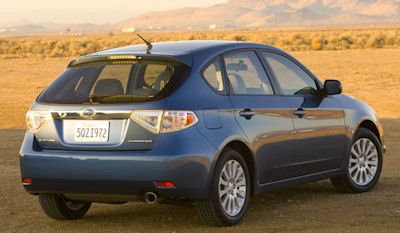
I drive one of these and I love it.

Impreza.jpg

With my Impreza, I get between 22-32 MPG. With gas anywhere from $3.90 – $4.35 a gallon, let’s just round everything off and say that I’m paying about $4 for every 25 miles I drive. That doesn’t sound like such a bad deal until you consider what it ought to cost to drive something that looks like this:

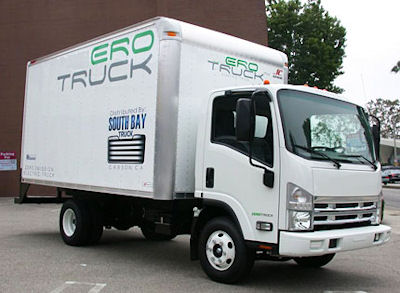
zerotruckdisguised.jpg

Take one of these Ero trucks, load it up with freight, drive it 50 miles to its destintation and then 50 miles back home, how much would you expect to shell out? Keep in mind that such a trip will run you about $16 in my moderately fuel efficient Subaru. At least twice as much, right? Call it $30 at the barest minimum

Would you believe 10% of that? How does $3 sound for a 100-mile trip?

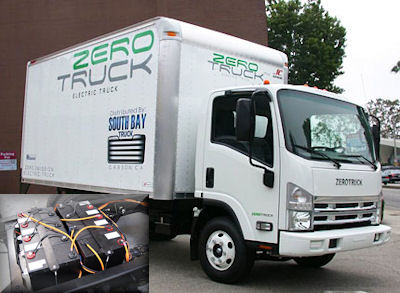
The’s because our “Ero truck” is really a Zero truck, an Isuzu modified to run on expensive-to-buy-but-oh-so-inexpensive-to-operate lithium batteries. Go back and read over all those fuel options I listed at the beginning of this post. Do any of them promise to deliver 100 miles of driving for three dollars?

I didn’t think so.

zerotruck.jpg

Electric cars are the way this thing is going to work out, folks. Yes, there are major issues to be resolved around developing more efficient batteries, extending the range these things can drive, figuring out a way to charge up quickly, etc. And of course, the biggest issue — how do we source all that electricity?

Mr. Pickens’ continent-sized wind farm is one idea. Getting serious about nuclear is another.

But it’s simple economics in the end. That 13 extra bucks I’m paying for every 100 miles of driving could be better spent on — so many things. Multiply that by the 20,000 miles I’m likely to put on my car in a year, and that’s $2600. Multiply that by the five years I’m taking to pay off my car and we’re looking at a break even point of an all-electric Subaru Impreza — with a sufficient range to get me from Highlands Ranch to Boulder and back, slightly more than the 100 miles that the Zero truck delivers — costing about $13,000 more than what I paid for mine.

Faster, please.

Imagine, Intend, Insist

Imaginintendinsist.jpg

On our most recent FastForward Radio, we talked about defining the Singularity not so much in terms of the achievement of greater-than-human intelligence as the fundamental and radical transformation of the world around us. If the Singularity is about transforming the world around us, then achieving greater-than-human intelligence, or atomically precise manufacturing, or an other major technological leap, becomes a means to that end, but not necessarily the end itself.

This discussion reminded me of a series of interviews I did with various futurists a while back, asking each of them a standard set of questions about the Singularity. One of those questions was:

Do you believe that you have a role to play in the unfolding Singularity and, if so, what is it?

I conducted most of those interviews at the Singularity Summit, so it’s not surprising that my interview subjects by and large answered in the affirmative and were able to articulate how they saw themselves fitting into the coming Singularity. I wonder, though, what kind of response this question would get from a non-Singularity aware audience, other than the obvious:

“The unfolding what?

So we might have to phrase the question differently, and maybe our expanded definition of the Singularity helps us to do that:

Do you believe that you have a role to play in the fundamental transformation of the world and, if so, what is it?”

It becomes a pretty daunting question. (Note that we’ve skipped the more fundamental question as to whether one believes the world is going to be transformed. One should ask that first, but we’re taking it as a given for this discussion.) There’s a hint of the audacious, some would even argue the delusional, in answering that question in the affirmative. And yet what a feeling of impotence, if not helplessness, would accompany answering in the negative.

However, I think there are three things that everybody can do to help bring this transformation about.

The first is to imagine the world transformed. All intentional accomplishment begins in the imagination. This is not to say that everything that happens begins in the imagination. Many things occur that we never imagined. Nor is it to say that all accomplishment begins in the imagination — sometimes we stumble on new things that we never imagined while trying to do something else. But when we get it right — when the future that we make happen is the one we were trying to make happen — our circumstances become the fruit of our imagination.

Beyond imagining, the next step is to intend for the world to be transformed. The ideas to which we apply intention are a very small subset of everything we imagine. There are any number of possible future scenarios that we like to think about, but have no intention of pursuing. Moreover, we fantasize about a wide variety of outcomes that we dread, fear, or just generally don’t want — we call this worrying. We actually do attach intention to some of our worries by deciding to take steps to prevent or avoid them. And then there are a few positive images of the future that we form first in our imaginations and then direct towards fulfillment by way of our intentions.

Finally, we can all insist that the world be transformed. When we imagine, we trade in what could be; when we intend, we deal with those things that should be; when we insist, we have narrowed it down to those things that must be.

Interestingly, I think this formula applies equally well to the researchers working on the cutting edge of friendly AI or atomically precise manufacturing as it does the non-technically trained layperson. Whether we’re trying to bring about a mundane or spooky technological Singularity, or simply trying to fix one broken part of our world, we have to see that change for ourselves, we have to direct ourselves towards that change, and we have to be ready to do whatever it takes to make that change real. Whoever we are, whatever transformation we want to effect, we have to imagine, intend, and insist.

FastForward Radio

Sunday night Phil Bowermaster and Stephen Gordon discussed the possibility of a mundane Technological Singularity.

225px-Infini-T.jpg

No, not a Singularity where we only get stuff we don’t need – like a razor with infinite blades – we’re talking about the Singularity we’d get if both practical molecular assembly and artificial general intelligence prove impossible. Could you even have a Singularity without those things?


Stream the latest show:

Or:

add_to_itunes.gif

Or download MP3′s for all the archived shows at:

Listen to FastForward Radio... on Blog Talk Radio


Click “Continue Reading” for the show notes:

Solar as a Service

Drive around and look at the rooftops in your neighborhood. If your town is anything like where I live chances are you won’t see any solar panels. Take a good look. In fact, take some pictures to document how your town looked circa 2008. By 2018 those rooftops will, mostly, have solar panels. Don’t worry they won’t be ugly boxes- at least not for long. The way solar will look will change too.

Solar has been around for decades, but it hasn’t been accepted. Things are about to change – partly due to technology, but also because we’ll find the right business model.

A good example of how this worked is the mobile phone. They were also around for decades before they were broadly accepted. In the 1967 movie Clambake, Elvis Presley’s character took a call on a car phone. It was a plot point that his oilman dad had to call every mobile phone register throughout the country to find him. And of course it was very important to the believability of this car phone that Elvis’ character was very rich.

clambake phone.jpg

In the 1987 movie Wall Street, Michael Douglas’ character did business from the beach with this brick:

wallstreet phone.jpg

We laugh at the brick now – you could throw a hip out carrying this in a holster – but it was an incredible leap forward from the Elvis phone. It was no longer tied to a car. And it was a true cellular phone – no mobile registers to call – just dial the number like a house phone. On the downside it was still analog. And it was still a status symbol – Gordon Gekko had one because he was rich.

By the time of the 2004 action film Cellular, it was an important plot point that everyone had cellphones.

15102__cellular_l.jpg

Cellphones are dirt cheap now. I got laughed at the other day when I pulled out my Go Phone. Yeah, I bought this thing around Christmas of 2006 for $20 as a “disposable” cell phone. Its still going strong. I plan to become marginally less dorky by buying an iPhone… soon.

Anyway, solar will be adopted in a similar fashion. Sunshine’s free, but the panels have been expensive. Payback on these things has been longer than their useful life. Typically people have resorted to solar only if grid electricity was unavailable. That’s changing. The word is that solar is slowing becoming competitive with grid power.

There’s been another problem with solar – you get the risks associated with owning the power plant. If there’s a problem at the hydroelectric damn its not your problem, but if there’s a problem with your solar panel, it is your problem.

Until now. Recurrent Energy is now offering “solar as a service.” They come to your site, set up the panels, and plug you in. They maintain ownership of the panels, so if there’s a problem, they’ll fix it. They promise that their service “supplies competitively priced solar electricity, displacing expensive peak-time utility power.”

I think this business model will be an important part of the move to solar. If the price is competitive with the grid (or better) and the risks of ownership remain with a power company, why not make the move?