Author Archives: Stephen Gordon

Short Attention Span Blogging; Friday, July 16, 2010

…where science, futurism, and anything else Stephen finds interesting are thrown together in an informational stew for your consumption.

Enjoy!


Follow Stephen on Twitter: @stephentgo


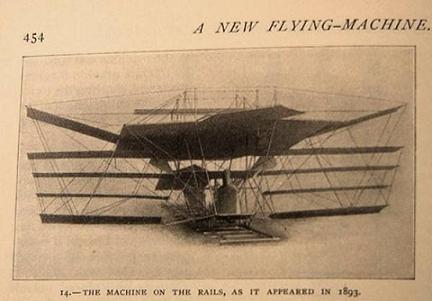
  • : “Steampowered flying machines of yesteryear.”
    newflyingmachine2.jpg

  • Composite made from reduced graphene oxide and magnetite could effectively remove arsenic from drinking water.

    Is there no end to the amazing properties of graphene?

  • Human Trials Next for Darpa’s Mind-Controlled Artificial Arm.
  • : “Air Force seeks to make science fiction a reality by developing smart autonomous vehicles + brain machine interfaces.”
  • : “New Livers Grown on Scaffolds In Rats.”
  • Reuters Science: “Woolly mammoth hunters helped change climate.”
  • Marcel Dicke: “The locust is the shrimp of the land.”

    Marcel Dicke laid out the arguments at TED for why we should be eating insects.

  • The first law of robotics in action: Developing artificial skin for robots to be safe around humans – that, plus algorithms to stop immediately if their skin contacts a human.
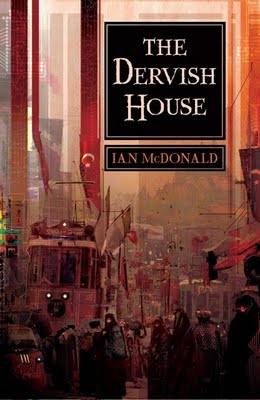
  • Doctorow: “Ian McDonald’s amazing novel The Dervish House: Turkey’s mystical nanotech future.”
    The Dervish House.jpg

  • Bob Richards reported that Dean Kamen received a standing ovation at Singularity University for inspiring millions of kids through FIRST robotics program.

    Bob Richards: “Brainstorming FIRST Robotics Bio-bot ideas over dinner with Dean Kamen and Singularity University students.”

  • Great CEO’s or Corporate culture- which is more important?
  • Roger Ebert’s 4-star review of “Inception.”

    It’s said that Christopher Nolan spent ten years writing his screenplay for “Inception.” That must have involved prodigious concentration, like playing blindfold chess while walking a tight-wire… We have to trust him that he can lead us through, because much of the time we’re lost and disoriented. Nolan must have rewritten this story time and again, finding that every change had a ripple effect down through the whole fabric.

  • Wil Wheaton: “Nothing makes me appreciate Pandora, Rhapsody, and Slacker more than being forced to rely on broadcast radio in the car.”

    Its a Wesley crusher.

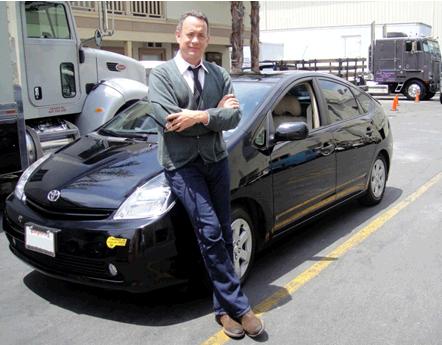
  • Tom Hanks: “Wanna buy my old Prius – hacked for MAX mpg? Go to Welcome Back Veterans auction.
    hanksprius.jpg

    Classy guy.

  • Aviation innovations: flying car, autonomous helicopter, paint that makes aircraft radar invisible.

    “Demonstrating that a full-scale robotic helicopter can safely take off, fly at low altitude and land heralds a new era,”

  • Which came first, the chicken or egg? MSNBC and NPR reported that “British scientists have proven it was the chicken.” That is not what those scientists said. This was just awful science reporting.

    By the way, the answer to the age-old riddle is “egg.” At some point in the distant past a pre-chicken bird layed an egg, which hatched the 1st chicken (however “chicken” is defined).

  • SierraSci: “244,273 compounds screened. 813 Telomerase inducers found! The search for a cure to AGING zooms ahead.”
  • junecohen: “The first TED talk from TEDGlobal is up! Matt Ridley: When ideas have sex. Knock out talk on human collaboration.”

    Ridley, of course, is the author of “Rational Optimist” – the book that Phil and I have been raving about for weeks on FastForward Radio.

    : “More detail on TED ‘s Global Conversation Project, launching this fall.”

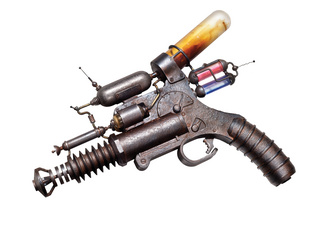
  • The 10 most gorgeous blasters and ray guns in science fiction.
    goliathon83-blaster-thumb-330x226-42754.jpg

    Pictured: Goliathon 83 from Dr. Grordbort

  • I think he would have liked this: “Philip K Dick brought back to life as a fully autonomous conversational android.”
  • MaryRobinette: “You know what I want? I want a clear sleeve on the back of my ereader so I can slip in a printout of the cover art of what I’m reading.”
  • New Scientist: “Time to abandon the black-and-white fiction that human-induced climate change is fact or conspiracy.”
  • as social hubs in neighborhoods. Good Social geography will be an increasingly important business model.
  • Paperback decline coupled with rapid growth of e-books puts the e-book market at 55% of the size of the paperback market.

    An important milestone for Phil and my “Kindle Bet:”

    I’m betting $1.00 that in ten years [from February 25, 2009] the print market will be diminished because most people will be reading on electronic readers like the Kindle. Phil disagreed and is betting that although most reading will occur on these devices in 10 years [by February 25, 2019], the print market will be bigger than ever.

  • June Cohen: “Neil Gershenfeld trying to re-implement biology with semiconductors, conductors, insulators to literally grow technology!”

    June Cohen: “Your brain doesn’t execute lines of code – everything happens everywhere all the time.” ~ Neil Gershenfeld

  • without normal cell towers.

    Australian scientists have invented software that enables mobile phones to work in remote areas where there is no conventional coverage and in locations where the infrastructure has been destroyed through disaster, or is not economically viable.

    Two methods are being worked on. One allows the wifi function of cell phones to be used to create a web of coverage.

  • Suzanne Lee makes BioCouture– textiles grown from bacterial cellulose.
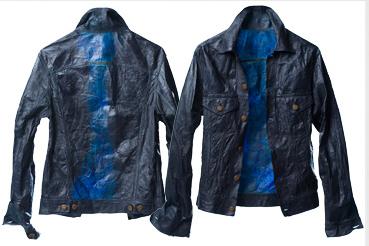
    denim_biocouture.jpg

  • Hudsonette: “There’s something to be said for the pressure to be excellent. R.I.P. George Steinbrenner.”
  • : “Body as battery.”

    Harvesting electricity from the human body (anybody remember Matrix), is yet another way to power medical devices with the human body.

    A recent “Short Attention Span” mentioned two other possible methods: using the mechanical energy of blood flow like a hydroelectric dam, and harvesting the ATP to ADP chemical energy that is already powering the human body.
Short Attention Span Blogging; Tuesday, July 13, 2010

…where science, futurism, and anything else Stephen finds interesting are thrown together in an informational stew for your consumption.

Enjoy!


Follow Stephen on Twitter: @stephentgo


  • Will “Inception” be Christopher Nolan’s first big flop?

    Some critics are stating that this film is great, but that its too brainy for a summertime movie crowd to appreciate. They’re suggesting that it may have a life cycle similar to “Blade Runner” – poor initial box office, rediscovery later.

    Maybe. But the public has become used to smarter entertainment since the days of “Blade Runner.” Compare television from then versus now.

  • Later this year Australian Felix Baumgartner hopes to beat by more than 3 miles the 100,000 foot skydiving record set in 1960 .

    This is not just a stunt. Information learned from this dive will be used in designing space vehicle ejection systems.

  • : Missing Iranian Nuclear Scientist Turns Up in D.C.

    Spys – and their work – have been in the news a lot lately.

  • To Kill a Mockingbird” was 50 years old Sunday. I believe that this novel might be the most important work of American fiction of the 20th century. Atticus may not have convinced that jury, but his plea for justice began to change hearts and minds outside the novel. Harper Lee gave us the right hero at the right moment.
  • New Scientist has a great daily science story feed. include underwater volcanoes, curing cancer with physics, and new nuclear fuel.
  • June Cohen writes, “This is my 19th TED. Something’s subtly different. The talks have evolved. More confident, crafted. We’re rediscovering the art of oration.”

    I wouldn’t have believed that TED had much room to improve.

    The latest TED talk: “Carl Safina: The oil spill’s unseen culprits, victims”

  • New device stays in a car’s power port and alerts its owners with a buzzing tone — if they’ve left their cell phone behind.

    Handy!

  • Our own Universe may be the interior of a black hole existing in another universe.

    Which explains the pressure I’ve been feeling lately.

  • New material – BC5 – hard as diamond, but is a superconductor.

    The team leader “believes that the outstanding mechanical and electrical properties of BC5 can be adapted to design new superconducting nano-electromechanical systems and high-pressure devices.”

    How about infusing bone (perhaps the skull) with super-hard superconducting electronics?

  • Diane Keng, co-founder of MyWEBoo, at 18, She’s Already on Her .

    If ever I start feeling a little too self-satisfied, I’ll read up again on this kid.

  • Trying to Forge a Friendship With a Robot Named Bina48

    I was reminded of two things when reading this article: Phil’s interview with Ramona. And, sadly, conversations with dementia patients. I believe these systems will teach us much about minds – both artificial and biological.

  • Fibers that can hear and sing: Fibers that can detect and produce sound developed at MIT’s.
  • Cory Doctorow: “Reports of blogging’s death have been .”

    Doctorow describes how social networking sites and Twitter have taken on some of the functions of blogging – and how that’s not a terrible thing.

  • “” – an article from Matt Ridley, discussing one of the ideas he wrote about in “The Rational Optimist.”
  • A reporter for Scientific America is visiting a Toyota assembly plant on the outskirts of Nagoya. Toyota is showing off its new plug-in Prius!

    Toyota had some concern that adding a plug to the Prius might actually be a marketing minus – that people would not like having to plug their car in at night.

    But giving people an option is not a minus. A plug-in Prius that’s not plugged in will function just like a standard Prius. And, since the plug-in will not be using a nickel-cadmium battery, this new Prius will be better for the environment.

  • The genetic code as musical score: Singing the .
  • Its no “Glorious Dawn” artistically, but its worth a listen:

    “Symphony of Science – ‘The Case for Mars’”

  • Uh Oh: Consumer Reports “can’t recommend iPhone 4″ over .

    I’ll wait a few months and get the same device… perfected and cheaper.

  • Robotic teaching. A New York Times video.
  • Senate ‘Internet Kill Switch’ Bill .

    Does anyone outside of Washington think this is a good idea?

  • An intense and smart discussion at Reddit.
  • Sci-Fi author Tobias Buckell reports: “I slapped a specks screen protector on my iPad yesterday. It is readable in direct sunlight now. Outside summer reading can now happen…”

    There, perhaps, goes the last reason to choose a Kindle-type eReader over a tablet.

  • Harvesting electricity from the mechanical energy of flowing blood to power medical devices.

    Why not just use the atp to adp chemical energy that’s already powering the body?

Short Attention Span Blogging, Sunday, 11 July 2010

…where science, futurism, and anything else Stephen finds interesting are thrown together in an informational stew for your consumption.

Enjoy!


Follow Stephen on Twitter: @stephentgo


  • Quote of the day: “The idea is to die young… as late as possible.” – Ashley Montagu

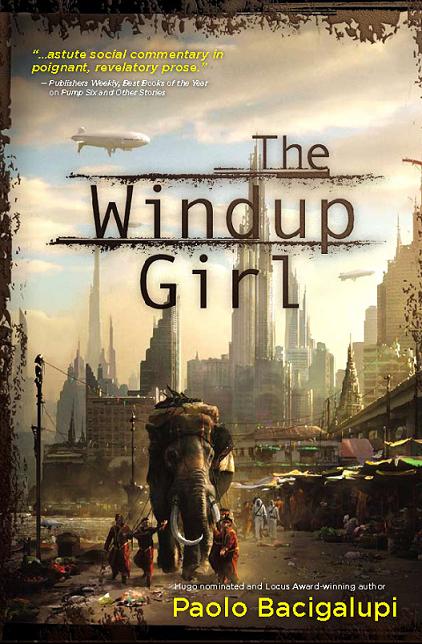
  • The Windup Girl” wins the Campbell Award for best 2010 SciFi novel!

    the-windup-girl-by-paolo-bacigalupi.jpg

  • Synthetic biology: algae biofuels, tumor-seeking microbial missiles; OR Frankenstein monster that destroys creator?
  • Drug enhances ability to form new memories in rat brains. This could be a potential treatment for Alzheimer’s patients.
  • The

    A fairly simple conversion that would allow you to use an old typewriter as a computer keyboard. This would be a fun steam-punk project. But also, this allows those who love the look and feel of typewriters to dust off and use those old machines in this century.

  • Faster, please: “Ships Could Contain Gulf Leak by Monday.”
  • A parent may be old when they have a baby, but the baby is born young. Reproductive cells produce the telomerase enzyme which lengthens telomeres back to a youthful state.

    Can we find a safe way to do this throughout an adult body?

  • Thoughtware.TV – Vernor Vinge on the Singularity.

  • selection and evolution: flies use bacteria to adapt to parasitic worms.

    Not all of my adaptive traits need be prescribed by my DNA: Gut flora for example.

  • Lots of life extension news at the “Blogging Life Extension” site.

    Recent posts include “Phys Ed: Your Brain on Exercise,” “Vitamin D and Mental Agility in Elders,” “Your Genome and the Future of Medicine: Tailored to Fit You,” “Supercentenarians,” and “Aubrey de Grey – In Pursuit of Longevity.”

  • Richard Morgan’s very positive review of Ian McDonald’s sci-fi novel, The Dervish House.

    The Dervish House.jpg

  • New research showing that of antioxidant supplements induce stem cell genetic abnormalities.

    Too much of a good thing?

  • : Brazil’s copyright law allows breaking DRM provided you are not otherwise breaking copyright law.

    Doctorow calls this the best-ever implementation of the UN’s copyright treaty.

  • Despicable Me: a fun, and surprisingly affecting, family film. My kids all loved it.

    It currently has 80% at Rotten Tomatoes.

  • Quotes from “The Rational Optimist:
    • “Better safe than sorry” is self defeating. In a sorry world there is no safety in standing still.

    • The true measure of something’s worth is the hours of work necessary to acquire it.
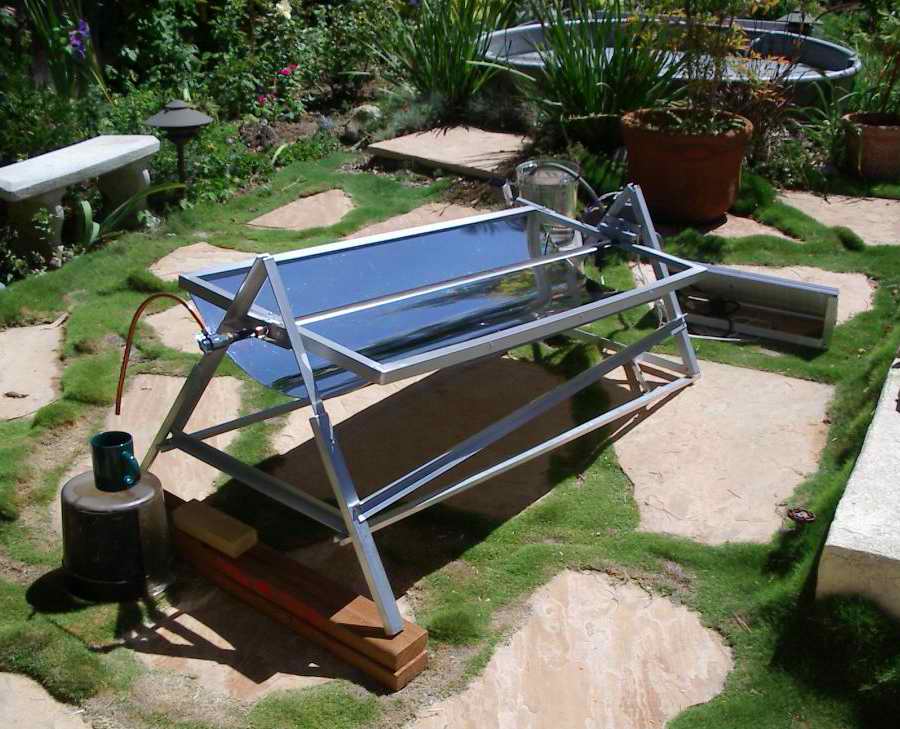
  • Preheating water with a solar parabolic trough will reduce coal consumption at new coal/solar electric plant in Colorado.

    What an beautifully simple idea!

    This is a small-scale parabolic trough. Notice that the trough is focused on a small water pipe. The power plant will work the same scaled up. Water will be run through a pipe being heated by the sun, before burning any coal.

    Why not do this for all electric power plants – including nuclear?

  • Has the Higgs Boson “God particle” been spotted?
  • Discover Magazine: Cryogenically freezing your body/head has a serious potential side effect: causing marital strife.
  • Computerizing the chaos of epilepsy: neural simulations help scientists better understand and treat the disorder.
  • Blood pharming – blood production using donorless self-renewing stem cell cultures. This technology is being developed by DARPA to provide a better (both in quantity and quality) transfusion blood for soldiers in the field. This technology could be ready in 5 years.
  • Ben Goertzel’s Singularity University lecture on Artificial General Intelligence was blogged at Wired UK.

    We recently heard from Artificial General Intelligence (AGI) expert, Dr. Ben Goertzel, who believes that the technology to develop robot children already exists and that the open-source software project that he is leading (OpenCog) will eventually achieve human-level intelligence and beyond.

    His open-source project aims to accelerate current progress in AGI by allowing geeks and scientists to build and share research. OpenCog has already been used to control a virtual dog in a virtual world and a humanoid Nao robot in a university robot lab. The project has a detailed roadmap leading from here to robot toddlers, virtual scientists and beyond. The hope is that, much as has happened with Linux, a diverse team of international collaborators will move the project ahead at an exponential pace.

    Ben believes that achieving child-level intelligence will be the biggest breakthrough for AGI and that we may reach this milestone within the next few years.

  • Roomba pioneer Rodney Brooks is leaving MIT presumably to focus on his new startup, Heartland Robotics.
  • The Predators alien – sci-fi portrait of a failed species. What kind of culture would have both faster-than-light travel, and a need to hunt dangerous prey?
  • Cancer death rates in the U.S. continue to decline.

    The American Cancer Society tells us that thanks to a 21% drop in cancer deaths among men and a 12% drop among women, 767,000 fewer people have died of cancer since the early 1990′s.

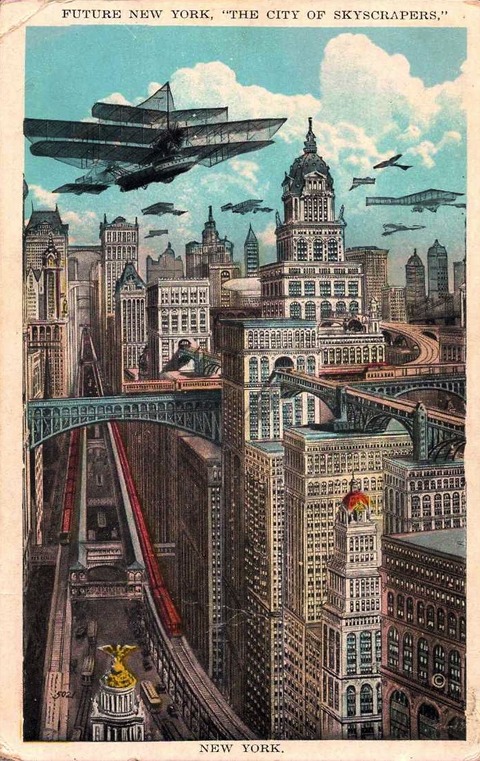
  • Past-Future New York, City of Skyscrapers (1925 postcard)

    past future new york.jpg

Short Attention Span Blogging, July 4, 2010

…where science, futurism, and anything else Stephen finds interesting are thrown together in an informational stew for your consumption.

Enjoy!


Follow Stephen on Twitter: @stephentgo


  • MJSL2050: New US satellite to monitor debris in Earth orbit.

    “If all goes as planned, the Space-Based Space Surveillance satellite, scheduled for a July 8 launch from Vandenberg Air Force Base, Calif., will have an unobstructed, around-the-clock view of the increasingly heavy traffic in Earth orbit – something the Air Force doesn’t have now.”

  • Life in 2050: healthier, longer, more urban, more of us.
  • Nanopore single molecule DNA sequencing – goal: reduce cost of sequencing a human genome to between $100 and $1,000.

    A “nanopore” is a hole as small as 1 nanometer across!

  • tobiasbuckell:
    1 bar cellphone reception here on my father in law’s farm. Internet speed check: 80kbps. I feel like I’m in one of Vernor Vinge’s slow zones.

    Proving William Gibson’s observation that, “The future is already here – it is just unevenly distributed.”

  • VFW91:
    FACT Jefferson & Adams were the only presidents to sign the Dec. of Independence & they both died on its 50th anniversary July 4, 1826.

  • Hyperspectral analysis of Declaration of Independence draft shows Jefferson changed “subjects” to “citizens.”

    Good change!

  • nytimesbooks
    Essay: Ben Franklin Is a Big Fat Idiot

    And the title is a big fat head fake. The author does not think Ben Franklin is an idiot. Instead, he makes the point that even a genius can have an off day. We remember “To err is human, to forgive is divine.” We forget “Every little makes a mickle.” Shakespeare wrote “Hamlet,” but he also wrote the forgettable (and forgotten) “Pericles, Prince of Tyre.”

    There’s something reassuring about the filter of history.

  • jpegpak
    Grid computing helping with cancer research.

    My kids have recently geeked out about this. They have their Playstation 3 working on the folding@home project.

  • ebertchicago:
    Oh. My. God. The Southern Lights (aurora australis) photographed by astronauts.

    southern lights.jpg

  • donttrythis
    For the record, I re-read both the Declaration of Independence AND the Bill of Rights every year at this time. Both amazing documents.

  • TED_TALKS:
    Mitchell Joachim: Don’t build your home, grow it!

    This idea has a looong way to go before being ready for prime time.

  • Taking the first steps toward living machines.
  • “@TranscendentMan: for ‘Minority Report Interface’ That Blew People’s Minds at TED.”

  • I’m currently reading new book, “The Rational Optimist

    Quote: “Humanity is experiencing an extraordinary burst of evolutionary change, driven by good old-fashioned Darwinian natural selection. But it is selection among ideas, not among genes. The habitat in which these ideas reside consists of human brains.

    …at some point in human history, ideas began to meet and mate, to have sex with each other.”

  • Only humans and whales live . Evolutionary benefit: teaching time??

    Because ideas are “mating” within our collective minds, the current generation gets a survival benefit if grandparents live long enough to pass on the wisdom that their long lives have allowed them to accumulate.

  • John Smart & Ken Hayworth created Brain Preservation Foundation to spur development of new methods – like plastization.

    Cryogenics without the problem of maintaining a deep freeze.

  • No problem with iPhone antenna -problem with software that calculates how many bars. Hasn’t worked since original iPhone.

    Now, can we get a fix please?

  • Using quantum dot printing to make lasers, TV screens, solar cells & more.
  • 75 years since thought experiment. Both Schrödinger and cat definitely dead.

To freedom loving people everywhere: “Happy Independence Day!”

Short Attention Span Blogging; July 2, 2010

…where science, futurism, and anything else Stephen finds interesting are thrown together in an informational stew for your consumption.

Enjoy!


Follow Stephen on Twitter: @stephentgo


  • Looks like I picked the wrong week to quit watching comedy retrospectives. “Airplane!” took off 30 years ago.

    Rumack: You’d better tell the Captain we’ve got to land as soon as we can. This woman has to be gotten to a hospital.

    Elaine Dickinson: A hospital? What is it?

    Rumack: It’s a big building with patients, but that’s not important right now.

  • Should it be a FELONY to photograph the oil spill?

    This is akin to prohibiting photographing of on-duty police officers.

  • The Brain Preservation Foundation: Better preservation through plastination.

    “John Smart and Harvard neuroscientist Ken Hayworth [are] seeking to facilitate the development of any technology that will effectively preserve the brain for eventual reanimation. While the foundation members’ pet interest is in plastination, they are not married to any particular technique. As far as they’re concerned, the successful development of any kind of brain preservation technology means that everyone wins.”

  • Real, Working From New Tron Movie For Sale on eBay!
  • Logi Aerospace Plans to Make DARPAs Flying SUV and Terra Transfugia Gets Approval for Its .

    Brian Wang has the specs on DARPA’s planned Flying SUV – it includes vertical take off.

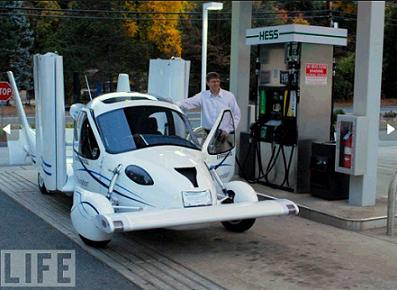
  • Flying Cars & Airborne Oddities – A LIFE gallery of old and new flying cars and strange aircraft.

    flying car.JPG

  • Tomorrow’s vehicles: smaller, electric, self-driving.

    The author would prefer cars with a more limited range to discourage urban sprawl. But people are not likely to move from cars with 300 mile ranges to something less.

    Sadly, he doesn’t mention flying cars.

  • Fuel = penny per mile! Zero S Electric Street Bike: 60 Miles range, $.60 to recharge (and max speed = 60 mph).

    Tomorrow’s vehicle today?

  • Public perception of next 40 years.

    Predictions of horrible disasters AND huge technological advancement are probably not contradictory.

  • How do you check out an eBook from a library? Different models will be tried. My answer: 1 ebook bought = 1 license to loan.

    One possible model is “keep it simple.” A writer and his publisher depend upon a certain amount of income per unit distributed. Whether that unit is electronic or paper, it should be usable by one reader at a time. EBooks should cost less, because physical printing is not necessary, but they should be treated like regular books otherwise.

    So, under that model, if I buy an ebook, I ought to be able to give it, sell it, or loan it to someone else to read on their reader. But, it should also mean that I don’t have access to it after selling it or while its on loan.

    One potential advantage of loaning a digital ebook – always be able to get it back. It could go back to the original owner (library or private individual) after a set time. No library late fees with automatic returning.

    But here’s another possible model: the subscription. Publishers could be paid by libraries per check-out. A library would always have the book available to loan, no matter how popular it is. And they wouldn’t have money or space invested in books that nobody has looked at in years.

  • A potent new drug could reverse hearing loss caused by prolonged exposure to loud noise.
  • Steampunk Ghostbusters!

Short Attention Span Blogging; June 30, 2010

…where science, futurism, and anything else Stephen finds interesting are thrown together in an informational stew for your consumption.

Enjoy!


Follow Stephen on Twitter: @stephentgo


  • Flying car, or “roadable aircraft” was designed by a team of MIT trained engineers. Will be on sale 2011. http://j.mp/aZMhe5

    With the exception of perhaps jetpacks, nothing says that you’ve made it to the “future” more than seeing actual flying cars in the sky.

  • Bankruptcy judge approved $20 mil sale of a former GM plant in Wilmington, Del., to Fisker to make electric cars. http://j.mp/b0Ee8h

    Fisker plans to use this facility to make a lower priced entry-level EV.

  • Sites that, incredibly, ban you from linking to them. Self defeating. http://j.mp/aC7ht2

    By the way, please feel free to link to the Speculist.

  • “Cognitive surplus” through shared, online work – Wikipedia, Ushahidi – we’re building a better, more cooperative world. http://j.mp/a6ZlTD

    Old news, but true: the Internet is creating opportunities for people to help each other in ways that just weren’t possible before.

  • Stevenbjohnson
    With 300,000+ apps, we need better tools than monolithic App Stores for discovery. Hence: appify.com My take:

    And here’s a good example of that cognitive surplus in action. People answering specific questions like “What’s the best app for navigating New York subway?”

  • Only humans and whales live long past menopause. Evolutionary benefit = teaching time??

    With more intelligent species, knowledge can be passed on to succeeding generations. This creates evolutionary pressure toward increased longevity.

  • Early signs of a point in the market where the cost of offering a solar solution is becoming cheaper than utility pricing http://j.mp/bq22SK

    We call this “The Solar Singularity.”

  • techranch
    Most hilarious startup name we’ve heard in a few weeks: Dog sitting network, “LaterDog.com”

    Well, the customers were already saying it when they dropped off their pets, so it seemed like a good name for the business.

  • The brain and how we perceive the world — are a mystery on par with understanding the universe and the origin of life. http://j.mp/9cP0to

    Particularly since our brains seem to create the reality around us. What if the missing piece of the Grand Unified Theory is our consciousness?

  • wilw
    Darn. The in-flight internet got too slow for Netflix to work. Back to reading my book, LIKE WE DID IN THE STONE AGES AND LIKED IT.

    The thought of Wil Wheaton having to put aside Netflix for a book strikes me as funny somehow. The future is still a work in progress. Still, pretty awesome that it was working at all.

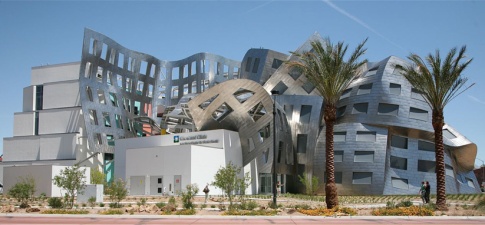
  • If this building really is used to treat people with cognitive disorders, well that’s just cruel: http://tinyurl.com/234guyk

    brain center.jpg

Short Attention Span Blogging; June 29, 2010

…where science, futurism, and anything else Stephen finds interesting are thrown together in an informational stew for your consumption.

Enjoy!


Follow Stephen on Twitter: @stephentgo


  • New NASA policy calls for research into technologies that could remove space debris, such as laser tractor beams. link

    The slightest push can move even massive objects in space. So space junk can be pushed into the atmosphere for quick disposal. If the power demands of a beam system were reasonable, this could be an incredibly efficient way to zap the problem.

  • A single building in China will have more DNA-sequencing capacity than the whole of the United States. http://j.mp/9jDwUX

    …that according to the scientist / entrepreneur who’s setting up the project.

  • rww
    Checking out and downloading some of Wired’s 10 iPad app recommendations:

    I find that some apps are an improvement over their PC equivalents. I prefer Twittering from my iPhone to doing it on the computer.

  • New gel could eliminate the need to fill cavities or drill deep into an infected tooth. Will dentists adopt? http://j.mp/cyGCjA

    Encouraging teeth to heal themselves strikes me as a much prefered method of dealing with cavities than the comparably barbaric drill-and-fill method.

  • michaelshermer
    Darwin bio-pic “Creation” starring Paul Bettany as Darwin & Jennifer Connelly as Emma now available on DVD: http://tinyurl.com/268ucxz

    I hadn’t heard of this film before today. I’ll try to see it and post a review ASAP.

  • science
    New Stephen Hawking book coming in September, The Grand Design, discusses idea of a single unified theory.

  • sciam
    Shifty Science: Programmable Matter Takes Shape with Self-Folding Origami Sheets

    More spooky stuff!

  • XiXiDu
    An open source peer-to-peer electronic cash system

    Up till now cash transfer systems have used a central server to verify the transfer. This system builds verification into the software. If this could work (I have some doubts) it could become the cheaper alternative (no middleman fees).

  • Tobias Buckell’s new collection of short stories gets thumbs up; errors in Kindle vrs gets thumbs down. http://j.mp/9hxx69

    I’ve also noticed more of errors and typos in electronic versions of books. There is no reason for this. If a work is going to be subjected to an editor at any point, shouldn’t the electronic version be published AFTER that point?

  • Future genetically modified plant trick – forget seeds, each part of a plant could become a spore upon shedding. http://j.mp/9UeFJs

    Another solution to replanting akin to the Perennial grains mentioned in my last post. What if corn could grow from the corn stalks laying in the field?

  • Fascinating interview of Bruce Katz re future of human cognition. http://j.mp/8XL36j

    An interview published in Hplus magazine last year. Definitely worth a look if you haven’t seen it yet.

  • Internet routers convert optical signals to electrical for processing. Skipping conversion will make net 100x faster http://j.mp/ctDkWf

    Manipulating optical signals without conversion to electric has been a tough problem to crack. It appears that we may be getting close to a solution.

  • Manufacterers should give us 3d TV that doesnt require glasses -like the upcoming Nintendo DS. http://j.mp/9ub8xP

    Maybe the problem is scalability, but how’s Dad going to feel when Junior has better 3D tech on his handheld Nintendo than the family has on the new expensive flat screen TV?

Short Attention Span Blogging; June 28, 2010

In the latest FFR show, Phil asked what started me on Twitter. The event that got me going was the Humanity Plus Summit. I set up an account, originally, just to follow their feed.

But I was also inspired by a fictional technology within Cory Doctorow’s novel, “Makers.”

Mild Spoiler Alert

“The ride” is an interactive museum created by the novel’s two main protagonists, Lester and Perry. Riders move through the museum on scooters and offer instant feedback to objects in the museum; and, often, contribute new objects. Robots tend the ride by rearranging existing objects according to feedback, and by 3D printing and placing new physical objects that were added first at other rides throughout the world – all of which are networked together. Some of the riders begin to see, almost mystically, a narrative begin to take shape within the ride which they call “The Story.”

What “the ride” was accomplishing in a physical space in “Makers” is similar to what I’m pursuing with Twitter. I see these “not-quite-random snippets of information” as an almost-narrative of the future unfolding. Like those aggravating autostereograms that were popular a few years back – some people can see it, some can’t. Those who can see it will struggle to see it more clearly, and will find the experience difficult to describe to those who can’t see it.

Good luck seeing “The Story.” It might help to squint your eyes a little.


Follow Stephen on Twitter @stephentgo.

“Makers” is available to download free here.


  • Consumer Reports test drives the Chevy Volt.

  • Steampunk: Nephelios, a solar-powered manned airship soon will make its maiden voyage across the English channel. link

    The airship needs to make a comeback. Sometimes flight should be about having a good time rather than making good time.

  • futureaware
    Sam Vaknin: The Ten Errors of Science Fiction

  • The perennialization of grain crops would count among the greatest innovations in the history of agriculture. link.

    Imagine the money saved if we didn’t have to replant food crops every season. Imagine how much soil would be retained if the root structure of crops persisted all year.

  • Solar cells could see a boost in their theoretical maximum efficiency from 31% to 66% by reducing energy lost to heat. link
  • reasonmag
    InstaVision with Glenn Reynolds: Where Have You Gone, Jacques Cousteau? link

    Jacques Cousteau was more than a television personality. He was an inventor who opened the seas to many who would not otherwise have experienced it.

  • ebertchicago
    20 Most Anticipated Sci-Fi Movies of 2011, link

    The 2010 sci-fi movie I’m most looking forward to is “Tron: Legacy.”

  • Stem cells have restored sight to 82 people with eyes blinded by burns, restoring vision up to 0.9 visual acuity level. link

    We may, finally, be reaching the elbow in the curve on the development of adult stem cell therapies.

  • DARPA announced program to build computers to achieve the mind-altering speed of 1 quintillion calculations per second. link
  • Genetic information will be available to most in developed world in 10 yrs, allowing better treatment & safer drugs. link

    I agree that the $1000 per person genome sequencing will be here in 5 years. And, I agree that the $1000 price point may allow the critical mass necessary to develop truly personal medicine.

    I do not agree that blood tests will be made obsolete.

  • digg_sciences
    “Maybe ET’s Calling, But We Have the Wrong Phone” – link

    Radio signals aren’t the only way to communicate.

  • Next gen Multiple Sclerosis medication passes an initial reg hurdle on the way to approval. link
  • nerdist:
    “iPhone 4 delivered to house at 10am today. Body: Gorgeous. Screen res: Stunning. Reception: Still crappy. I love it like a crazy g-friend.”

    …the funniest comment I’ve read so far about the iPhone 4.

  • Interview: “Venter’s accomplishment [producing synthetic life] will have profound ramifications. I see DNA as a programming language.” link
  • Fashion designer Mark Suppes built fusion reactor in Brooklin. link

    The most amazing thing about this story to me – Suppes is not the first independent physicist to do this. He’s the 38th.

  • tedtalks
    Today’s #TED: Charles Leadbeater went looking for education innovation — and found it in the slums. link

  • New tech could make existing nuclear power plants 30% more productive and produce less radioactive waste. link

    Technology developed for a type of fusion reactor that has not caught on, could, nevertheless, be used to significantly boost the production of existing nuclear reactors with a minimal additional capital cost.

  • China’s new white-collar underclass is developing intimate connections as they share struggles and seek to adapt. link

    The high tech slums described in “Makers” already exist in China.

  • Kurzweil offering a free ereader program called “Blio.” Will run on many platforms & preserves format of printed ver. link

    …because Ray Kurzweil appears constitutionally unable to rest upon his laurels.

  • “The first principle is that you must not fool yourself – After that it’s easy not to fool other scientists” – R Feynman link
  • Genetically engineered crops reduce CO2 emissions. Those opposed to GM crops working against a goal they support. link

    By whatever means, increased yields means more food for a hungry world, less land devoted to agriculture, and less CO2 emitted per unit of food produced.

  • Harvard has created nanodevices made of DNA that self-assemble and can be programmed to move and change shape on demand. link

    Nanotech could get “spooky” pretty quick.

  • XiXiDu
    Brain structure corresponds to personality link

    Brain imaging is destined to be a bigger part of psychiatry.

Speculistic Goodness

Follow Stephen on Twitter, @stephentgo


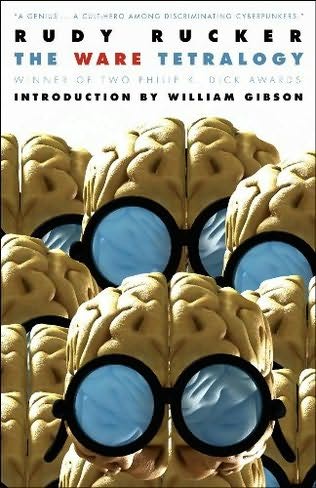
  • Rudy Rucker’s award-winning Ware Tetraology now available free: link

    ware.jpg

  • IEET Chair Nick Bostrom discusses the Great Silence (Fermi paradox) with Robert Lawrence Kuhn link
  • Social cost of disproving Euclidean geometry higher than three 19th cent thinkers willing to pay. Book: 5th Postulate link

    Scientists have not always lived up to Thomas Jefferson’s ideal, “we are not afraid to follow truth wherever it may lead, nor to tolerate any error so long as reason is left free to combat it.”

  • PopMech
    Here are our [Popular Mechanics] 9 summer flick picks, selected for quality VFX, hardware and science (OK, & plots):

    I’d add Iron Man 2, A-Team, and Toy Story 3.

    UPDATE: The kids reminded me about Shrek 4. That was a fun movie too. I’ve not seen it yet, but the word on the new Karate Kid has also been positive.

  • Richard MacManus reports, “Ray Kurzweil just got mobbed by a group of beautiful, smart women. I need to write a book.”

    For some reason geeks with groupies makes me smile.

  • XiXiDu
    The Surprises Never End: The Ulam Spiral of Primes link

    Cosmic Easter Egg?

  • “The Singularity movement is no place for uncritical, facile technophilia.” link

    Optimism should be based on reason.

  • Google command line tricks. link
  • Matthew Gevans, “Finished 1st draft of my paper on Singularity. Long way to go. Constructive criticism is appreciated.” link

    Here’s a chance to encourage a serious Singularitarian scholar.

  • “chemical is the first ever discovered that activates the telomerase enzyme gene without killing the cells.” link
  • Plastic Antibodies Save the Lives of Mice, Are Humans Next?
  • B&N, Amazon Cut E-Reader Prices. Unmentioned elephant in room – iPad. link

    Electronic paper is easy on the eyes, but Apple’s Retina Display is just so much more functional.

  • “Always listen to the experts. They’ll tell you what can’t be done and why. Then do it.” ~ Robert Heinlein
  • Roger Ebert: “Pixar is the first studio that is a movie star.”

    Toy Story 3 was incredible. A must-see even if you don’t have kids. But I think Ebert is forgetting that in its animation hay-day, the Disney-brand had similar drawing power.

  • John Scalzi, “Listening to a radio station in Christchurch, New Zealand. BECAUSE I CAN. The future is awesome.”
  • Mike Anissimov, “Why Arguments Against Mind Uploading Don’t Work — Constant Neural Molecular Turnover: link

    If a person uploaded themselves to a computer, would they make the trip or just be copied? Michael argues that gradual uploading is no different from normal neural turnover.

  • The mega-structures of Shimizu – his vision for the future. link

    shmz.jpg

  • matthewgevans
    “No pleasure, no rapture, no exquisite sin greater than central air.” quote from the movie “Dogma.”

  • Ben Goertzle answers Michael Annisimov’s anti-Twitter tweet , “Saying Twitter sucks is like saying phone calls suck.” link

    Media like Twitter is what we make it.

  • BoingBoing
    Modern gadgets made in 1977

  • creating a working touch-screen display with graphene. link

Short Attention Span Blogging; June 21, 2010

Last week I started a Twitter wrap-up feature that I intended to be published weekly. But, frankly, I’ve got plenty already for a huge update.

Follow me on Twitter at @stephentgo


  • Everything bad is good for you: the cognitve benefits of playing video games (in moderation). link

    It turns out that video games, like watching television, or surfing the web, can be good for you… if you don’t overdo it.

    Much more on the subject here.

  • Meet the team that knows who is REALLY influential on Twitter (Klout)

    These guys are experts at quantifying the value of a network.

  • Summer’s here! Photo=summer solstice sunrise this morning at Stonehenge.

summer solstice.jpg

  • Private space industry maturing: 2 year deal valued at $492 mil is largest single commercial launch agreement ever made. link

    Space becomes real for our civilization when we can go there to make money.

  • New air conditioning system uses 50 to 90 percent less energy than the best available units. link

    The development of the air conditioner increased productivity here in the South tremendously. Air Condition is the reason that places like Los Angeles, Houston, and Atlanta can compete with Chicago and New York.

    Now, imagine the impact of cutting the energy consumption for air conditioning by 50% percent.

  • bengoertzel: 3rd H+ Summit: Live Long and Prosper … Nov. 5-7 in LA … link

    Heh. “Live Long and Prosper.” Quoting Spock here is a good example of knowing your audience.

  • Using carbon nanotubes for battery electrode produced increase — up to tenfold — in the amount of power it could deliver. link

    This could give us laptops that run for days on a charge. EV’s that can compete with gasoline vehicles on range and speed.

  • Did other species of hominids spark wild man legends? link

    The linked writer doubts it. He thinks its much more likely that cultural and racial differences were magnified to create these legends. Imagine an agricultural culture coming into contact with hunter-gatherers.

    On the other hand, it seems likely that Neanderthals persisted some time after the last fossil evidence of their existence some 40,000 years ago. If a few pockets survived up until 15,000 years ago… maybe.

  • British quite relaxed about synthetic life – and seemed to see it as a natural extension of biological knowledge link

    Relaxed or not, this development is huge. It’s on par with the invention of the computer. It’s more important than walking on the Moon.

  • I love old pulp short stories. Here’s “Castle of Terror” and “Merchants of Venus” link, and link

    castle of terror.jpg

  • The lunar far-side is probably the best site for radio astronomy anywhere in the inner Solar System. link

    The darkside of the Moon is permanently blocked from our radio interference.

  • Lifeboat Fndtn on Internet, “if collective intelligence enhances the chance of survival, then we need as much as possible” link

    It seems an obvious truth that the more heads working on a problem, the better the likelihood that an acceptable solution will be found – whatever the problem. This rationale lies behind our freedom of speech. If an idea has merit, it can stand on its own without having to censor competing points of view.

  • Sure, robotics makes us more productive, but add jobs? I’m doubting it. link

    In the latest Willy Wonka movie, Charlie’s father had a job screwing lids on toothpaste tubes. The family’s fortunes suffered when he was replaced by a robot. Later he got a job as a repairman for the toothpaste lid robot. This heart-warming solution has a problem – the robot replaced many workers but needed only one repairman. You multiply the effects of automation throughout the economy many times and there is a net loss of jobs and a concentration of wealth within the company that automated.

    The upside is an increase in efficiency – toothpaste, and everything else, will cost less.

  • 706 new possible exoplanets. Another exponential trend. link

    We’re discovering planets outside our solar system in groups of hundreds now.

  • DOE to fund geothermal energy development in Nevada and Oregon. link

    …a huge potential source of green energy.

  • Winston Churchill gave his “finest hour” speech 70 years ago this week. link

    Has there ever been a greater wartime orator?

  • BoingBoing: Tiny art museum on the moon?

    This is one of those things that just ought be true.

  • BoingBoing: Violinist plays Mario soundtrack in real time.

    I’m not sure it gets any geekier than this.

  • singularityu: Andrew Hessel – Introduction to Synthetic Biology.

    A science that everyone needs a primer on because… well, it didn’t exist a few months ago.

  • Seems we could learn some things from these immortal jellyfish

    This animal is quite possibly the only immortal multicellular organism on the planet. It actually ages and then reverses back to youth repeatedly.

  • NY City hotel… Beautiful and abandoned. Glad it’s going to be restored right.

    This is a fascinating look at some really old and long-neglected architecture in New York.

  • NYTimes: What Is I.B.M.’s Watson? [Deep Blue for Jeopardy, it seems!] link

    I know this doesn’t mean that Watson could pass the Turing Test. Being able to answer questions is still far-removed from having a conversation. Still, this is an exciting milestone for A.I.