In our last edition of Fast Forward Radio, Phil and I got into a discussion about whether NASA as an organization should be completely rebooted as a “push prize” dispenser. This new NASA would make a master plan of the space technology it wants to see developed, and then develop push prizes to inspire others to develop the technology. The private sector would begin to take the lead in space.
In the show I took the position that NASA as it exists today is still useful. I could have been more effective in explaining why.
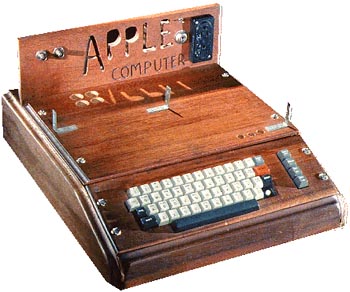 I am a big believer in push prizes. If your goal is to see technology developed, then the push prize is the most cost-effective means to make it happen. And I’m completely dissatisfied with space development as it exists today. With some notable exceptions, space tech has been static for thirty years. Think of what that would mean in the field of personal computers. The Apple 1 is 30 years old this year.
We have commercial satellites, a far too-expensive and dangerous orbital program, some probes and rovers, but no human presence beyond earth orbit, and no private space program except for a few multimillionaires who can catch a ride with the struggling Russian space program. We have the hope that Virgin Galactic will develop from the success of SpaceShipOne, but that’s about it.
NASA critics put some blame on NASA itself for this state of affairs – as if NASA has preempted space. Er…there’s room out there for everybody. The problem is that space is just too expensive with current rocket technology.
If some aerospace firm decided to launch a billion dollar Moon program to harvest helium-3 for possible fusion in a reactor that hasn’t been developed yet, how long would their stockholders put up with that? I’m guessing not long.
So, the functions of NASA should be:
- To do valuable things in space that the private sector won’t do because the lack of a profit incentive (pure science programs like the Hubble Space Telescope), or where potential profits are too uncertain or too long-term for the private sector (like harvesting helium-3), and
- To encourage the development of technologies that will allow the private sector to do more in space.
This would include development of the space elevator and the airship-to-orbit programs.
NASA seems to have learned the value of push prizes to accomplish basic research cheaply. But I’m not certain that NASA has fully accepted function #2 as an important goal. NASA should be doing everything in it’s power to get the private sector into space. Right now, that doesn’t appear to be the priority it should be.
On the other hand, the critics who would defund NASA to create a push prize dispensary forget the first function. I don’t think that Jerry Pournelle – the NASA critic Phil and I have been linking to – goes that far. Pournelle would pull 20 billion a year for the next 10 years out of NASA’s present budget and devote that to push prizes.
That sounds like a great idea provided function #1 projects wouldn’t be abandoned.