Breakthroughs in regenerative medicine have received quite a bit of attention on the web recently, with this particular story making the rounds several times. We linked to it back in March after 60 Minutes did a piece on it, although then (and today) our emphasis is more on Wake Forest University’s efforts to grow human tissues and organs than the University of Pittsburgh’s use of extracellular matrix to regrow body parts. Both are very exciting lines of research, but it was the latter that caught the attention of the BBC and ultimately the Volokh Conspiracy, who subsequently linked to this piece, wherein a “leading plastic surgeon,” apparently after carefully viewing the entire 59-second BBC clip — possibly more than once! — declared the entire matter “junk science.”
This assessment will no doubt come as a shock to the U. S. Army Institute of Surgical Research, who just awarded $42.5 million to Wake Forest and the University of Pittsburgh, in support of a “massive regenerative medicine project aimed at battlefield injuries.” Apparently both of these institutions have been working on a number of “junk science” projects with the Department of Defense over the past few years, and the DOD now sees great potential in treating a wide variety of battlefield injuries, including:
Burn repair
Wound healing without scarring
Craniofacial reconstruction
Limb reconstruction, regeneration or transplantation
Compartment syndrome, a condition related to inflammation after surgery or injury that can lead to increased pressure, impaired blood flow, nerve damage and muscle death.
Here’s hoping that this research yields significant relief and healing to patients who have suffered traumatic injuries on the battlefield.
Meanwhile, following up on our original piece on this subject, we recently caught up with Dr. Anthony Atala, the director of the Wake Forest Institute for Regenerative Medicine, and got some more information on his team’s efforts to grow human tissues and organs, essentially “replacement parts” for the sick and injured. Here he talks about using inkjet printers to literally “print out” new tissues, and addresses the question of whether his research in regenerative medicine has implications for life extension research.
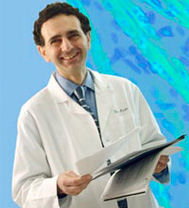 You’ve been quoted as saying that it is “just a matter of time” before someone grows a human heart. So let’s start with the basic question — how does one grow a heart? We’ve read how an artificially grown human bladder was recently implanted into a patient: that it was built using layers of tissue attached to a bladder-shaped scaffolding which eventually dissolved, leaving an intact organ in place. Will a human heart be built by similar means? If so, where do these layers of tissue come from? Are they grown from stem cells?
It’s hard to predict which form of regenerative medicine will eventually be used to help patients with damaged heart muscle. There is the possibility of injecting stem cells that will find their way to the damaged tissue as well as the approach of creating patches of the tissue in the lab that can be used to mend a poorly functioning organ. In many cases, you don’t need an entire new heart to dramatically improve the patient’s life. It may be possible to change a patch of non-functional tissue the same way you change a malfunctioning heart valve. Our interest isn’t specifically to build a human heart, but to make patients better – no matter what strategy is used. Not one technology is going to be best for all patients. I foresee a time when we’ll have a boutique of technologies and will select one based on the patient’s needs. Currently, we are attacking this challenge on multiple fronts, including using a modified ink jet technology to “print†a small two-chamber heart.
In attempting to describe the implications of the research you are doing, I wrote: “If this research leads to the ability to grow new kidneys, patients with severe kidney disease will be able to get replacement kidneys without a healthy person having to give one of theirs up. If this research leads to the ability to grow new hearts, patients with severe heart disease will be able to get replacement hearts without someone having to die.” Is that an accurate assessment? And, ultimately, will fully compatible replacement organs grown using these kinds of techniques eliminate the need for organ donation, and all of the logistical, ethical, and immunological difficulties associated with that practice?
There are currently almost 99,000 people on the waiting list for an organ transplant and nowhere near enough donors to meet their needs. Our goal is certainly to develop organs and tissues in the laboratory to help solve this shortage. As you know, we have already created bladders in the laboratory that have been successfully implanted in patients. These are grown from a patient’s own cells, so there were no issues with rejection. Similarly, if organs/tissues are grown from stem cells that are a genetic match to a patient, rejection will not be a problem. It is much too soon to predict whether we’ll be successful growing all organs and whether the need for organ donation can eventually be eliminated.